

Missing a tooth can feel overwhelming, but you have two excellent options to restore your smile. Both dental implants and bridges can replace missing teeth effectively, though they work in completely different ways.
Dental implants typically last longer and preserve your jawbone health better than bridges, but bridges cost less upfront and work faster.
The choice between them depends on your budget, timeline, and overall health. Implants involve surgery and can take months to complete, while bridges can be finished in just a few weeks.
Understanding the key differences will help you make the right choice for your situation. Your dentist can guide you through the pros and cons of each option based on your specific needs and goals.
Key Takeaways
- Implants last longer and preserve jawbone health but cost more and require surgery
- Bridges are cheaper upfront and faster to complete but may need replacement sooner
- Your choice depends on your budget, health condition, and how quickly you need results
What Are Dental Implants and Dental Bridges?
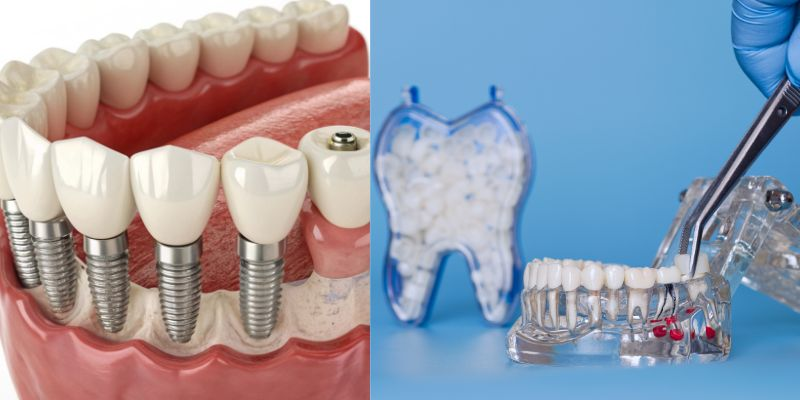
Dental implants are artificial tooth roots made from titanium that anchor into your jawbone, while dental bridges are false teeth held in place by your surrounding natural teeth. Both options replace missing teeth but use completely different methods to stay in your mouth.
Key Differences in Structure
Dental implants replace your entire tooth structure from root to crown. The titanium post acts as an artificial tooth root that fuses directly with your jawbone.
Dental bridges don’t replace the tooth root at all. Instead, they use your healthy teeth on both sides of the gap as anchors to hold the replacement tooth in place.
The main structural difference is where each option gets its support. Implants rely on your jawbone for stability. Bridges depend on your neighboring teeth for support.
This creates different requirements for each treatment. You need healthy jawbone density for implants to work properly. For bridges, you need strong teeth on both sides of your missing tooth.
Ready to make the right choice for your smile? Book your consultation with our Wilmington, NC team today and explore the best options for replacing your missing teeth.
How Dental Implants Work
Dental implants require surgery to place a small titanium post into your jawbone where your tooth root used to be. Your oral surgeon drills a precise hole and screws the implant into position.
After placement, your jawbone grows around the titanium post over 2 to 6 months. This process is called osseointegration and creates a strong, permanent bond.
Once healing is complete, your dentist attaches an artificial tooth called a crown to the top of the implant. The crown looks and functions just like your natural tooth.
The implant process involves three main parts:
- Titanium post (acts as the tooth root)
- Abutment (connects the post to the crown)
- Crown (the visible artificial tooth)
How Dental Bridges Work
Dental bridges literally bridge the gap created by your missing teeth. The replacement tooth, called a pontic, sits in the empty space between two crowns.
Your dentist shapes the teeth on both sides of the gap to fit crowns. These crowned teeth become the anchors that hold your bridge in place.
The entire bridge is one connected piece. It includes crowns for the anchor teeth plus the pontic that replaces your missing tooth.
A typical bridge has three components:
- Two crowns that fit over your anchor teeth
- One pontic (artificial tooth) that fills the gap
- All pieces fused together as a single unit
You can’t remove a bridge once it’s cemented in place. It becomes a permanent part of your mouth that you clean like natural teeth.
Comparing the Benefits for Oral Health

Both dental implants and bridges offer unique advantages for your oral health, but they work differently in your mouth. Implants help keep your jawbone strong and don’t affect nearby teeth, while bridges rely on your surrounding teeth for support.
Jawbone and Bone Loss Prevention
Your jawbone needs stimulation from tooth roots to stay healthy and strong. When you lose a tooth, the bone in that area starts to shrink without this stimulation.
Dental implants act like artificial tooth roots that are surgically placed into your jawbone. The titanium implant fuses with your bone and provides the stimulation needed to prevent bone loss.
This process helps maintain your jawbone density over time. Your bone actually grows around the implant, making it a permanent part of your jaw structure.
Bridges don’t prevent bone resorption because they sit on top of your gums. The missing tooth area continues to lose bone since there’s no root stimulation happening below the surface.
Over many years, this bone loss can change the shape of your face and jaw. It can also make future dental treatments more difficult if you need them later.
Impact on Adjacent Teeth
The way each treatment affects your nearby teeth is very different. This difference can have long-term effects on your overall oral health.
Dental implants don’t require any changes to your healthy adjacent teeth. The implant stands alone in the empty space without touching or affecting surrounding teeth.
Your natural teeth stay completely intact and healthy. You can clean around an implant just like you would a natural tooth.
Dental bridges require grinding down the teeth on both sides of the gap. These healthy adjacent teeth must be shaped to fit crowns that will support the bridge.
This process removes healthy tooth structure permanently. Once your teeth are prepared for crowns, they will always need crowns to protect them.
The teeth supporting your bridge also face extra pressure when you chew. This added stress can sometimes lead to problems with those teeth over time.
Preservation of Facial Structure
Your teeth and jawbone work together to support your facial muscles and skin. Changes to either can affect how your face looks as you age.
Because implants prevent bone resorption, they help maintain your natural facial structure. Your cheeks and lips continue to have the same support they had before you lost your tooth.
The stimulation from implants keeps your jawbone at its normal height and width. This helps prevent the sunken appearance that can happen when bone is lost.
Bridges don’t provide this same level of facial support since bone loss continues under the bridge. Over time, you may notice changes in your facial structure as the bone shrinks.
The area under a bridge can develop a hollow or sunken look. This is especially noticeable if you lose multiple teeth that are replaced with a longer bridge.
Your facial muscles may also lose some support as bone resorption progresses. This can contribute to premature aging around your mouth and cheeks.
Longevity, Durability, and Chewing Function
When choosing between tooth replacement options, dental bridges need replacement every 5-15 years while dental implants can last a lifetime. Both options restore your ability to chew properly, though implants provide a more natural feel.
Long-Term Durability
Dental implants offer superior longevity through osseointegration. This process allows the titanium implant to fuse with your jawbone, creating a permanent foundation.
Implants can last a lifetime with proper care. The crown on top typically needs replacement after about 15 years.
Dental bridges have a shorter lifespan. Bridges typically last 5-15 years before requiring replacement.
The difference comes down to design. Bridges rely on your natural teeth for support, which can weaken over time. Implants replace the tooth root completely.
Your oral hygiene affects both options. Poor cleaning leads to earlier replacement for bridges due to decay in supporting teeth.
Chewing Ability and Comfort
Dental implants more closely mimic natural teeth when chewing compared to bridges. The implant transfers bite force directly to your jawbone like a real tooth root.
Bite strength with implants reaches about 80-90% of natural teeth. Bridges typically restore 60-70% of normal chewing force.
Food restrictions are minimal with implants. You can eat corn on the cob, apples, and other challenging foods without worry.
Bridges require more caution with hard or sticky foods. These can damage the bridge or pull it loose from the supporting teeth.
Comfort levels differ between options. Implants feel like your original teeth once healed. Bridges may feel bulky initially but most people adjust within weeks.
Don’t wait to restore your smile! Book your consultation with our Wilmington, NC team and discover whether dental implants or bridges are the right solution for you.
Treatment Process and Recovery
The dental implant procedure involves multiple stages spread over several months, while bridge placement typically takes just a few weeks. Recovery times differ significantly between these two tooth replacement options.
Procedure Timeline
Dental Implant Process: The implant process happens in several stages. First, your dentist removes any damaged tooth and prepares your jawbone if needed.
Next, they surgically place the titanium post into your jawbone. This metal post acts as your new tooth root. You’ll receive a temporary partial denture to cover the gap during healing.
After healing, your dentist places an abutment on top of the implant. This piece connects the implant to your crown. Finally, they attach your permanent crown to complete the process.
The entire implant process can take many months from start to finish. Most of this time involves waiting for your bone to heal around the titanium post.
Bridge Process: Bridge placement is much faster. Your dentist shapes the teeth on both sides of the gap during your first visit.
They take impressions of your teeth to create your custom bridge. You’ll wear a temporary bridge while waiting for the permanent one.
At your second visit, your dentist removes the temporary bridge and cements the permanent bridge in place. The whole process usually takes 2-3 weeks.
Healing Time and Expectations
Implant Healing: Implant healing happens in phases. The initial surgical site heals within 1-2 weeks after placement. However, the bone must grow around and fuse with the titanium post.
This bone fusion process takes 3-6 months. During this time, you can eat soft foods and maintain good oral hygiene around the healing site.
Pain after dental implant surgery typically lasts just a few days. You may experience swelling, minor bleeding, and discomfort at the implant site.
Bridge Healing: Bridge recovery is much quicker. Your gums may feel sore for a few days after the procedure. Most people return to normal activities within 24-48 hours.
You can eat normally once the numbness wears off. Just avoid very hard or sticky foods for the first few days.
Care During Recovery: Both options require excellent oral hygiene during healing. Brush gently around the treatment area and follow your dentist’s cleaning instructions.
Oral Hygiene and Maintenance Considerations
Both dental implants and bridges require specific cleaning routines to stay healthy and last longer. Proper oral hygiene is essential for healthy teeth and gums and becomes even more important with tooth replacements.
Caring for Dental Implants
Care for dental implants is similar to standard dental hygiene for natural teeth. You need to brush at least twice daily with a soft-bristle toothbrush.
Floss around your implant just like you would with natural teeth. The good news is that implants don’t trap food as much as other options.
Daily cleaning routine:
- Brush twice daily with fluoride toothpaste
- Floss once daily around the implant crown
- Use an antimicrobial mouthwash
- Consider a water flosser for extra cleaning
Dental implants don’t get cavities, but you still need to prevent gum disease. The tissue around your implant can become infected if you don’t clean properly.
Visit your dentist every six months for regular checkups. They’ll check the implant and surrounding gums for any problems.
Caring for Dental Bridges
Cleaning bridges takes more work than caring for implants. A bridge can be a pain to clean because you have three connected teeth with no way to floss between them normally.
You’ll need special tools to clean under your bridge properly. Regular floss won’t work between the connected teeth.
Special cleaning tools needed:
- Floss threaders– Help guide floss under the bridge
- Water flossers– Spray water under the false tooth
- Interdental brushes– Small brushes that fit under bridges
- Super floss– Thick floss designed for bridges
Clean under your bridge daily to remove food particles and bacteria. Food gets trapped easily in the space under the false tooth.
Patients report more cavities and tooth decay after receiving bridges. This happens because proper cleaning is harder and many people don’t do it correctly.
Brush your bridge like normal teeth twice daily. Pay extra attention to where the crowns meet your gums.
Frequently Asked Questions
Cost differences, timing considerations, and location-specific factors all play important roles when choosing between dental implants and bridges. Understanding maintenance requirements and specific situations where dentists recommend one option over another helps you make the best decision for your oral health.
What are the cost differences between dental implants and bridges?
Bridges generally cost less upfront than dental implants. You can expect to pay between $2,000 to $5,000 for a traditional bridge compared to $3,000 to $6,000 for a single dental implant.
However, the long-term costs tell a different story. Bridges typically need replacement every 10-15 years, while implants can last a lifetime with proper care.
When you factor in replacement costs over 20-30 years, implants often become more cost-effective. Your insurance coverage may also differ between these treatments, with some plans covering bridges more than implants.
How does the cost compare for a 3-tooth implant bridge versus a traditional dental bridge?
A traditional 3-tooth bridge typically costs $6,000 to $12,000. This option uses crowns on adjacent healthy teeth to support the middle replacement tooth.
An implant-supported bridge for three teeth usually ranges from $8,000 to $15,000. This approach uses two implants to support three crowns without affecting healthy adjacent teeth.
While the implant option costs more initially, it preserves your natural teeth. You won’t need to reshape healthy teeth, which can weaken them over time.
When considering front teeth, which is preferable: a dental implant or a bridge?
Front teeth replacements require careful attention to appearance and function. Dental implants often provide the most natural-looking results for single front tooth replacement.
An implant doesn’t require altering your adjacent healthy front teeth. This preservation is especially important since front teeth are highly visible and structurally important.
Bridges for front teeth can look natural but require reshaping neighboring teeth. If those adjacent teeth already need crowns, a bridge might make sense.
Your gum health and bone density in the front area also influence the decision. Some people have thinner bones in front areas that may need grafting before implant placement.
What are the pros and cons of single tooth replacements with bridges versus implant-supported restorations?
Single tooth bridges require three crowns to replace one tooth. You’ll need to reshape two healthy adjacent teeth to support the bridge structure.
The main advantage is faster completion time. Most bridges take 2-3 weeks to complete compared to 3-6 months for implants.
Dental implants act as completely new, standalone teeth with their own artificial roots. They don’t affect adjacent healthy teeth and provide better long-term stability.
Implants also help maintain jawbone density by stimulating bone growth. Bridges don’t provide this stimulation, which can lead to bone loss over time.
In what situations might a dentist advise against a bridge and recommend an implant instead?
Your dentist may recommend an implant when your adjacent teeth are perfectly healthy. Reshaping healthy teeth for a bridge support removes valuable tooth structure permanently.
If you have a history of tooth grinding or heavy bite forces, implants often handle these stresses better. Bridges may fail more quickly under excessive force.
Young patients often benefit more from implants since they’ll likely need fewer replacements over their lifetime. A 25-year-old could need 4-5 bridge replacements but potentially only one implant.
Poor oral hygiene habits may also favor implants. Bridges create hard-to-clean areas that can lead to decay in the supporting teeth.
How does the longevity and maintenance of bridges compare to implants?
Traditional bridges typically last 10-15 years before needing replacement. Factors like grinding, decay, and gum disease can shorten this lifespan significantly.
Dental implants can last 25-30 years or even a lifetime with proper care. The implant crown may need replacement after 10-15 years, but the implant root usually stays permanently.
Bridge maintenance requires special flossing techniques and water flossers. You’ll need to clean under the bridge daily to prevent decay and gum disease.
Implant maintenance closely resembles natural tooth care. Regular brushing, flossing, and dental visits keep implants healthy without special techniques.