

You can expect some cosmetic dental changes to last for many years, while others need regular touch-ups; porcelain restorations and well-maintained crowns or veneers often last longest, while whitening and bonding usually require more upkeep.
You’ll learn which treatments give lasting results and which need routine care. This will help you pick options that match how much maintenance you want and how long you want results to last.
You’ll also find simple steps to protect your investment by choosing options with cosmetic dentistry longevity.
Key Takeaways
- Some restorations offer multi-year durability while others need periodic renewal.
- Your habits and follow-up care strongly affect how long results last.
- Choose treatments based on how much upkeep you want.
Understanding Cosmetic Dentistry Results: Longevity and Expectations
You will learn which treatments last longest, what affects their lifespan, and how to care for them. Read the details to set realistic expectations for common cosmetic dental procedures.
What Determines How Long Cosmetic Dentistry Results Last
Several key factors control how long your cosmetic dentistry lasts. Your daily oral hygiene, brushing twice, flossing once, and using non-abrasive toothpaste, directly affects restorations like veneers and bonding. Habits such as smoking, heavy coffee or tea use, and teeth grinding shorten lifespans by staining, wearing, or fracturing materials.
The procedure quality matters too. A skilled cosmetic dentist using high-grade porcelain or properly placed implants will usually deliver longer-lasting results than lower-quality work. Your bite and jaw alignment also matter; uneven forces cause premature wear. Finally, regular dental checkups and professional cleanings every six months catch small problems before they need major fixes.
A research found that the longevity of dental restorations and cosmetic dentistry results is influenced by multiple factors, including the type of materials used, patient‑related behaviors (such as oral hygiene and diet), and clinician‑related factors like technique and experience.
Comparing Different Cosmetic Dental Procedures
Not all cosmetic dental treatments age the same. Teeth whitening fades fastest, often 6–24 months, especially if you drink staining beverages. Composite bonding and tooth-colored fillings tend to chip or discolor in 3–10 years depending on oral habits. Porcelain veneers and crowns are more durable, commonly lasting 10–15 years with good care.
Dental implants can last decades or a lifetime if you keep gums healthy and avoid heavy smoking. Orthodontic results (like Invisalign) are long-lasting only if you wear retainers as directed. When weighing options, ask your cosmetic dentist about expected lifespan, typical maintenance, and realistic costs for touch-ups or replacements.
Types of Cosmetic Enhancements and Their Average Duration
- Teeth whitening: 6 months to 2 years. Lifestyle strongly affects this range.
- Composite bonding: 3–10 years. Susceptible to staining and chipping.
- Porcelain veneers: 10–15 years. Replaceable and resist stains well.
- Crowns and bridges: 10–15 years. Longevity depends on tooth health under the restoration.
- Dental implants: decades to lifetime. Bone health and gum care are crucial.
- Orthodontics (Invisalign/braces): permanent if you use retainers; otherwise teeth can shift.
Ask your cosmetic dentist for material options and expected maintenance. Keep regular exams and tell your provider about clenching, diet, or habits that could shorten the life of your cosmetic dental treatments.
Achieve durable results and a confident smile in Wilmington NC. Contact us today to plan your cosmetic dentistry treatment.
Which Cosmetic Dentistry Treatments Last Longest?
These options give the best chances for a long-lasting smile: some replace missing roots, others cover and protect teeth, and materials matter more than the procedure name. Your habits and care will decide how long each one keeps looking and working.
Dental Implants: The Most Durable Solution
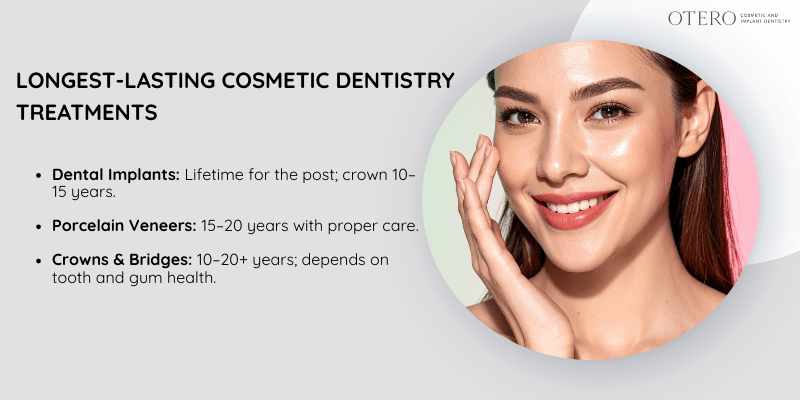
Dental implants replace both the tooth root and crown. A titanium or zirconia implant fuses to your jawbone, which makes it stable and resistant to shifting. The implant post often lasts a lifetime if you keep your gums healthy and avoid heavy smoking.
The visible crown on an implant may wear or need replacement every 10–15 years, depending on the material and biting forces. You can extend life by brushing twice daily, flossing, getting professional cleanings, and wearing a nightguard if you grind your teeth.
Benefits you’ll notice: improved chewing, no damage to adjacent teeth, and a more natural feel compared with removable options.
Porcelain Veneers and Their Lifespan
Porcelain veneers are thin shells bonded to the front of teeth to change shape, color, or alignment. High-quality porcelain resists staining and can look natural for 15–20 years with proper care.
Veneer lifespan depends on enamel preparation, bonding technique, and your habits. Avoid biting hard objects and limit staining foods and drinks. If you grind your teeth, a nightguard helps prevent chips and fractures.
If a veneer chips or wears, dentists usually replace the single affected veneer rather than the whole set. Veneers also protect the tooth surface and can be part of a full smile makeover when combined with crowns or whitening.
Crowns and Bridges: Long-Term Restorations
Crowns cover damaged teeth; bridges replace one or more missing teeth by anchoring to adjacent crowns. Materials like zirconia and porcelain-fused-to-zirconia give strength and a natural look, often lasting 10–20 years or more.
Longevity depends on the health of the underlying tooth and gum. Decay under a crown or gum disease around bridge abutments shortens lifespan. Maintain tight oral hygiene, attend checkups, and get cavities treated early to protect these restorations.
If a crown loosens or a bridge fails, your dentist can often repair or recement it, but sometimes replacement is needed. Crowns and bridges are common choices in smile makeovers because they restore function and create a lasting smile.
Shorter-Term Changes: Cosmetic Solutions That Need Upkeep
These treatments give fast, noticeable results but require ongoing care or touch-ups to keep looking their best. Expect repeated visits, good daily habits, and small repairs over time.
Professional Teeth Whitening: Duration and Maintenance
Professional teeth whitening usually brightens your teeth for months to a few years depending on your habits. If you drink coffee, tea, red wine, or smoke, the color will return faster. In-office whitening gives stronger, longer results than over-the-counter gels, but you may still need touch-ups every 6–18 months.
Protect your results with daily brushing and flossing and by using a whitening toothpaste twice a week. Your dentist can give you a take-home tray for occasional top-ups; using it every few months helps maintain tone. If sensitivity follows a session, use desensitizing toothpaste and talk to your dentist before repeating treatment.
Composite and Dental Bonding: How Long Do They Last?
Composite bonding repairs chips, gaps, and discolored spots using tooth-colored resin. Bonding usually lasts 4–8 years, but small repairs are common. The resin wears faster than porcelain, so routine polishing or re-bonding may be needed.
Avoid biting hard objects and limit staining foods to extend life. Your dentist can buff or add new composite in one visit if edges chip or color shifts. For bigger or longer-term restorations, ask about porcelain veneers or crowns; they last longer but cost more and may require more invasive prep.
Gum Contouring and Smile Design Longevity
Gum contouring reshapes the gum line to change tooth proportions and improve your smile. Results can be stable for many years if your gums stay healthy. Poor oral hygiene, gum disease, or aggressive brushing can alter the contour and cause recession.
Follow a strict home care routine: brush gently, floss daily, and attend professional cleanings every 3–6 months as recommended. If you have ongoing gum issues, your dentist or periodontist may recommend maintenance visits.
For complete smile makeovers, gum contouring often pairs with restorations like veneers or bonding to keep proportions consistent.
Get a beautiful smile that lasts. Schedule your appointment for cosmetic dentistry longevity today.
Longevity of Orthodontic and Alignment Procedures
Orthodontic work can move teeth permanently, but teeth often shift with time. The key is how treatment type, bite forces, and retainer use affect how long your new alignment stays put.
Invisalign Retention and Lasting Results
Invisalign straightens teeth using clear, removable trays you wear most of the day. You must follow the wear schedule, typically 20–22 hours daily, so teeth move to the planned positions. Skipping hours slows progress and can make final results less stable.
After active treatment, many Invisalign plans include a retainer phase. Retainers hold teeth while bone and gums adapt. Without retainers, small shifts commonly occur within months. For long-term success, expect to wear a removable retainer nightly for at least the first year, then several nights a week afterward.
Invisalign works well for mild to moderate crowding and spacing. Complex bite corrections sometimes need traditional braces or combined approaches. Talk to your orthodontist about a personalized retention plan and realistic expectations.
Traditional Braces Versus Clear Aligners
Traditional braces use brackets and wires to apply constant force to teeth. They excel at complex movements like rotating teeth or moving molars. Braces can produce stable results for severe misalignments when worn for the full prescribed time.
Clear aligners (Invisalign) offer similar outcomes for many cases but rely on patient compliance. If you remove trays too often, final alignment and stability can be compromised. Braces reduce that risk because they are fixed.
Both systems require retention to keep teeth stable. Material and method matter less than correct finishing touches, tightening, detailing, and monitoring. If your bite or jaw growth continues after treatment, you may need further adjustments regardless of the method used.
Role of Retainers in Maintaining Your Smile

Retainers prevent relapse by holding teeth while soft tissue and bone settle. You’ll get either removable retainers (Hawley or clear plastic) or fixed bonded retainers glued behind front teeth. Each has pros and cons: removable ones are easy to clean; bonded retainers require careful flossing.
Wear schedule matters. Many orthodontists ask for full-time wear for the first 3–12 months, then nightly wear indefinitely. Skipping nights increases the chance of rotation or spacing returning, often in the first two years.
Check retainers regularly for fit and damage. If a removable retainer cracks, replace it quickly. If a bonded retainer breaks, see your dentist to avoid unwanted movement. Proper retainer care is the single most important step to keep your smile enhancements lasting.
Factors That Influence How Long Your Results Last
Your daily care, what you eat and drink, and how often you see a dentist directly affect how long cosmetic work lasts. Small habits, like the toothpaste you choose or skipping check-ups, make big differences for veneers, bonding, and whitening.
Impact of Daily Oral Hygiene and Care Habits
You must brush twice a day and floss once daily to protect restorations and natural teeth. Use a soft-bristled brush and non-abrasive toothpaste to avoid scratching veneers, crowns, or composite bonding. Abrasive pastes wear away polish and can make surfaces dull or more likely to stain.
Rinse after acidic foods and wait 30 minutes before brushing to avoid enamel damage. If you grind your teeth, get a night guard; grinding can chip veneers and shorten the life of crowns. Replace your toothbrush every 3 months or after illness to keep bristles effective.
Track any changes, sensitivity, chips, or gaps, and tell your cosmetic dentist right away. Small repairs now can prevent bigger work later.
Effect of Lifestyle Choices and Diet
Limit coffee, red wine, tobacco, and dark sodas to reduce staining. Even high-acid foods like citrus and soda can erode tooth edges and affect bonded restorations. If you smoke, consider quitting; tobacco speeds discoloration and raises the risk of gum disease around restorations.
Avoid using teeth as tools. Biting nails, opening packages, or chewing ice can crack porcelain or chip the bonding. Choose softer snacks when you have new restorations and wear a mouthguard for sports to prevent sudden damage.
Hydrate and eat a balanced diet rich in calcium and vitamin D to support bone and gum health. Healthy gums keep crowns and veneers stable for longer.
Significance of Professional Dental Check-ups
Schedule check-ups and cleanings every 3–6 months based on your dentist’s advice. Professional cleanings remove stains and tartar that at-home brushing can miss, and they help preserve the appearance of veneers and crowns. Your cosmetic dentist will examine margins, bite, and gum health to spot problems early.
Ask your dentist to polish restorations with non-abrasive materials and to use fluoride treatments if you have sensitivity. If a repair is needed, prompt treatment often costs less and extends the life of your cosmetic work.
How to Maximize and Extend Your Cosmetic Dentistry Results
Keep your routine simple and consistent. Small daily steps and regular professional care protect work like veneers, crowns, and whitening so results last longer.
At-Home Care Best Practices
Brush twice a day with a soft-bristle brush and a non-abrasive toothpaste to avoid scratching veneers or worn enamel. Spend two minutes each session and use gentle, circular strokes.
Floss once daily to remove plaque at the gumline. If you have bridges or implants, use floss threaders or interdental brushes to clean under and around restorations.
Limit staining foods and drinks, coffee, red wine, dark sodas, and curry. When you do consume them, rinse with water or drink through a straw to reduce contact with front teeth.
Quit smoking and avoid tobacco products. Tobacco stains composite and porcelain and raises your risk of gum disease, which can undermine cosmetic work.
Use a night guard if you grind or clench. Grinding chips veneers and wears down crowns. Ask your cosmetic dentist about a custom guard.
Professional Maintenance and When to Seek Help
Schedule dental check-ups every six months or as your dentist recommends. During visits, dentists check margins, polish restorations, and catch wear before it becomes a problem.
Get professional cleanings to remove surface stains and tartar that brushing can’t reach. Cleanings help your cosmetic dental treatments look their best and protect gums.
Plan touch-ups for whitening when shade shifts. At-home trays or in-office boosters can restore brightness without replacing restorations.
Contact your cosmetic dentist right away if you notice chips, looseness, sensitivity, or gum swelling. Early repairs often mean simpler fixes and lower costs.
Discuss repair vs. replacement for older treatments. Crowns and veneers can last a decade or more, but may need replacement if fit or function changes.
Choosing the Right Cosmetic Dentist for Lasting Results
Pick a cosmetic dentist with before-and-after photos of cases like yours. Look for consistent results on veneers, crowns, or whitening to match your expectations.
Confirm the dentist uses high-quality materials, porcelain veneers, ceramic crowns, and stable composite resinsthat last longer. Ask about brands and lab partners they work with.
Check training and credentials. Memberships, continuing education in cosmetic dentistry, and specialization in restorative work show deeper experience.
Ask about maintenance plans and warranties. A clear follow-up plan and reasonable guarantees show the clinic stands behind its work.
Read patient reviews and ask to speak with past patients when possible. Real feedback helps you judge long-term satisfaction and the clinic’s handling of repairs.
Curious about which cosmetic dental treatments last longest in Wilmington NC. Learn how to protect your smile and schedule an appointment today.
Frequently Asked Questions
This section answers common timing and care questions about veneers, implants, whitening, bonding, crowns, and the main things that change how long they last. Expect clear time ranges and simple care steps you can use to keep results longer.
How long can I expect my veneers to last with proper care?
Porcelain veneers typically last about 10 to 15 years when you care for them well. Avoid biting hard objects, use a non-abrasive toothpaste, and see your dentist for checks and cleanings twice a year.
Longevity improves if your dentist uses high-quality porcelain and bonds them precisely. If you grind your teeth, ask about a night guard to prevent chips and early wear.
What is the average lifespan of dental implants?
Dental implants can last decades and often a lifetime with proper oral hygiene and regular dental visits. The implant body (titanium post) is very durable; the crown on top may need replacement after 10–20 years.
Avoid smoking and treat gum disease early to protect the bone around the implant. Schedule professional cleanings and checkups to monitor implant health.
Are teeth whitening treatments permanent, or will I need touch-ups?
Teeth whitening is not permanent; results usually last from six months up to two years depending on habits. Drinking coffee, tea, red wine, or smoking shortens the effect and may require more frequent touch-ups.
You can extend results by avoiding strong stains, using whitening toothpaste occasionally, and getting in-office or at-home touch-ups as your dentist recommends.
Can bonding on teeth deteriorate over time and how can I prevent it?
Yes, composite bonding typically lasts 5 to 10 years before it may chip, stain, or wear. You can prevent problems by avoiding biting hard items, cutting down on staining foods, and keeping good brushing and flossing habits.
If you notice rough edges or color change, see your dentist early; repairs are usually quick and less costly than full replacement.
What factors affect the longevity of my cosmetic dental work?
Material quality, your oral hygiene, and habits like grinding or smoking strongly affect how long results last. Regular dental exams and cleanings help spot early wear and let your dentist intervene before small problems grow.
The location of the work matters too: back teeth take more force and wear than front teeth. Also, how well your dentist places and bonds restorations changes their lifespan.
How often should I replace my dental crowns to maintain a fresh look?
Crowns commonly last 10 to 15 years, and high-quality crowns can often go 15 years or more with good care. Replace them sooner if you see cracks, looseness, or recurrent decay under the crown.
Keep up daily oral hygiene, avoid heavy biting on hard objects, and visit your dentist regularly so they can assess the crown and recommend replacement when needed.