

You want a full smile that lasts, not one that brings new problems years later. All-on-X dental implants often work well, but long-term issues can still happen if certain risks go unchecked. Most All-on-X failures happen due to infection, bone loss, bite stress, or poor planning, not because the system itself is flawed.
Success rates stay high, often above 90 percent over many years, yet small problems can grow when care slips or health changes. Issues like peri-implant infection and bone loss remain the most common causes of implant failure, as explained in research on dental implant failure causes and prevention.
You can lower your risk when you understand what affects long-term results. Factors like smoking, grinding your teeth, and skipping follow-up care raise the chance of trouble, even years later.
Knowing why implants fail helps you protect your investment and your comfort, as shown in studies on long-term dental implant success and failure rates.
Key Takeaways
- All-on-X implants usually fail due to preventable causes, not the design.
- Health habits and ongoing care play a major role in long-term success.
- Early signs and proper treatment can help avoid serious complications.
Understanding All-on-X Dental Implants and Failure Rates
All-on-X dental implants replace missing teeth using a small number of implants to support a full arch. To understand failure rates, you need clear definitions of the treatment, how success gets measured, and what long-term data shows.
What Are All-on-X Dental Implants?
All-on-X dental implants support a full set of upper or lower teeth with four to six implants placed in the jaw. Dentists often call these options all-on-4 or all-on-6 based on implant count.
You receive a fixed bridge that does not come out like dentures. The implants anchor into bone and hold the teeth in place during eating and speaking.
This approach differs from conventional dental implants, which usually replace one tooth at a time. Full-arch solutions reduce surgery time and cost for many patients. They also depend more on precise planning, bone quality, and bite balance, which can affect long-term outcomes.
Success Versus Failure: Defining Outcomes
Dentists define success by how well the implants integrate with bone and support daily function. A stable bite, low pain, and healthy gums matter just as much as implant placement.
Dental implant failure occurs when an implant loosens, fractures, or never bonds to bone. In All-on-X cases, one failed implant does not always mean the full bridge fails.
Common markers used to judge outcomes include:
- Implant stability over time
- Bone loss levels around the implant
- Ability to chew without pain
- No ongoing infection or inflammation
Understanding these points helps you evaluate real risk instead of relying on marketing claims.
Long-Term Survival Statistics
Research shows strong implant survival rates for All-on-X treatments when care and planning meet clinical standards. Large studies report survival ranges between 94% and 98% over 5 to 10 years.
One review of long-term outcomes found that full-arch implants remain stable even if a single implant fails, especially in all-on-6 designs.
The implant failure rate increases with smoking, poor bone quality, or skipped maintenance. Regular cleanings and bite checks play a direct role in long-term stability.
Get expert implant care in Hampstead, NC and protect your smile’s long-term stability.
Primary Causes of All-on-X Dental Implants Failure
All-on-X implant failure usually ties to how well the implant bonds to bone, how the gums and bone stay healthy over time, and how the prosthesis handles daily forces. Your habits and health also play a direct role in long-term results.
Early Failure Factors: Osseointegration Issues
Early implant failure happens when osseointegration does not occur. This means the implant never fully bonds with your jawbone. You may notice looseness or pain before the final teeth are placed.
Several factors raise this risk. Poor bone quality, overheating during surgery, and infection at the implant site matter most. Smoking and uncontrolled diabetes also slow healing and increase early implant failure rates, as explained in research on the causes of dental implant failure.
Key early risks include:
- Low bone density or volume
- Lack of implant stability
- Active infection
- Smoking during healing
When osseointegration fails, the implant usually needs removal to prevent further implant bone loss.
Late Failure Factors: Peri-Implantitis and Bone Loss
Late implant failure often develops months or years later. The most common cause is peri-implantitis, a type of peri-implant disease that leads to progressive bone loss around implants.
Bacteria build up around the implant when plaque control slips. This triggers inflammation, bleeding, and gradual bone loss. Over time, the implant loses support and may fail.
Risk factors you should watch closely:
- Poor oral hygiene
- History of gum disease
- Retained dental cement
- Limited keratinized mucosa width
Adequate keratinized mucosa helps protect implants by improving cleaning and reducing inflammation.
Mechanical Problems and Prosthetic Complications
Not all implant complications involve infection or bone. Mechanical stress plays a major role in All-on-X systems because fewer implants support a full arch of teeth.
Common prosthetic complications include:
- Screw loosening or fracture
- Cracked prosthetic teeth
- Implant fracture from overload
These problems often relate to bite forces, bruxism, or poor prosthetic design. Cantilevers and uneven force distribution increase failure risk. Studies of All-on-X implant failures and prevention show that controlling bite forces reduces long-term issues.
If you grind your teeth, wearing a nightguard helps protect both implants and the prosthesis.
Patient-Related Risks and Behaviors
Your daily habits strongly influence implant survival. Even well-placed implants can fail if maintenance falls short.
High-risk behaviors include:
- Smoking or vaping
- Skipping professional cleanings
- Poor oral hygiene at home
- Ignoring early warning signs
Medical conditions also matter. Diabetes, osteoporosis, and certain medications affect bone healing and stability. Inadequate follow-up care allows small issues to turn into late implant failure.
Consistent home care, routine dental visits, and early treatment of peri-implant disease give you the best chance to avoid implant failure and long-term bone loss.
Request a consultation to evaluate your implant health and long-term stability.
Risk Factors Affecting Long-Term Outcomes
Long-term All-on-X results depend on how well your bone supports the implants, how your health affects healing, and how daily habits load stress on the system. Problems often build slowly and can lead to a failed dental implant if risk factors go unchecked.
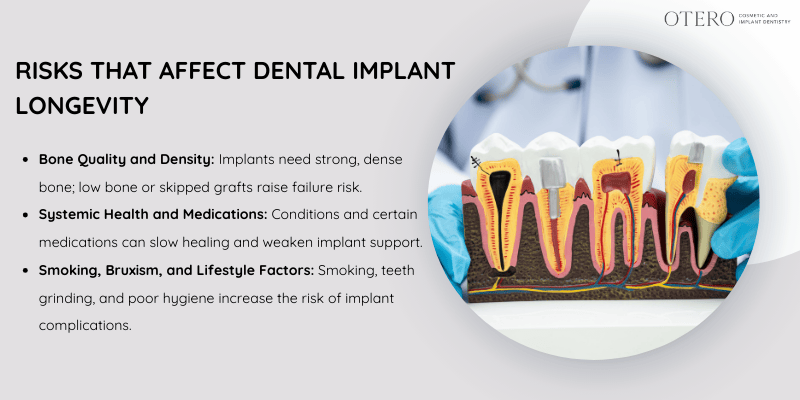
Bone Quality and Density
Your jaw must have enough bone quality and bone density to hold implants under daily bite forces. Soft or thin bone raises the risk of movement before full healing, which can stop proper bonding to bone.
Dentists often use bone grafting or bone augmentation when bone volume falls short. These steps rebuild support but add healing time and cost. In the upper jaw, a sinus lift may help create enough height for stable placement.
Some plans use short implants to avoid grafts. These can work well in select cases, but they still need good bone strength. Poor planning or skipping needed grafts increases long-term stress and failure risk.
Key bone-related risks include:
- Low bone density in the back of the upper jaw
- Skipping needed bone graft procedures
- Early loading before full bone healing
Impact of Systemic Health and Medications
Your overall health plays a direct role in implant survival. Conditions that affect blood flow or bone healing can slow recovery and weaken support over time.
A large retrospective study on factors affecting dental implant failure found links between implant loss and medical conditions, smoking, and restoration type, with poor bone bonding as a leading cause of removal. This matters for All-on-X because each implant carries more load.
Some medications change bone turnover or healing speed. These include certain osteoporosis drugs, steroids, and acid-reducing medicines. Your provider needs a full medication list before surgery.
Health factors that raise risk:
- Poorly controlled diabetes
- Bone metabolism disorders
- Long-term use of bone-altering drugs
Smoking, Bruxism, and Lifestyle Factors
Smoking reduces blood flow and slows healing around implants. This increases infection risk and bone loss, especially in the first year after surgery.
Teeth grinding, also called bruxism, adds heavy and repeated force. Over time, this stress can loosen screws, damage prosthetics, or overload bone. Night guards help, but only if you use them consistently.
Daily habits also matter. Poor oral hygiene allows plaque to build around implants, raising the risk of inflammation and bone loss. Skipping follow-up visits makes small issues harder to catch early.
Lifestyle risks to watch:
- Smoking or vaping
- Untreated grinding or clenching
- Missed maintenance visits and cleanings
Types of Implant Failures and Related Complications
All-on-X failures usually fall into three clear categories. Problems can start during oral surgery, develop in the prosthetic parts, or appear later as bone loss and gum inflammation around the implants.
Implant Placement and Surgical Challenges
Implant placement sets the foundation for long-term success. When an oral surgeon places implants at the wrong angle or depth, stress builds up during chewing. This stress can lead to loosening, pain, or early failure.
Low bone volume or density also raises risk. In these cases, surgeons may use zygomatic implants or pterygoid implants to gain stronger support. These advanced options demand skill and careful planning. Poor planning increases the chance of nerve injury, sinus issues, or unstable implants, which can later require implant removal.
Common surgical-related problems include:
- Poor implant position
- Lack of primary stability
- Bone not fusing to the implant surface
Prosthetic Failures and Material Breakage
The prosthetic bridge connects all implants and takes daily bite forces. When design or materials fall short, parts can crack or break. Screws may loosen, acrylic teeth may chip, or the entire bridge may fracture.
Bite imbalance plays a major role. Clenching or grinding adds extra force, especially when too few implants support the bridge. Studies on mechanical implant failures show higher complication rates when forces concentrate on limited points.
Typical prosthetic complications include:
- Loose or broken screws
- Cracked bridge materials
- Worn chewing surfaces
These issues may not mean total failure, but they often require repairs and repeated dental visits.
Peri-Implant Bone Loss and Gum Inflammation
Peri-implant bone loss often starts with gum inflammation. Bacteria collect around implants when cleaning slips or maintenance visits stop. This leads to swelling, bleeding, and gradual bone loss around the implant.
This condition, known as peri-implantitis, remains one of the most common long-term problems linked to implant failure.
Warning signs you may notice include:
- Red or tender gums
- Bleeding during brushing
- A bad taste or odor
Without early care, bone loss can progress and threaten the stability of the entire All-on-X system.
Management, Prevention, and Treatment of All-on-X Failures
You can lower the risk of long-term All-on-X problems when you spot early warning signs, follow a clear maintenance plan, and know your treatment options. Good care protects your implants, implant bridges, and the bone that supports full mouth dental implants.
Recognizing Signs of Implant Failure
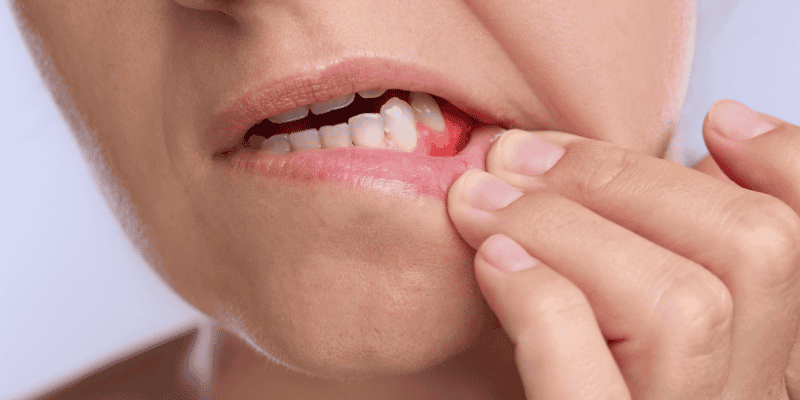
You should watch for changes that do not feel normal. Pain, swelling, bleeding gums, or a bad taste can signal infection around the implants. Loose teeth in a fixed bridge or clicking when you chew also matter.
Bone loss often starts without pain. Dentists call this peri-implantitis, which links to infection and plaque buildup. A detailed review of dental implant failure causes and management explains how inflammation and bone loss lead to failure if ignored.
Other signs include broken screws, cracked implant bridges, or pressure spots under the prosthesis. Early checks help protect dental implant rehabilitation and reduce the need for major repairs.
Preventive Care and Maintenance
Daily care plays a major role in long-term success. You should brush twice a day, clean under the bridge, and use tools made for implants.
Key habits that lower failure risk:
- Professional cleanings at least twice a year
- Home plaque control around implants and gums
- Wearing a nightguard if you grind your teeth
- Regular bite checks to prevent overload
Studies on All-on-X failures and prevention show that poor maintenance raises the risk of infection and mechanical problems.
Good planning also matters. Proper implant position, balanced bite forces, and routine follow-up visits protect full dentures and partial dentures supported by implants.
Options for Repair, Replacement, and Rehabilitation
Treatment depends on the problem and how early you act. Mild infection may respond to deep cleaning and medication. More advanced cases often need surgery.
Common treatment paths include:
| Problem | Typical Treatment |
| Gum infection | Cleaning, local or systemic antibiotics |
| Bone loss | Bone grafting and implant surface cleaning |
| Broken implant | Implant removal and replacement |
| Bridge damage | Repair or new implant bridge |
In some cases, your dentist may remove one failed implant and keep the rest. Others may need full dental implant rehabilitation or a temporary return to full dentures or partial dentures during healing. Guidance from All-on-X long-term care considerations supports this staged approach when stability is at risk.
Frequently Asked Questions
All-on-X implants usually last many years, but long-term problems can happen. Most issues link to oral care habits, health risks, planning mistakes, and material choices.
What factors contribute to the failure of All-on-X dental implants?
Implant failure often starts with infection, poor bone support, or excess bite pressure. Smoking and skipped dental visits also raise risk.
Studies show high success over time, with reported rates of 94% to 98% success for All-on-X implants over 10 years. Failures still happen when risk factors stack up.
How can improper oral hygiene affect the longevity of All-on-X implants?
Plaque buildup can inflame the gums around implants. This condition, called peri-implantitis, can lead to bone loss.
Daily brushing, flossing, and routine cleanings help protect the implant base. Skipping care shortens the lifespan of the prosthesis.
Are there any specific health conditions that increase the risk of All-on-X implant complications?
Uncontrolled diabetes can slow healing and raise infection risk. Gum disease history also increases complications.
Conditions that weaken bones or immune response may affect integration. Your dentist should review your full medical history before treatment.
How does the skill level of the dentist performing the All-on-X procedure impact success rates?
Precise planning and placement matter for long-term stability. Errors in angle or spacing can overload implants.
Experienced providers reduce common problems linked to planning and execution, such as those described in common All-on-X dental implant problems.
Can the quality of the materials used in All-on-X implants affect their durability?
High-grade titanium implants and strong prosthetic materials last longer. Low-quality components wear faster or fracture.
Material choice also affects fit and bite balance. Poor fit can stress implants and surrounding bone.
What are the signs that indicate potential issues with an All-on-X dental implant?
Persistent pain, swelling, or bleeding around the gums can signal trouble. A loose bridge or clicking feeling also matters.
Bad taste, pus, or sudden bite changes need quick attention. Early care often prevents more serious failure.