
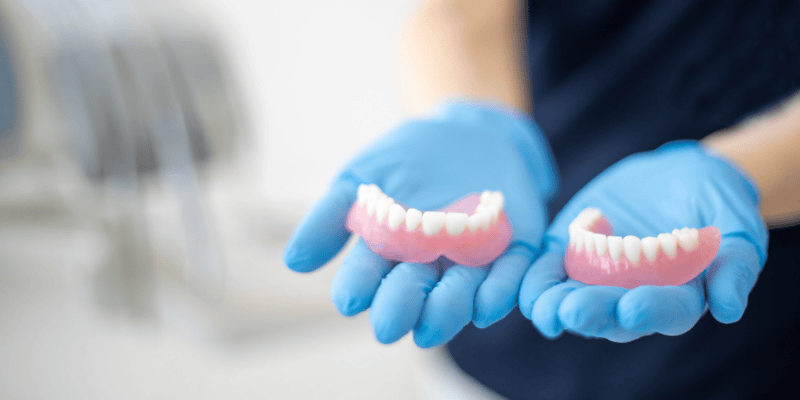
Slipping dentures can turn simple activities like eating, talking, or laughing into sources of anxiety and embarrassment. Many people wonder if their dentures will ever feel truly secure or if constant shifting is just something they have to accept.
The good news is that modern dentistry offers multiple solutions to keep dentures firmly in place.
The stability of your dentures depends on several key factors including the fit of your denture base, the shape and condition of your jaw ridge, proper tooth placement, and how well the dentures work with your mouth muscles.
Understanding what makes dentures stable helps you know when adjustments are needed and what options exist to improve your comfort. Well-fitting dentures can be secure, but many people need help from professional adjustments or additional products to prevent movement.
Whether you’re new to dentures or have been struggling with an unstable fit for years, knowing what affects stability gives you the power to find real solutions. From simple daily care techniques to advanced implant options, you have more choices than ever to achieve the confident, comfortable fit you deserve.
Key Takeaways
- Denture stability relies on proper fit, ridge shape, tooth position, and muscle coordination working together
- Lower dentures are typically harder to stabilize because they cover less surface area and compete with tongue movement
- Professional adjustments, proper maintenance, adhesives, and implant-supported options can all improve denture security
Schedule a denture stability consultation in Hampstead, NC for a secure, comfortable fit.
Understanding Denture Stability in Everyday Life
Denture stability affects everything from what you eat for breakfast to how confidently you speak with friends. When your dentures shift or move unexpectedly, daily activities become stressful instead of enjoyable.
Why Stability Matters for Daily Comfort
Stable dentures let you live without constantly thinking about your teeth. When your dentures fit properly, they stay in place during normal activities like talking, laughing, and eating. You don’t need to worry about embarrassing moments or unexpected slipping.
Denture stability is essential for functional success because it prevents unseating from horizontal forces acting on the denture. These forces come from your muscles during everyday movements. When your dentures lack stability, you might feel constant discomfort or soreness in your gums.
Unstable dentures create physical problems beyond just irritation. Your jaw muscles work harder to keep loose dentures in place, which can lead to headaches and facial pain. Poor stability also affects your ability to taste food properly since unstable dentures can cover more of your palate than necessary.
How Loose Dentures Affect Eating and Speaking
Eating becomes a challenge when you wear loose dentures. Foods that should be easy to chew, like bread or lettuce, suddenly feel difficult. You might find yourself avoiding certain foods entirely, which can impact your nutrition and enjoyment of meals.
Speaking clearly requires your dentures to stay put. Loose dentures click or slip when you talk, making certain sounds harder to pronounce. The letters S, T, and F become particularly tricky. You might notice yourself speaking more quietly or avoiding conversations to prevent embarrassment.
Common eating difficulties with unstable dentures:
- Food gets trapped under the denture base
- Uneven chewing on one side only
- Pain when biting down on harder foods
- Need to cut food into very small pieces
- Avoiding social meals with friends or family
Your confidence drops when denture wear causes these problems. Many people with loose dentures stop going to restaurants or social gatherings because they worry about their dentures moving at the wrong moment.
Real-World Signs of Poor Denture Fit
You can spot signs of poor denture fit through daily experiences. The most obvious sign is movement when you’re not doing anything with your mouth. Your dentures shouldn’t shift when you swallow or breathe normally.
Sore spots on your gums appear when dentures don’t fit correctly. These red or white patches develop where the denture rubs against soft tissue. You might also notice your gums bleeding after removing your dentures at night.
Watch for these signs of poor denture fit:
- Clicking sounds when you talk or eat
- Needing adhesive every single day
- Food particles slipping under the denture
- Difficulty keeping your mouth closed comfortably
- Changes in how your face looks
Poorly fitted dentures made years ago may fail to match your current bone and gum structure. Your jawbone changes shape over time, which means dentures that once fit well can become loose. Regular checkups help catch these changes early before they cause serious problems.
Get custom denture solutions in Hampstead, NC designed for real stability.
Key Factors That Determine Denture Stability
The fit between your dentures and oral tissues changes constantly due to natural bone loss and tissue shifts. Regular adjustments become necessary to maintain comfort and function as your mouth continues to change over months and years.
Importance of Proper Denture Fit
A proper denture fit creates retention through physical forces between your dentures and the underlying tissues. Your dentures need to match the exact shape of your gums to create a thin layer of saliva that acts like suction. This seal keeps your dentures in place during talking and eating.
When your dentures fit correctly, they distribute pressure evenly across your gums. This prevents sore spots and reduces movement during function. The borders of your dentures must extend to the right length without being too long or too short.
Ill-fitting dentures cause multiple problems. They slip during meals and conversations. They create friction that leads to gum irritation and painful sores. Poor fit also means your dentures cannot provide adequate retention and stability for normal activities.
Jawbone and Gum Changes: Bone Resorption
Your jawbone naturally shrinks after tooth loss through a process called bone resorption. This happens because your bone needs pressure from tooth roots to maintain its shape and density. Without teeth, your body reabsorbs the bone tissue.
The rate of bone loss varies from person to person. Some people lose bone quickly while others experience slower changes. Lower jaws typically lose bone faster than upper jaws. This makes stability in mandibular dentures more challenging to achieve.
As your bone shrinks, the ridge that supports your dentures becomes smaller and flatter. Your dentures no longer match the shape of your gums. The gap between your dentures and tissues grows larger, which reduces the seal and suction needed for stability.
Role of Denture Adjustments Over Time
Regular denture adjustments compensate for the ongoing changes in your mouth. Your dentist reshapes and refits your dentures to match your current tissue contours. These adjustments restore the close contact needed for proper retention.
Most people need adjustments every six to twelve months. You might need them more often if you experience rapid bone loss. Signs you need an adjustment include increased movement, clicking sounds, difficulty chewing, or sore spots on your gums.
Your dentist can reline your dentures by adding new material to the tissue-facing surface. This fills the gaps created by bone resorption. Without regular adjustments, even well-made dentures become loose and unstable over time.
Talk with a specialist about options for stable, secure dentures.
Types of Dentures and Their Impact on Stability
Different denture types offer varying levels of stability based on how they attach to your mouth and what materials they use. Your choice between full, partial, flexible, or temporary options directly affects how secure your dentures feel during daily activities.
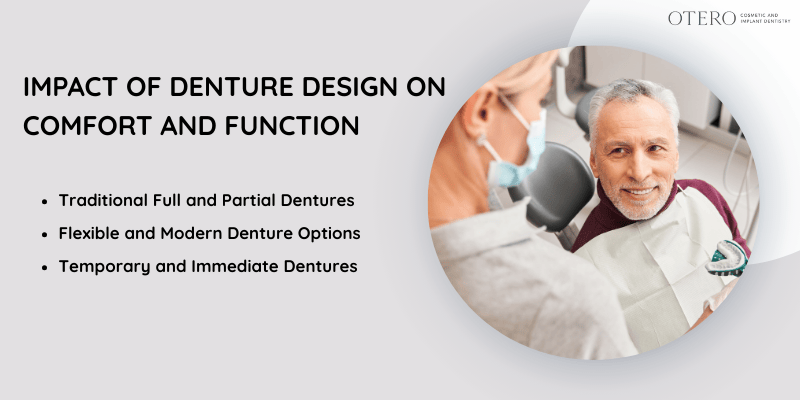
Traditional Full and Partial Dentures
Full dentures replace entire sets of teeth and rest directly on your gums, relying on suction and saliva to stay in place. They can become loose or slip while you’re eating or speaking because they don’t have a permanent anchor point.
Partial dentures fill in gaps where you’re missing some teeth. They use metal or plastic clasps that hook onto your remaining natural teeth for support.
This design gives partials more stability than full dentures since they have actual teeth to grip. However, both types may require adhesives for extra security.
Key stability factors:
- Suction strength from gum contact
- Quality of fit against your jaw ridge
- Amount of saliva your mouth produces
- Condition of remaining natural teeth (for partials)
Traditional dentures typically need adjustments every few years as your gums and bone structure change over time.
Flexible and Modern Denture Options
Flexible dentures use softer, more adaptable materials like nylon instead of rigid acrylic. These modern options bend slightly to match your mouth’s movements, which can reduce pressure points and improve comfort.
The flexible material allows these dentures to grip your gums more naturally. Many people find they don’t slip as much during eating or talking.
Modern denture designs also include improved suction features and better fit technology. Some use special materials that create a tighter seal against your gums without adhesives.
Advantages of flexible options:
- Better adaptation to mouth movements
- Less gum irritation
- Lighter weight than traditional acrylic
- No visible metal clasps
The trade-off is that flexible dentures can be harder to repair if damaged and may wear down faster than traditional hard acrylic versions.
Temporary and Immediate Dentures
Temporary dentures go into your mouth right after tooth extraction, letting you have teeth while your gums heal. Your dentist makes these before removing your teeth, so the fit isn’t as precise as permanent dentures.
These immediate dentures often slip more because they’re created based on impressions taken while your natural teeth were still present. Your gums shrink and change shape significantly during the first few months of healing.
You’ll need frequent adjustments and relining during this period to maintain basic stability. Most people use denture adhesive with temporary options.
After 3-6 months of healing, you’ll get permanent dentures that fit your new gum shape much better. Think of temporary dentures as a placeholder that keeps you from being without teeth rather than a long-term stability solution.
Advances in Implant-Supported Solutions
Dental implants have changed how dentures stay in place by anchoring them directly to your jawbone. These modern options give you better chewing power and eliminate the worry of dentures shifting during meals or conversations.
How Dental Implants Prevent Slipping
Dental implants work as artificial tooth roots that fuse with your jawbone through a process called osseointegration. This creates a solid foundation that your dentures attach to rather than relying on suction or adhesives.
The implants are made of titanium posts that your dentist surgically places into your jaw. Over 3 to 6 months, your bone grows around these posts and holds them in place. Once healed, your dentures snap onto or screw into these implants.
This direct connection means your dentures become part of your jaw structure. You get stability that eliminates unwanted movement and lets you bite with much more force. Studies show implant-supported dentures restore up to 90% of natural bite force, compared to only 20-30% with traditional dentures.
The implants also prevent bone loss in your jaw by providing the stimulation your bone needs to stay healthy.
All-on-4 and Overdentures: Enhanced Stability
All-on-4 is a technique where four implants support a full arch of replacement teeth. Your dentist places two implants straight up in the front of your jaw and two at angles in the back. This arrangement uses your existing bone efficiently and often lets you avoid bone grafting procedures.
Overdentures are removable dentures that clip onto two or more implants. You can take them out for cleaning but they stay secure while you wear them. This option costs less than fixed implant dentures but still gives you much better stability than traditional dentures.
Both options give you a more secure fit you can count on without messy adhesives. The All-on-4 approach works well if you want a permanent solution, while overdentures offer flexibility if you prefer something removable.
Comparing Implant vs. Conventional Dentures
The differences between implant dentures and conventional dentures affect your daily life in practical ways:
Stability and Comfort
- Implant-supported dentures stay firmly in place
- Traditional dentures can slip and cause sore spots on your gums
- You don’t need adhesives with implant options
Eating Ability
- Implant dentures let you eat harder foods like apples and steak
- Conventional dentures limit you to softer foods
- You get better nutrition when you can eat a wider variety of foods
Bone Health
- Implants preserve your jawbone and facial structure
- Traditional dentures allow bone loss over time, which changes your face shape
Longevity
- Implant-supported dentures last 20+ years
- Conventional dentures need replacement every 5-7 years
The upfront cost for implant dentures is higher, but they require fewer adjustments and replacements over time.
Everyday Strategies to Improve and Maintain Stability
Proper adhesive application, regular cleaning with non-abrasive products, and close monitoring of fit changes form the foundation of denture stability between professional visits. Small daily habits can prevent slipping and extend the functional life of your dentures.
Using Denture Adhesives Effectively
You only need a small amount of denture adhesive to create a strong seal. Three or four pea-sized dots are sufficient for a full day of wear.
Apply the adhesive to a completely dry denture surface. Moisture prevents proper bonding and reduces effectiveness. Place the dots evenly across the denture base, avoiding the edges where excess adhesive can squeeze out.
Press the denture firmly into place and hold for a few seconds. This allows the adhesive to spread and create an even seal. If you need large amounts of denture adhesive daily, your dentures likely need professional adjustment rather than more product.
Recognizing When Adjustments Are Needed
Your dentures require a professional denture adjustment when you notice persistent movement during eating or speaking. Clicking sounds when you chew indicate an unstable fit that won’t improve with adhesive alone.
Sore spots that develop on your gums mean pressure is distributed unevenly. Food particles consistently getting trapped under your dentures signal gaps that need filling. Pain while wearing dentures is never normal and requires immediate attention.
Your jawbone changes shape over time, especially in the first year after tooth removal. Schedule regular checkups even if your dentures feel comfortable to catch fit problems early.
Daily Denture Care and Cleaning Tips

Remove your dentures every night and soak them in water or denture cleaning solution. This prevents the acrylic from drying out and warping, which destroys the suction fit.
Use a soft brush and non-abrasive denture cleaner designed specifically for dentures. Regular toothpaste contains harsh abrasives that scratch the surface and create spaces where bacteria grow. These scratches also weaken the seal between your dentures and gums.
Rinse your dentures after every meal to remove food particles. Trapped debris breaks the vacuum seal and causes slipping. Handle your dentures over a folded towel or sink filled with water to prevent damage if you drop them.
How to Monitor for Signs of Wear
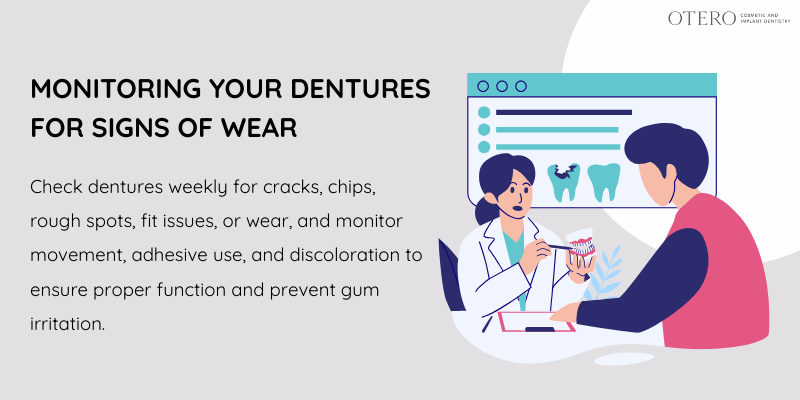
Check your dentures weekly for visible cracks, chips, or rough spots. Run your finger along all edges to feel for sharp areas that could irritate your gums. Hold your dentures up to light to spot hairline fractures before they become bigger problems.
Notice changes in how your dentures feel throughout the day. Increased movement during meals or difficulty pronouncing certain words indicates denture wear. Track how much adhesive you need daily, as increasing amounts suggest deteriorating fit.
Your denture teeth gradually wear down from chewing forces. Smooth, flat chewing surfaces reduce your ability to break down food properly. White spots or discoloration on the acrylic base can indicate material breakdown that affects retention.
Getting the Best Fit: Professional Help and Maintenance
Professional expertise makes the difference between dentures that work and dentures that feel like part of you. Regular maintenance with specialists who understand prosthetic dentistry keeps your dentures stable and comfortable for years.
When to See Your Prosthetic Dentistry Specialist
You should schedule an appointment if your dentures slip when you talk or eat. Sore spots that don’t go away after a few days also mean it’s time to call your dentist.
Signs your dentures don’t fit right include food getting trapped underneath or clicking sounds when you chew. Don’t wait until the problem gets worse.
Your jaw and gums change shape over time. This is especially true during the first year of wearing dentures.
A prosthetic dentistry specialist can perform a denture adjustment to fix minor issues. They reshape the base or adjust the bite to restore stability. Sometimes they recommend a reline procedure to fill in gaps caused by gum changes.
Benefits of Regular Dental Checkups for Denture Wearers
Most people need checkups every six months even with new dentures. Your dentist spots small problems before they become painful or expensive to fix.
Regular visits help catch gum infections early. The dentist also checks for changes in your mouth that affect how your dentures sit.
Well-fitting dentures need professional monitoring to maintain comfort and stability. Your dentist measures bone loss and tracks how your jaw shape changes.
These appointments give you a chance to ask questions about care and cleaning. Your dentist can show you better techniques for inserting and removing your dentures safely.
Role of Manufacturing and Customization
Quality manufacturing starts with accurate impressions of your mouth. Your dentist takes multiple molds to capture every detail of your gums and jaw.
Modern labs use precise measurements to create dentures that match your bite pattern. The manufacturing process includes several fittings to test stability before you receive the final product.
Custom dentures cost more than standard options but fit better from day one. Each tooth is positioned based on your facial structure and how you chew.
The materials matter too. Higher-quality acrylic resists wear and maintains its shape longer. Better materials mean fewer adjustments and replacements over time.
Frequently Asked Questions
Many denture wearers have similar concerns about keeping their dentures secure and comfortable. Understanding the mechanics of denture fit and maintenance helps you make informed decisions about your oral health.
How can I ensure my dentures stay in place throughout the day?
Proper denture fit starts with making sure your dentures cover the maximum area of your gums. Your dentures should feel snug against your gums without causing pain or sore spots.
You can improve stability by keeping your mouth moist throughout the day. Dry mouth reduces the natural suction that helps hold dentures in place.
Denture adhesive can provide extra security when you need it. However, if you find yourself relying on adhesive daily, your dentures may need adjustment.
The position of your tongue plays an important role in keeping your lower denture stable. When your tongue rests properly against the inner surface of your denture, it helps keep the denture seated.
What are the advantages and disadvantages of snap on dentures?
Snap-on dentures attach to dental implants placed in your jawbone. They offer much better stability than traditional dentures because they anchor directly to your jaw.
You can remove snap-on dentures for cleaning, which makes maintenance easier than permanent implants. They also feel more natural when you eat and speak.
The main disadvantage is cost. Snap-on dentures require surgery to place the implants, which increases the total expense significantly.
Some people experience discomfort during the healing period after implant placement. You’ll also need to visit your dentist regularly to check the attachment points.
What factors influence the stability and support of dentures?
The height and width of your jawbone ridge directly affects how stable your dentures will be. Wider, taller ridges provide better support than narrow or severely worn ridges.
The shape of your ridge matters too. Square, parallel-sided ridges offer greater resistance to movement than small, tapered ridges.
Your lower denture is usually harder to stabilize than your upper denture. The covered surface area is about half that of the upper arch, and your tongue sits against the denture floor.
The way your dentist shapes the polished surface of your denture affects stability. The surface should work with your cheek and lip muscles rather than against them.
Are there any foods I should avoid with slip-resistant dentures?
Sticky foods like caramel, taffy, and peanut butter can pull your dentures loose. These foods create strong suction forces when you chew.
Hard foods such as nuts, raw carrots, and hard candies can dislodge your dentures. They also risk damaging the denture material itself.
Very chewy foods like tough meats and bagels require extra force that can shift your dentures. Cut these foods into smaller pieces if you want to eat them.
Corn on the cob and whole apples need you to bite down with your front teeth, which can lift your dentures. Remove corn from the cob and slice apples before eating.
What is the average cost of getting snap-in dentures fitted?
Snap-in dentures typically cost between $6,000 and $30,000 for a full arch. The wide range depends on how many implants you need and where you live.
The implant surgery makes up a large portion of the cost. Each implant can cost $1,500 to $3,000 before adding the denture itself.
Your dental insurance may cover part of the denture cost but usually won’t cover the implants. Many dental offices offer payment plans to help manage the expense.
Additional costs include preliminary exams, imaging, and possible bone grafting. Some people need extra procedures if their jawbone has deteriorated too much.
How often do snap-in dentures require adjustments or replacements?
You should visit your dentist every six months for checkups on your snap-in dentures. These visits let your dentist check the attachment points and overall fit.
The attachment mechanisms typically need replacement every one to two years. These small parts wear down from daily use and lose their grip strength.
Your denture base may need relining every two to three years as your gums change shape. This process adds new material to the fitting surface for better contact.
Most snap-in dentures last five to ten years before needing complete replacement. Taking good care of them and maintaining your oral health helps them last longer.