

When you have a damaged tooth, your dentist has two main tools to save it: fillings and crowns. These treatments don’t compete with each other but work as a team to fix different levels of tooth damage.
Fillings handle small chips and cavities, while crowns protect severely damaged teeth, and dentists often use both treatments together to completely restore your tooth’s function and appearance.
For example, if you have a large break, your dentist might use a filling material to build up the tooth to hold the crown.
Understanding how these treatments work together helps you make better choices about your dental care. The right combination can save your natural tooth and prevent more serious problems down the road.
Key Takeaways
- Fillings repair minor damage while crowns protect severely damaged teeth from further harm
- Dentists often combine both treatments to rebuild and strengthen badly damaged teeth
- Proper care of restored teeth helps them last many years and prevents future dental problems
When to Use Fillings Versus Crowns
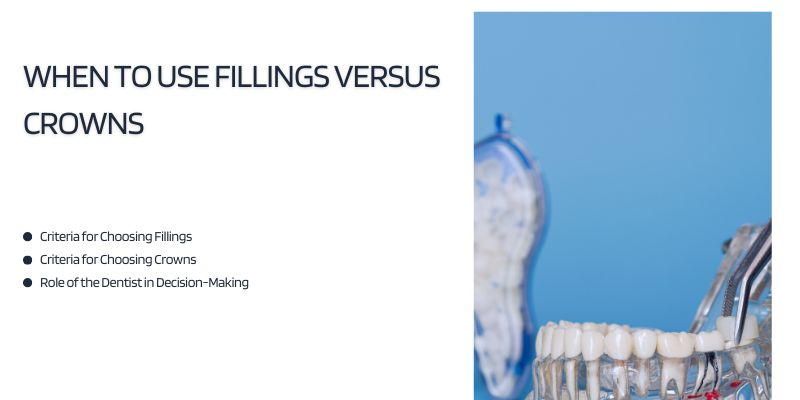
The choice between fillings and crowns depends on how much damage your tooth has and what type of protection it needs. Your dentist will look at the size of the cavity, the tooth’s strength, and your long-term dental health goals.
Criteria for Choosing Fillings
Dental fillings work best for minor cavities or small areas of decay. Your dentist will recommend a filling when most of your natural tooth structure remains healthy and strong.
Size matters most when choosing fillings. If the cavity takes up less than one-third of your tooth, a filling can restore it properly.
Fillings preserve more of your original tooth compared to crowns. This makes them a better choice for younger patients who want to keep as much natural tooth structure as possible.
Best situations for fillings:
- Small to medium cavities
- Surface decay on tooth edges
- Minor chips or cracks
- When you want to save healthy tooth material
- Single-visit treatment needs
Your tooth must have enough strong structure left to support the filling material. If too much tooth is missing, the filling might fall out or break.
Don’t let tooth damage worsen. Schedule an appointment with our Wilmington, NC team today and explore the best treatment options for restoring your smile.
Criteria for Choosing Crowns
Dental crowns become essential when tooth structure is severely compromised. You need a crown when a filling cannot provide enough strength or protection.
Large cavities that affect more than half your tooth require crowns. Crowns are commonly used for molars and teeth with large cavities.
Crowns help after root canal treatments because these teeth become weaker and need extra protection.
When you need crowns:
- Cavities larger than one-half the tooth
- Cracked or broken teeth
- After root canal procedures
- Worn down teeth from grinding
- Cosmetic improvements for front teeth
Crowns can protect severely weakened and damaged teeth and help prevent tooth loss. They last longer than fillings, making them better for long-term tooth restoration.
Role of the Dentist in Decision-Making
Your dentist plays the key role in choosing between fillings and crowns during your dental check-up. They examine your tooth structure using X-rays and visual inspection to determine the best treatment.
Professional assessment includes:
- Measuring cavity size and depth
- Checking remaining healthy tooth structure
- Looking at your bite and jaw alignment
- Considering your age and dental history
Dentists in restorative dentistry have special training to evaluate which treatment will last longest. They consider how much chewing force your tooth handles and whether you grind your teeth at night.
Your dentist will explain both options and help you understand the benefits of each choice. They might show you pictures or models to help you see the difference between treatments.
Factors dentists consider:
- Location of the damaged tooth
- Your oral hygiene habits
- Budget and insurance coverage
- Time available for treatment
Regular dental check-ups help catch problems early when fillings are still possible. Waiting too long often means you need a crown instead of a simpler filling.
How Fillings and Crowns Work Together to Restore Teeth

Dentists often combine fillings and crowns to fix badly damaged teeth that need more help than one treatment can provide. This teamwork approach lets your dentist save teeth that might otherwise need to be removed.
Combined Approach for Extensive Decay
When you have deep cavities, your dentist might use both treatments to rebuild your tooth. First, they remove the decayed parts and place a dental filling to restore the damaged areas.
The process works like this:
- Remove all decay from your tooth
- Fill hollow spaces with composite material
- Shape and smooth the filling
- Place a crown over the entire tooth for protection
Large cavities often weaken your tooth structure. A filling alone might not be strong enough to handle biting and chewing forces.
Your dentist places a dental crown over the filled tooth to add strength. This combination gives you back a tooth that looks natural and works properly.
Restoring Teeth After Root Canal Treatment
Root canal treatment removes infected pulp from inside your damaged teeth. After this procedure, your tooth needs both a filling and crown to work again.
Your dentist fills the empty space inside your tooth with a special rubber material. Then they seal the tooth with a temporary filling to protect it between visits.
A permanent crown comes next. Root canal treatment removes the nerve, which makes your tooth more likely to break.
The crown acts like a helmet for your treated tooth. It prevents cracks and lets you eat normally without worry.
Temporary vs Permanent Solutions
Your dentist uses temporary crowns while making your permanent crown. During this time, a filling protects the prepared tooth underneath.
Temporary phase includes:
- Temporary crown covers your tooth
- Filling seals any gaps
- Protection lasts 2-3 weeks
Permanent phase provides:
- Custom-made crown fits perfectly
- Strong bond with underlying filling
- Long-lasting repair that can last many years
You need to be gentle with temporary crowns since they come off more easily. Avoid sticky foods and chew on the other side of your mouth when possible.
The permanent crown bonds much stronger to your tooth and filling. This final step completes the repair and gives you back full chewing power.
Ready to restore your damaged teeth with crowns and fillings? Book your consultation with our Wilmington, NC specialists and find out the best solution for your needs.
Long-Term Care for Restored Teeth
Taking care of teeth with crowns and fillings requires daily attention and professional monitoring. The right habits and regular dental visits help your restorations last 10-15 years or longer.
Maintaining Dental Restorations
Your restored teeth need special attention to stay strong and healthy. Dental crowns act like protective shields over damaged teeth, but they still need proper care.
Avoid chewing on hard objects like ice, pens, or fingernails. These can crack or chip your restorations. Don’t use your teeth as tools to open packages or bottles.
Foods to avoid:
- Hard candies
- Sticky caramels
- Ice cubes
- Popcorn kernels
- Nuts with shells
If you grind your teeth at night, wear a custom mouthguard. Grinding puts extra pressure on your restorations and can cause them to fail early.
Watch for warning signs like sensitivity, pain when chewing, or rough edges. These might mean your restoration needs attention.
Replace your toothbrush every three months. Old brushes don’t clean as well and can harbor bacteria around your restorations.
Importance of Regular Dental Visits
Regular dental check-ups help catch problems before they become serious. Your dentist can spot issues with your restorations that you might miss.
Professional cleanings remove plaque and tartar buildup around crowns and fillings. This buildup can cause gum disease and new cavities.
Most people need a dental check-up every six months. Some patients with multiple restorations might need visits every three to four months.
During your visit, your dentist will:
- Check the fit of your crowns
- Look for cracks in fillings
- Examine your gums around restorations
- Take X-rays to check for decay underneath
Early detection saves money and prevents pain. A small problem caught early costs much less than waiting until you feel pain.
Your dentist can also polish your restorations to keep them looking natural. This helps them blend in with your other teeth.
Oral Hygiene Tips
Good oral health starts with brushing twice daily with fluoride toothpaste. Fluoride toothpaste helps prevent new cavities around your restorations.
Use a soft-bristled toothbrush and gentle circular motions. Brush for two full minutes, paying extra attention to the gum line around crowns and fillings.
Daily flossing is crucial for restored teeth. Food particles and bacteria can get trapped where your restoration meets your natural tooth.
Use these flossing techniques:
- Thread floss carefully under bridges
- Don’t snap floss against your gums
- Consider water flossers for hard-to-reach areas
Rinse with an antibacterial mouthwash after brushing and flossing. This helps kill bacteria that cause gum disease and bad breath.
Pay attention to the margins where your crown or filling meets your tooth. These areas collect plaque easily and need extra cleaning.
Consider using an electric toothbrush. Studies show they remove more plaque than manual brushing, especially around dental work.
Frequently Asked Questions
Can fillings be used along with crowns to repair a tooth?
Yes, fillings and crowns often work together during dental treatment. If a break or chip has left a large piece of the tooth missing, your dentist can use a filling material to build up the tooth to hold the crown.
This process is called “building up” the tooth structure. Your dentist adds filling material to create a strong foundation before placing the crown.
The filling acts as support while the crown provides the outer protection. This combination gives you the best chance of saving a badly damaged tooth.
What are the signs that a filling needs to be upgraded to a crown?
Several warning signs suggest your filling may need crown protection. Large fillings that take up more than half of your tooth often need crown support.
Cracks around existing fillings indicate the tooth structure is weakening. Pain when biting down can mean your current filling isn’t providing enough protection.
A dental crown may be needed to cover and support a tooth with a large filling when there isn’t a lot of tooth left. Your dentist will check for these issues during regular visits.
How do crowns and fillings differ in terms of durability and protection?
Dental crowns last between five and 15 years on average. They provide complete coverage and protection for your entire tooth.
Fillings typically last 7 to 10 years but offer limited protection. They only cover the specific area where decay was removed.
Crowns handle heavy chewing forces better than fillings. They distribute pressure across your entire tooth instead of concentrating it in one spot.
Are there specific conditions where a crown is more appropriate than a filling?
Crowns are tooth-shaped caps that protect a tooth that’s weak or has experienced major damage. You may need one if you lose a large tooth fragment.
Root canal treated teeth almost always need crowns for protection. These teeth become brittle without their inner nerve and blood supply.
Teeth with multiple large fillings benefit from crown protection. Crowns prevent further cracking and breaking of weakened tooth structure.
How does a dentist decide whether to use a crown or a filling for a damaged tooth?
Your dentist considers the size and location of the damage first. Small cavities and chips usually need only fillings for repair.
The amount of healthy tooth structure remaining is crucial. Most dentists recommend crowns for cracked teeth to prevent the crack from worsening.
Your dentist also looks at your bite pressure and grinding habits. Heavy chewing forces may require crown protection even for smaller repairs.
What is the process for getting a crown after having a filling?
Preparing a tooth for a crown usually requires two visits to the dentist. Your dentist may add filling material to build up damaged areas first.
The tooth gets reshaped and an impression is made during your first visit. You receive a temporary crown while the permanent one is made.
Your permanent crown gets cemented in place during the second visit. The entire process typically takes two to three weeks from start to finish.