
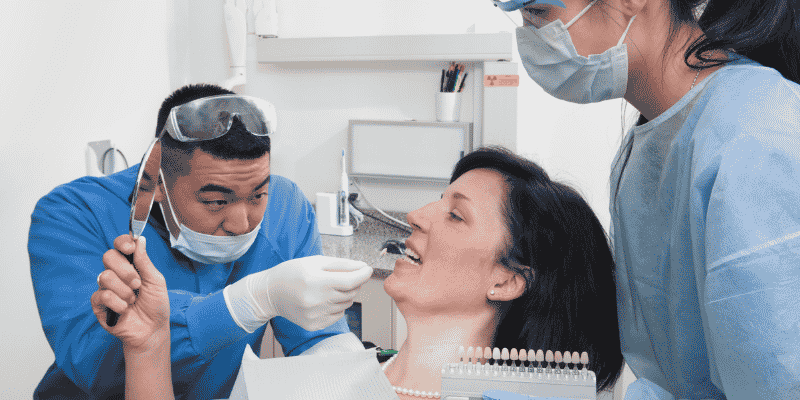
Planning a smile makeover can feel overwhelming when you’re trying to figure out which treatments to do first. If you want both veneers and whiter teeth, the order matters more than you might think.
Scheduling your veneer consultation before any whitening treatment helps your dentist create a complete plan that matches veneers to your brightest possible tooth shade.
Veneers before teeth whitening is the standard approach because veneers can’t be whitened once they’re placed on your teeth.
When you meet with your dentist first, they can tell you exactly when to whiten and how bright to go based on your goals.
This prevents costly mistakes like ending up with veneers that don’t match your natural teeth.
Getting the consultation first saves you time and money. Your dentist will check your oral health, discuss realistic shade options, and create a timeline that puts each treatment in the right order.
This planning step makes sure you don’t waste money on whitening treatments that might not even be necessary for your specific situation.
Key Takeaways
- A veneer consultation first allows your dentist to plan the whitening timing and shade that works best for your smile goals
- Veneers cannot be whitened after placement because porcelain and composite materials don’t respond to bleaching agents
- Proper treatment sequencing prevents color mismatches between your veneers and natural teeth that would require expensive veneer replacement
Table of Content
- The Relationship Between Veneers and Whitening Treatments
- Benefits of Scheduling Your Veneer Consultation Before Whitening
- Potential Pitfalls of Whitening After Veneer Placement
- Best Practices for Planning Your Smile Makeover
- Caring for Veneers and Maintaining Long-lasting Results
- Frequently Asked Questions
The Relationship Between Veneers and Whitening Treatments
Veneers and teeth whitening work on completely different principles, which is why understanding their interaction matters for your cosmetic dentistry plan.
Natural teeth respond to bleaching agents, but veneer materials stay permanently locked at their original shade.
How Veneers and Teeth Whitening Differ
Teeth whitening uses bleaching agents like hydrogen peroxide that penetrate your natural tooth enamel.
Your natural teeth have tiny pores that allow these agents to break down stains and lighten color from within.
Veneers work differently because they’re thin shells bonded to your tooth surface. Instead of lightening existing color, they completely cover your natural tooth with a new shade.
Think of it like painting a wall versus cleaning a stain.
Professional whitening changes what’s already there. Veneers replace what people see. This fundamental difference affects how you should plan your treatment timeline.
The Science Behind Porcelain and Composite Veneers
Porcelain veneers have a smooth, non-porous surface that mimics natural enamel’s translucent quality.
This dense structure makes them highly stain-resistant but also means bleaching agents can’t penetrate them.
Composite veneers use resin material that’s slightly more porous than porcelain. While they may pick up surface stains from coffee or wine over time, they still won’t lighten from whitening treatments.
Key Material Differences:
- Porcelain: More durable, better stain resistance, completely non-reactive to whitening
- Composite: More affordable, easier to repair, won’t lighten but may accumulate surface stains
Both materials maintain their original color permanently once your dentist places them.
Why Whitening Does Not Affect Existing Veneers
Whitening treatments only work on natural tooth enamel because the bleaching chemicals need porous material to penetrate. Your veneers, crowns, and bonding materials don’t have this porous structure.
When you try whitening after getting veneers, only your natural teeth will change color. Your veneers stay exactly the same shade they were when placed.
This creates a two-tone effect where your real teeth look bright white but your veneers appear darker by comparison.
If your veneers look dull or stained, professional cleaning might remove surface buildup. But veneers cannot be whitened to a lighter shade.
Replacement becomes your only option if you want brighter veneers after they’re already bonded to your teeth.
Benefits of Scheduling Your Veneer Consultation Before Whitening
Getting your veneer consultation first helps your cosmetic dentist create a complete plan for your smile makeover. This approach prevents color mismatches and gives you better long-term results.
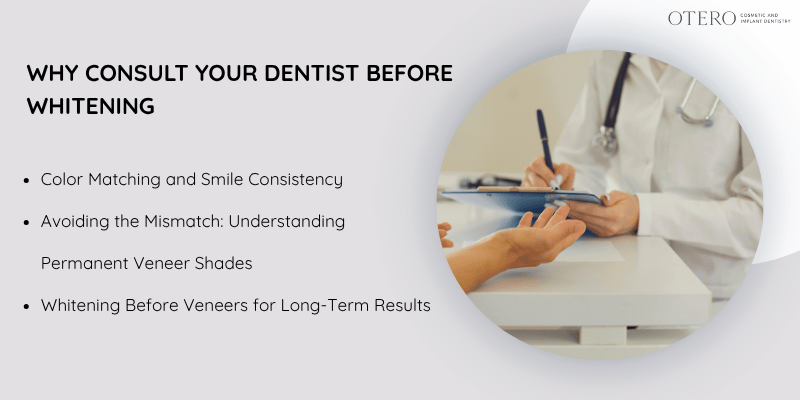
Color Matching and Smile Consistency
Your cosmetic dentist needs to see your natural tooth color before any whitening happens. This lets them plan your smile transformation with accurate information about your starting point.
When you meet with your dentist first, they can recommend the right shade for your dental veneers based on how white your other teeth can become.
Whitening gel works differently on everyone’s teeth. Some people’s teeth get very white, while others only lighten a few shades.
Your dentist will look at your natural teeth and help you pick a veneer shade that works with your whole smile. They consider your skin tone, facial features, and what you want from your cosmetic smile makeover.
This planning stage is important for aesthetic dentistry. If you whiten first without professional guidance, your dentist has to match veneers to already-whitened teeth.
That might not be the best shade for your full smile.
Avoiding the Mismatch: Understanding Permanent Veneer Shades
Veneers don’t change color after they’re placed. This is the most important thing to understand about veneers and whitening.
Porcelain veneers are stain-resistant and maintain their original shade. If you get veneers that match yellow or stained teeth, those veneers will stay that shade forever. Your natural teeth might get whiter later, but your veneers won’t.
This creates a problem many people face after getting veneers too soon.
Your natural teeth can be whitened multiple times throughout your life, but veneers are a permanent solution that doesn’t respond to whitening treatments.
Here’s what happens with different timing:
- Veneers first, whitening after: Your veneers stay the original shade while surrounding teeth get whiter
- Consultation first, then whitening, then veneers: Everything matches from day one
The consultation helps you avoid spending money on whitening veneers later, which isn’t actually possible with traditional whitening methods.
Whitening Before Veneers for Long-Term Results
Whitening your natural teeth before getting veneers means your smile stays consistent for years. Your dentist can match your veneers to your whitest possible tooth shade.
When you need touch-up whitening in the future, your natural teeth will lighten back to match your veneers. This keeps your smile looking uniform every time you whiten.
If you skip whitening before veneers, you face two choices later. You can live with teeth that don’t match, or you can replace your veneers to match newly whitened teeth.
Replacing veneers costs thousands of dollars.
The consultation appointment is when your dentist maps out this timeline. They might recommend professional whitening sessions before veneer placement.
Some patients need just one whitening treatment, while others benefit from multiple sessions.
Your dentist will also explain how to maintain your results after your esthetic dentistry work is complete. This includes which products are safe for both natural teeth and veneers.
Potential Pitfalls of Whitening After Veneer Placement
Whitening treatments performed after veneers are already in place create several challenges that can compromise your smile’s appearance.
The most common issues include mismatched tooth colors, wasted money on ineffective treatments, and potentially needing costly veneer replacements.
Two-Tone Smiles: The Risk of Color Mismatch
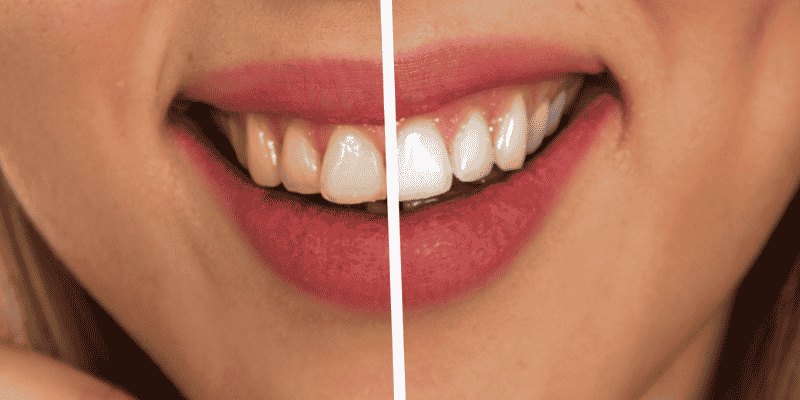
When you whiten your natural teeth after getting veneers, you create an obvious color difference between your treated and untreated teeth.
Your natural teeth will become several shades lighter while your veneers stay exactly the same color they were when placed.
This two-tone effect is especially noticeable if you only have veneers on your front teeth. The veneers will appear yellower or darker compared to your newly whitened natural teeth beside them.
The contrast becomes more visible when you smile or talk.
Common pitfalls in whitening effectiveness on veneers include this exact color mismatch problem.
You might also notice uneven shading if you have dental crowns or bonding on other teeth, as these materials also resist whitening agents just like veneers do.
Why Veneers and Dental Crowns Resist Whitening Agents
Porcelain veneers and crowns are made from non-porous ceramic materials that don’t absorb whitening chemicals.
The bleaching agents in whitening products work by penetrating natural tooth enamel to break down stains.
Since porcelain is completely sealed during manufacturing, these agents simply can’t get inside the material to change its color.
The bonding cement and dental adhesive used to attach veneers to your teeth also create a protective barrier.
This bonding agent prevents any substances from passing through to alter the veneer’s appearance.
While professional cleanings can remove minor surface staining from food or drinks, you can’t whiten veneers like natural teeth.
The same resistance applies to composite bonding and dental crowns on your other teeth.
When Veneer Replacement Becomes Necessary
If you whiten your teeth after veneer placement and can’t tolerate the mismatched colors, veneer replacement becomes your only real option.
You’ll need to have your existing veneers removed and new ones made in a lighter shade to match your whitened natural teeth.
This process requires removing the old bonding cement, preparing your teeth again, and creating completely new custom veneers.
The cost typically equals what you paid for your original veneers, essentially doubling your investment.
Your dentist will need to carefully match the new veneer shade to your whitened teeth for a cohesive smile transformation.
The replacement process also takes several weeks from start to finish. You may need to wear temporary veneers while your permanent ones are being crafted in the lab.
Best Practices for Planning Your Smile Makeover
A successful smile makeover requires careful planning and proper treatment sequencing. Getting procedures in the right order protects your investment and creates better results.
Sequencing Smile Treatments for Health and Aesthetics
Your dentist should address oral health issues before any cosmetic work begins. This means treating cavities, replacing old fillings with new fillings, and ensuring your gum health is stable.
Dental restorations like crowns or bridges need to be completed first since they affect the overall color scheme of your smile.
If you have missing teeth, implants should be placed early in the smile makeover process. They take months to heal properly before receiving final crowns.
A professional dental cleaning removes buildup along your gumline and provides a clean foundation for cosmetic treatments.
Teeth whitening comes next, but only after restorative work is done. Your natural teeth need to reach their whitest shade first.
Then veneers, bonding, or other cosmetic work can be color-matched to your brightened smile. Any contouring or reshaping of your teeth happens during the preparation phase for veneers.
The Importance of a Personalized Treatment Plan
Every smile is different, which is why a veneer consultation creates a custom roadmap for your needs.
Your dentist evaluates gaps between teeth, alignment issues, and tooth discoloration to determine which treatments will work best.
Some patients only need whitening and minor adjustments. Others require a combination of orthodontics, veneers, and restorations.
Your treatment plan should include realistic timelines and explain how each procedure builds on the previous one. This prevents wasting time or money on treatments in the wrong order.
Timing At-Home vs. Professional Whitening
Professional whitening at your dental office produces faster, more dramatic results than at-home whitening products. In-office treatments can brighten your teeth several shades in just one visit.
Your dentist uses stronger bleaching agents and professional polishing techniques.
At-home whitening kits work more gradually over several weeks. They’re useful for maintaining results after professional treatment.
If you’re getting veneers, complete all whitening before your consultation so your dentist can match the veneer shade to your brightest teeth.
Never use at-home whitening products after getting veneers since they won’t change the porcelain color but will lighten your natural teeth, creating a mismatched appearance.
Caring for Veneers and Maintaining Long-lasting Results
Once you have veneers, proper daily care keeps them looking natural and prevents damage.
The right brushing habits, careful product choices, and knowing when replacement is needed all help your veneers last 10 to 15 years or longer.
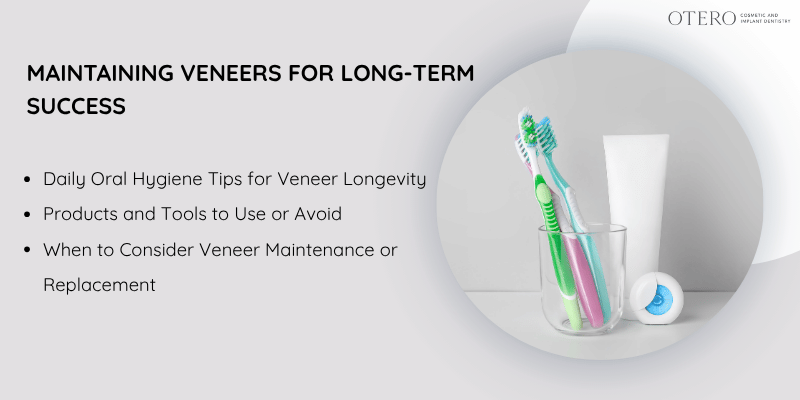
Daily Oral Hygiene Tips for Veneer Longevity
Brush your veneers twice a day using a soft-bristled toothbrush. Hard or medium bristles can scratch the surface over time.
You should also floss once daily. Many people worry that flossing might loosen veneers, but veneers are bonded with strong dental cement.
Flossing actually protects them by preventing cavities and gum problems around the edges where your natural tooth meets the veneer.
Be gentle around the gum line. Veneers themselves don’t decay, but the teeth and gums underneath them can. Keeping these areas clean prevents discoloration at the edges and supports long-term veneer stability.
If you grind your teeth at night, wear a custom night guard. Grinding puts excessive pressure on veneers and causes chips or cracks. A night guard protects your investment and reduces jaw pain.
Products and Tools to Use or Avoid
Choose non-abrasive toothpaste specifically. Abrasive toothpaste creates tiny scratches on veneer surfaces that make them look dull over time.
Avoid whitening toothpaste and any products containing bleaching gel. Professional teeth whitening treatments and at-home whitening products don’t work on dental veneers.
These products only affect natural tooth enamel, which means your veneers will stay the same shade while your natural teeth change color.
Products to use:
- Non-abrasive toothpaste without whitening agents
- Soft-bristled toothbrushes
- Water flossers for gentle cleaning
- Regular dental floss
Products to avoid:
- Whitening toothpaste
- Charcoal-based toothpaste
- Any bleaching gel or strips
- Hard or medium bristle brushes
When to Consider Veneer Maintenance or Replacement
Most veneers need replacement after 10 to 20 years. Even with excellent care, the bonding material and porcelain eventually wear down.
Watch for these warning signs that indicate it’s time for replacement:
- Visible chips or cracks on the surface
- Gaps forming at the edges
- Discoloration that professional polishing can’t fix
- Sensitivity or discomfort under a veneer
- A veneer feeling loose or unstable
Visit your dentist every six months for checkups.
During these appointments, your dentist polishes your veneers, checks the bond strength, examines for tiny damage, and takes X-rays if needed to spot problems like cavities forming at the edges.
Regular visits often extend veneer life by several years because problems get caught early.
Frequently Asked Questions
Most people wonder about the right order for cosmetic treatments and how their choices now will affect their smile later.
These questions cover the timing, planning, and practical steps involved in coordinating whitening with veneers.
Should I schedule a veneer consultation before booking a teeth whitening appointment?
Yes, you should schedule your veneer consultation first.
Your dentist needs to evaluate your teeth and discuss your goals before you start any whitening treatment.
During this consultation, they’ll create a treatment plan that includes the right sequence for whitening and veneers.
If you whiten before consulting with your dentist, you might end up needing to whiten again or wait longer than necessary. Your dentist will tell you exactly when to whiten based on your specific veneer plan.
Will whitening my teeth affect how my veneers will look or match later?
Whitening your natural teeth will directly affect how your dentist matches your veneers.
Dentists create veneers to match the current shade of your teeth. If you whiten after getting veneers, your natural teeth will lighten but your veneers will stay the same shade. This creates an uneven look.
When you whiten before getting veneers, your dentist can match the veneers to your new brighter shade. This gives you a uniform smile that looks natural.
Can veneers be whitened, or will they stay the same shade permanently?
Veneers cannot be whitened and will stay the same shade permanently.
Whitening products only work on natural tooth enamel. Materials like porcelain and composite resin don’t have the porous structure that allows bleaching agents to work. Once a veneer is made, its color is locked in.
If you want lighter veneers later, you’ll need to replace them completely. This is why planning your color before veneers matters so much.
How do dentists choose the right veneer shade if my teeth haven’t been whitened yet?
Dentists match veneers to whatever shade your teeth are at the time of fabrication.
If your teeth haven’t been whitened yet, the dentist will choose a shade based on your current tooth color. This works fine if you’re happy with your current shade.
But if you want a brighter smile overall, you’ll need to whiten first.
During your consultation, your dentist will ask about your whitening goals. They’ll help you decide whether to whiten and then wait about two weeks for your tooth color to stabilize before taking final shade measurements.
If I whiten first, could I need to re-whiten or adjust my veneer plan afterward?
You won’t need to re-whiten or adjust your veneer plan if you follow your dentist’s timeline.
After whitening, your dentist will wait 10 to 14 days before finalizing your veneer shade. This waiting period lets your teeth rehydrate and settle into their true post-whitening color.
Once your veneers are placed, they’ll match your whitened teeth perfectly. You might want to do touch-up whitening years later to keep your natural teeth bright, but your veneers will maintain their original shade.
What should I expect during a veneer consultation when I’m also considering teeth whitening?
Your dentist will examine your teeth, discuss your smile goals, and create a customized treatment timeline.
They’ll look at your current tooth shade and any existing dental work. You’ll talk about how white you want your smile to be.
Your dentist will then explain whether you should whiten first and how long to wait between treatments.
Most dentists recommend professional whitening before veneers because it gives controlled strength and real-time monitoring. Your dentist will take photos and measurements to track your progress.
They’ll also explain the costs and timeline for each step so you can plan accordingly.