

Zygomatic implants provide an advanced tooth-replacement option for patients with severe upper-jaw bone loss, but the first week after surgery can bring swelling, sinus pressure, and other temporary changes that may feel concerning if you do not know what to expect.
Most of this is a normal part of healing. Zygomatic implant recovery during the first week commonly involves swelling, bruising, and sinus pressure that peak around days two and three, then gradually ease.
Knowing what counts as normal healing and what needs attention can lower your stress and help you recover with more confidence.
This guide walks through what recovery after zygomatic implant surgery commonly feels like, day by day, with a clear line drawn between expected changes and warning signs.
It also covers post-operative care basics, from sinus precautions to diet, so you know exactly what to do during zygomatic implant surgery recovery and when to reach out for help.
Key Takeaways
- Swelling, bruising, and sinus pressure usually peak around day two or three and start improving by day five or six.
- Nose blowing, sneezing with a closed mouth, and straining should be avoided for at least the first few weeks to protect the sinus area.
- Persistent one-sided nasal discharge, worsening pain after day three, or fever are signs you should call your surgical team right away.
What to Expect During the First Seven Days
The first week after zygomatic implant surgery follows a fairly predictable pattern: bleeding and numbness early on, swelling that peaks mid-week, then gradual improvement by the weekend.
Facial swelling and bruising affect the cheeks and sometimes the area around the eyes, which surprises many patients because it looks more dramatic than typical dental work.
Understanding this recovery timeline in advance makes each stage feel less alarming when it arrives.
The First 24 Hours: Bleeding, Numbness, and Rest
Expect some bleeding, facial numbness, and grogginess in the first day after surgery. Light oozing from the surgical site is common, and gauze is usually placed to help control it with gentle biting pressure.
Numbness around the cheeks, lip, and nose can last several hours as anesthesia wears off. Avoid spitting forcefully during this time, since it can disturb healing tissue and increase bleeding.
Rest with your head elevated, even while sleeping. Lying flat lets fluid pool in the face, which can make morning swelling worse.
Days Two and Three: When Swelling Usually Peaks
Swelling and bruising typically reach their highest point 48 to 72 hours after surgery. This is normal, even if it looks worse than you expected.
Bruising can spread downward into the neck or jaw area due to gravity, which is unsettling to see but not a sign of a problem on its own.
Cheeks may feel tight, warm, and stiff rather than sharply painful for most people.
Keep resting, keep your head raised, and avoid bending forward or lifting anything heavy during these two days.
Days Four Through Seven: What Should Start Improving
Swelling and bruising should begin easing by day four or five, with noticeable improvement by day seven. Discomfort typically shifts from constant soreness to occasional tenderness, especially around the surgical site.
Daily activities like light walking, sitting upright at a desk, and gentle self-care usually feel manageable by the end of the week.
Soft tissue healing is underway, though the deeper bone healing process is just beginning.
Swelling that starts increasing again after it has begun to go down is not part of this normal pattern and should prompt a call to your surgical team.
Which Sinus Symptoms Are Normal and Which Need Attention?
Mild sinus pressure, stuffiness, and light pink-tinged nasal discharge are common in the first several days after zygomatic implant surgery, because the implants sit close to the maxillary sinus.
Persistent one-sided discharge, foul odor, or worsening congestion after the first week are different and warrant a clinical examination.
Knowing the difference protects your sinus health and your implant success.
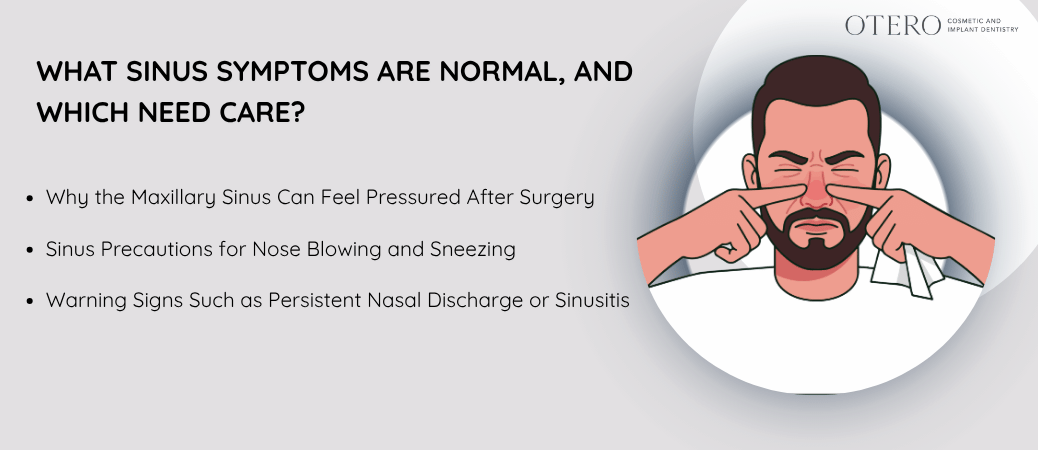
Why the Maxillary Sinus Can Feel Pressured After Surgery
The maxillary sinus sits directly above the zygomatic bone, so surgery in this area can cause pressure, mild congestion, or a stuffy feeling on the treated side.
This happens because the implant path runs close to or sometimes through the sinus cavity, depending on the surgical technique used.
Sinus Precautions for Nose Blowing and Sneezing
Avoid blowing your nose for at least the first one to two weeks after surgery, and longer if your surgeon advises it.
Blowing your nose creates pressure that can push air or bacteria into the healing sinus area.
If you need to sneeze, keep your mouth open rather than closing it tightly. This simple habit reduces the sudden pressure spike that a closed-mouth sneeze sends into the sinuses.
Other things to avoid during early healing:
- Swimming, diving, or submerging your face underwater
- Using a straw, which creates suction near the surgical site
- Air travel until your surgeon confirms you’re ready, since cabin pressure changes can affect the sinuses
Warning Signs Such as Persistent Nasal Discharge or Sinusitis
Persistent one-sided nasal discharge, especially if it’s discolored or foul-smelling, is not a normal part of healing and needs prompt evaluation.
This can be an early sign of sinusitis related to the surgical area.
Research on maxillary sinusitis following zygomatic implant placement notes that treatment often involves antibiotics alone or combined with sinus surgery when infection develops, and that catching it early leads to better outcomes.
A separate case series found that conservative approaches could resolve sinusitis while preserving the implant in most cases.
Call your surgical team if you notice:
- Nasal discharge that lasts beyond the first week or has an odor
- Air or fluid passing between your mouth and nose
- Fever, chills, or a change in your voice that doesn’t improve
- Pain that worsens after day three instead of easing
How to Control Swelling, Bruising, and Discomfort Safely
Cold compresses, scheduled pain medicine, and avoiding smoking and alcohol are the three most effective tools for a comfortable first week.
Used consistently, they reduce swelling faster and lower the risk of complications that can affect implant healing.
Using Cold Compresses and Ice Packs Correctly
Apply an ice pack or cold compress to the cheeks in short bursts, about 15 to 20 minutes on and 20 minutes off, during the first 48 hours.
This is the window when cold therapy does the most to limit swelling.
Wrap ice packs in a thin towel rather than placing them directly on skin, which can cause irritation or frostbite.
After the first two days, some surgeons recommend switching to warm compresses to help bruising resolve faster, so ask your surgical team which approach fits your case.
Pain Management and Prescribed Medicines
Take pain medication on a set schedule for the first few days rather than waiting until pain becomes severe. Staying ahead of discomfort works better than trying to catch up once pain has built.
Ibuprofen and other prescribed painkillers help manage both pain and inflammation when taken as directed.
If antibiotics were prescribed, finish the full course even if you feel fine partway through, since stopping early can allow infection to take hold near the surgical site.
Contact your surgeon if pain breaks through your prescribed medication or worsens instead of improving after day three or four.
Why Smoking and Alcohol Can Delay Healing
Smoking and alcohol slow healing and raise the risk of implant failure during the critical first weeks.
Smoking restricts blood flow to healing tissue, which delays soft tissue healing and can interfere with bone integration around the implant.
Alcohol can interact with pain medication and antibiotics, and it may increase swelling and bleeding risk. Supporting your general health with rest, hydration, and good nutrition gives your body the best chance to heal on schedule.
If quitting smoking entirely feels unrealistic, even a temporary pause during the first few weeks makes a meaningful difference.
Eating, Cleaning, and Moving Without Stressing the Implants
A soft-food diet, gentle oral hygiene, and a gradual return to activity protect your implants while deeper healing takes place underneath the surface.
These habits matter as much in week three as they do on day one, since the visible improvement in swelling doesn’t mean the implants are fully settled.
How Long to Follow a Soft-Food Diet
Stick to cool liquids and purées for the first 48 hours, then move to soft foods that need no biting through the first week.
Options like scrambled eggs, mashed potatoes, soft fish, and well-cooked pasta provide protein and calcium without stressing the surgical site.
Avoid hard foods like nuts, crusty bread, and tough meat during this stage. Straws are off-limits too, since the suction they create can disturb healing tissue near the implant site.
Most patients gradually reintroduce more variety over two to four weeks, cutting food small and chewing on both sides of the mouth.
Gentle Rinsing and Oral Hygiene Around the Surgical Area
Use gentle rinsing with a prescribed mouth rinse for the first several days, letting the rinse fall out of your mouth rather than spitting forcefully. Forceful spitting can disrupt clotting and irritate the surgical area.
Oral hygiene becomes more important, not less, once a fixed provisional bridge is in place, since you can’t remove it to clean underneath.
Surgeons typically recommend a soft brush along the gum line plus an interdental brush or interdental brushes to clean under the bridge once tissues can tolerate it.
Ask your surgical team for the exact brush size and cleaning routine that fits your bridge before you leave your first visit.
When to Resume Exercise, Travel, and Other Activities
Walking is safe from the first days after surgery, but strenuous activity, strenuous exercise, and contact sports need to wait until your surgeon clears you.
Activities that raise blood pressure sharply, like heavy lifting or high-intensity training, can increase swelling and bleeding risk during early healing.
Air travel is possible for many patients within the first week, but cabin pressure changes can affect the sinuses, so confirm timing with your surgical team first.
Diving and swimming carry an added sinus-pressure risk and are usually deferred longer than general exercise.
If you’re planning dental implants or zygomatic implants travel around a busy schedule, build in extra recovery days rather than cutting it close.
Why Feeling Better Does Not Mean Healing Is Complete
Looking and feeling better within a week or two doesn’t mean the implants have fully bonded with your bone.
Osseointegration, the process where bone grows around and locks onto the implant, takes months to complete even after visible swelling and bruising are long gone.
Temporary Teeth and Protecting Implant Stability
Most patients receive temporary teeth, often a fixed provisional bridge, within 24 to 72 hours of surgery. This lets you eat and speak with more confidence early on, but the bridge is a protective step, not the finished result.
Protecting implant stability during this phase means following diet restrictions even after you start feeling normal.
A bridge that feels loose, clicks, or moves is not something to wait out; it needs an evaluation right away.
Osseointegration, Bone Healing, and Follow-Up Visits
Osseointegration and full bone healing generally take four to six months before a final prosthesis is considered.
Zygomatic implants anchor into the cheekbone rather than the jaw, which is why they work well for patients with severe maxillary atrophy or low bone density who aren’t candidates for standard implants or traditional dental implants that rely on jawbone volume.
Regular follow-up visits let your surgical team check implant stability, monitor bone quality around the implant, and catch early signs of trouble before they become bigger problems.
These visits matter even when you feel completely fine.
When the Final Prosthesis May Be Considered
The final prosthesis is typically placed four to six months after zygomatic implant placement, once bone integration is confirmed through clinical exams and imaging.
This is called delayed loading, and it exists to protect long-term implant success rather than to slow you down unnecessarily.
Patients who needed additional procedures or had severe bone loss before surgery may require a longer monitoring period before the final bridge is made.
Follow-up visits allow the dental team to evaluate healing and determine when the implants and surrounding tissues are ready for the final restoration.
Otero Cosmetic & Implant Dentistry builds this follow-up schedule around each patient’s individual healing pace rather than a fixed calendar date.
A Safer, More Confident First Week of Healing

Recovery after zygomatic implant surgery follows a fairly predictable arc: swelling and bruising peak around day two or three, sinus pressure eases gradually, and most people feel noticeably better by the end of the first week.
Knowing what to expect ahead of time turns a scary-looking recovery into a manageable one.
Following post-operative care instructions closely, from cold compresses to sinus precautions to a soft-food diet, protects both your comfort and your implant success.
If anything feels off, a quick call is always better than waiting it out.
Otero Cosmetic & Implant Dentistry provides individualized post-operative instructions tailored to each patient’s surgery and health history, so you’re never guessing what’s normal for your specific case.
Reaching out early with questions is part of good healing, not a bother to your surgical team.
Frequently Asked Questions
How long does swelling last after zygomatic implant surgery?
Swelling typically peaks around 48 to 72 hours after surgery and starts improving by day four or five. Most visible swelling resolves within one to two weeks, though subtle puffiness can linger a bit longer in some patients.
Is cheek and eye bruising normal after zygomatic implants?
Yes, bruising around the cheeks and sometimes the eye area is a normal part of healing after zygomatic implant surgery.
Bruising can spread downward due to gravity and may look worse before it improves, but it should fade steadily over one to two weeks.
Can zygomatic implants cause sinus pressure or congestion?
Mild sinus pressure and congestion are common in the first week because the implants sit close to the maxillary sinus.
This usually eases on its own, though persistent or worsening congestion after the first week should be checked by your surgical team.
When should I call my surgeon about nasal discharge after surgery?
Call your surgeon if nasal discharge is one-sided, discolored, foul-smelling, or lasts longer than the first week.
Light pink-tinged discharge in the first few days is common, but anything persistent or unusual needs a clinical evaluation.
How long should I avoid blowing my nose after zygomatic implant placement?
Avoid blowing your nose for at least one to two weeks after surgery, or longer if your surgeon advises. If you need to sneeze during this time, keep your mouth open to reduce pressure on the healing sinus area.
When can I return to work and normal activities after zygomatic implant surgery?
Desk-based work is often possible within two to four weeks, while physically demanding jobs usually need more time.
Strenuous exercise, contact sports, and activities like diving should wait until your surgical team gives clearance, since sinus pressure and swelling need time to fully resolve.