
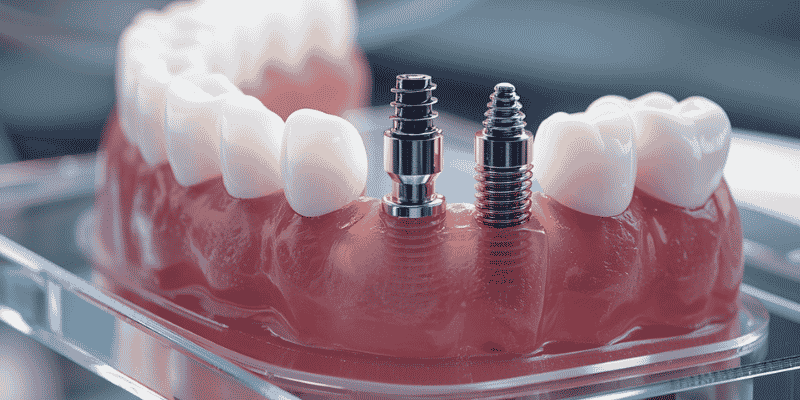
If you have severe bone loss in your upper jaw, you may hear about zygomatic implants vs bone graft. In some cases, your surgeon may recommend both. That can feel confusing at first.
You may need both a bone graft and zygomatic implants when parts of your upper jaw lack enough bone for standard dental implants, but other areas still benefit from added support and rebuilding.
Zygomatic implants anchor into the cheekbone to bypass weak upper jaw bone, while bone grafting rebuilds thinner areas to improve stability, support gum health, or allow placement of additional dental implants.
Your provider makes this decision after studying your 3D scans, bone volume, bite force, and overall health.
The goal is simple: create a strong, long-lasting foundation that fits your anatomy and lowers your risk of future problems.
Key Takeaways
- You may need both treatments when severe upper jaw bone loss affects some areas more than others.
- Zygomatic implants anchor in strong cheekbone while bone grafting rebuilds weaker sections.
- Careful imaging and planning guide a personalized, stable implant solution.
Understanding Severe Bone Loss in the Upper Jaw
Severe bone loss in your upper jaw changes how implants can be placed and supported. The amount and shape of bone, along with your sinus anatomy, guide every treatment choice.
Causes and Patterns of Bone Loss
Upper jaw bone loss often starts in the alveolar bone, the ridge that once held your teeth. When you lose a tooth, that bone no longer receives pressure from chewing. Your body begins to resorb it.
Common causes include:
- Periodontal disease, which destroys bone around teeth
- Long-term tooth loss without replacement
- Trauma or prior surgery
- Extended denture wear without implant support
Periodontal disease can quietly reduce bone height and width over time. By the time you notice loose teeth, damage may already be advanced.
Denture wear can also speed up resorption. Dentures rest on the gums and do not stimulate the bone underneath, so the ridge may shrink and flatten.
In many patients, severe bone loss in the upper jaw follows a pattern. The back areas near the molars often lose height first, while the front may keep slightly more bone. This uneven loss affects how and where implants can anchor.
Impact on Dental Implant Options
Dental implants need enough healthy bone for stability. If your alveolar bone becomes too thin or too short, standard implants may not achieve strong initial support.
With mild to moderate loss, your surgeon may rebuild the ridge using grafting. Many clinics describe these options in guides about dental implants with severe bone loss.
When bone loss becomes severe, grafting alone may not provide enough structure. In these cases, surgeons may consider longer implants anchored in the cheekbone, known as zygomatic implants.
You may need both a bone graft and zygomatic implants if part of your jaw can support grafting while other areas cannot.
Your care team studies scans to decide which zones can hold standard implants and which require alternative anchorage.
Role of the Maxillary Sinus and Sinus Anatomy
Your maxillary sinus sits just above the roots of your upper back teeth. When teeth are lost, the sinus often expands downward. This reduces the vertical bone height available for implants.
This process, called sinus pneumatization, makes the back of your upper jaw one of the most challenging areas for implant placement.
In moderate cases, surgeons perform a sinus lift to raise the sinus membrane and add bone beneath it. Many treatment summaries for upper jaw bone loss and sinus lift procedures explain how this creates more space for implants.
In severe cases, your sinus anatomy may limit how much grafting is possible. Thin sinus walls, wide sinus cavities, or prior infections can increase risk.
Zygomatic implants avoid the sinus by anchoring in the cheekbone. Your surgeon reviews 3D scans to map the sinus cavity, remaining alveolar bone, and nearby structures before choosing the safest path.
Bone Grafting: Types, Techniques, and When It’s Used
You may need bone grafting when your jaw does not have enough bone volume to hold implants in a stable way.
Dentists choose the graft type and technique based on how much bone you lost, where the loss sits, and how soon you plan to place implants.
Autografts, Allografts, Xenografts, and Synthetic Grafts
Your dentist can use several types of bone grafts to rebuild your jaw.
- Autograft: Bone taken from your own body, often the chin, jaw, or hip.
- Allograft: Donor bone from another person, processed for safety.
- Xenograft: Bone from an animal, usually cow, treated for medical use.
- Synthetic grafts: Lab‑made materials that act as a scaffold for new bone.
An autograft contains living cells and growth factors, which can help strong bone form. It does require a second surgical site, so you may have more swelling or discomfort.
An allograft avoids a second surgery and still supports new bone growth. A xenograft and many synthetic grafts mainly act as a framework. Your body slowly replaces them with your own bone over time.
For larger defects, your surgeon may use block grafts or perform ridge augmentation to increase width or height before implant placement.
Sinus Lift and Sinus Augmentation Procedures
If you lost bone in the upper back jaw, you may not have enough height below your sinus. In this case, your dentist may suggest a sinus lift, also called sinus augmentation.
During this procedure, the surgeon gently lifts the sinus membrane and places bone graft material underneath. This increases bone volume so implants can anchor safely.
A sinus lift often happens when you plan to place implants in the molar or premolar area. In some cases, your surgeon places the implant at the same time as the sinus lift.
In other cases, you wait several months for the graft to mature before implant placement.
Healing Timeline and Graft Integration
Your healing timeline depends on the graft type, the size of the defect, and your health.
Small grafts may need 3 to 4 months before implants can be placed. Larger grafts, such as block grafts or major ridge augmentation, may need 6 months or longer.
During healing, your body grows new blood vessels into the graft. Bone cells replace or integrate with the graft material. This process is called graft integration.
You must keep the area clean and avoid pressure from dentures or chewing. Smoking, poor oral hygiene, and uncontrolled diabetes increase the risk of graft failure.
Your dentist monitors healing with exams and X‑rays. When the graft shows stable bone formation, you can move forward with implant placement.
Zygomatic Implants and Their Advantages in Complex Cases
When you have severe upper jaw bone loss, standard implants may not hold. Zygomatic implants anchor in stronger cheekbone and often allow faster, fixed teeth with fewer grafts.
Anchorage in the Zygomatic Bone
Zygomatic implants anchor in the zygomatic bone, not the thin upper jaw. Your cheekbone has dense, stable bone that can support long implants even when the maxilla has shrunk.
This design lets your oral and maxillofacial surgeon avoid large sinus lifts or major grafts in many cases. Because the implant gains support from stronger bone, it can create a stable base for a full-arch restoration.
These implants were first developed for patients with major upper jaw defects and later adapted for severe atrophy.
Key advantages of zygomatic implants in this setting include:
- Support in dense cheekbone
- Reduced need for extensive bone grafting
- A stable base for prosthetic teeth
For you, that often means fewer staged surgeries and a clearer path to fixed teeth.
Immediate Loading and Full-Arch Solutions

In many cases, your surgeon can place two or four zygomatic implants and attach temporary prosthetic teeth within 24 hours. This process is called immediate loading.
Immediate loading works because the long implants gain strong anchorage in the cheekbone. When conditions are right, you leave surgery with fixed teeth instead of wearing a removable denture.
This approach often supports a full-arch solution, especially when the upper jaw has lost too much bone for traditional implants.
By anchoring into the cheekbone rather than the maxilla, surgeons can bypass grafting in selected cases.
Not every patient qualifies for immediate loading. Your bone quality, bite forces, and overall health all affect the plan.
Surgical Procedures and the ZAGA Approach
Zygomatic implant surgery requires careful planning and advanced training. Your oral and maxillofacial surgeon studies your sinus shape, bone volume, and soft tissue before implant placement.
The ZAGA, or zygoma anatomy-guided approach, adapts the implant path to your unique anatomy.
Instead of using one fixed method, your surgeon chooses an intra-sinus or extra-sinus path based on your bone shape and sinus wall.
This method aims to reduce problems such as sinus irritation and soft tissue issues.
With this anatomy-guided plan, your surgeon tailors:
- The angle and depth of implant placement
- The entry point through the gum and bone
- The design of the final prosthetic teeth
This careful planning helps create a stable, long-term foundation for your full-arch restoration.
Combining Bone Grafting and Zygomatic Implants: Clinical Scenarios
Some patients do not have enough bone in the upper jaw for standard implants alone. In these cases, your oral surgeon may combine bone grafting with zygomatic implants to create stable support and reduce risk.
Hybrid Treatment Approaches
A hybrid plan uses zygomatic implants for strong rear support and bone grafting to rebuild thinner areas in the front of your upper jaw.
Zygomatic implants anchor into the cheekbone. They often help patients with a severely resorbed upper jaw avoid large grafts.
Research on zygomatic implants combined with bone regeneration techniques shows that surgeons may add bone and soft tissue procedures to lower the risk of sinus problems and gum recession.
Your surgeon may also place standard upper jaw implants in grafted bone at the same time. In some cases, they perform sinus grafting along with zygomatic implant placement.
This combined method can:
- Improve implant position for your final teeth
- Support a full-arch bridge
- Reduce the need for multiple staged surgeries
Your plan depends on bone volume, sinus shape, and your overall health.
Candidates for Combination Treatments
You may need both treatments if you have advanced bone loss in the upper jaw, especially after years without teeth or failed implants.
Candidates for zygomatic implants often have very thin bone in the back of the upper jaw. Some patients could choose between autogenous bone grafting with standard implants or zygomatic implants.
A retrospective comparison of autogenous bone grafting and zygomatic implants shows that both options can restore function, but they differ in treatment time and surgical steps.
You may benefit from a combination approach if:
- The front jaw has moderate bone loss
- The back jaw has severe bone loss
- You want fixed teeth instead of a removable denture
- Previous grafting has failed
Your dental examination and CBCT scan play a key role. CBCT scans show bone height, width, and sinus space in 3D. This helps your oral surgeon decide where grafting adds value and where zygomatic implants provide better support.
Treatment Goals and Planning
Your treatment goals guide every decision. Some patients want faster results. Others focus on long-term bone support or fewer surgeries.
During surgical planning, your oral surgeon studies your CBCT scan and bite. They check bone density in the cheekbone and measure the thin areas in the upper jaw. This step reduces risk during implant surgery.
Your plan may aim to:
- Provide stable support for a full-arch bridge
- Improve chewing strength
- Protect sinus health
- Shape the gum tissue for better hygiene
You and your surgeon also discuss healing time, cost, and comfort. When you compare zygomatic implants vs bone grafting, remember that the right answer often combines both.
The goal is not just to place implants, but to build a stable and healthy base for your new teeth.
Risks, Recovery, and Long-Term Outcomes of Combined Treatments
When you receive both a bone graft and zygomatic implants, you take on two surgical steps that require careful healing and follow-up.
You need to understand possible complications, realistic recovery time, and how long your implants can last with proper care.
Managing Complications and Implant Failure
You face risks from both the bone graft and the implants.
After grafting, you may notice swelling, bruising, or tenderness. These side effects often improve within one to two weeks, as explained in this overview of a dental bone graft process and healing.
Small bone particles may come out early on, which can be normal.
More serious problems include:
- Graft failure, where the new bone does not blend with your natural bone
- Infection at the surgical site
- Implant failure, when the implant does not bond firmly to bone
Dental implant surgery has a high success rate, but complications can occur. These may involve infection, allergic reaction, or problems linked to certain medications.
Your risk rises if you smoke, have uncontrolled diabetes, or active periodontal disease. Your surgeon will check these factors before treatment to lower the chance of implant complications.
Recovery Time and Healing Processes
Your recovery happens in stages.
Initial healing after a bone graft usually takes about a week. However, the healing timeline for the graft itself can take at least three months. Larger grafts may need up to nine to twelve months to fully mature.
Implants also need time to fuse with bone. This process, called osseointegration, can take several months because the bone must grow tightly around the implant.
Zygomatic implants often reduce the need for large grafts, which can shorten total treatment time. Still, you may need a soft diet, limited physical activity, and close follow-up visits during early healing.
Your dentist will monitor:
- Swelling and pain levels
- Signs of infection
- Stability of the implants
- Progress of bone healing on scans
Following instructions closely lowers your risk of graft or implant failure.
Longevity and Maintenance of Implants
You may wonder, are zygomatic implants safe and how long do zygomatic implants last? When placed by an experienced surgeon and cared for properly, they can last many years and often decades.
Standard dental implants can remain stable long term if the bone stays healthy.
A graft can also last for life, but only if you place the final implant within the recommended time frame and maintain good bone support.
Your long-term success depends on daily habits:
- Brush and floss carefully
- Attend regular dental cleanings
- Treat gum disease early
- Avoid smoking
Untreated periodontal disease can damage the supporting bone and lead to late implant failure. With steady care and routine checkups, you protect both your graft and your zygomatic implants for the long run.
Costs, Alternatives, and Patient Decision Factors
Money, timing, and health history shape your final treatment plan. You need to weigh total cost, healing time, surgical risk, and how long you can function without permanent prosthetic teeth.
Comparing Costs of Treatment Options
The cost of zygomatic implants is usually higher per implant than standard dental implants. These implants require advanced surgical skill and often hospital-level anesthesia.
However, they can reduce the need for large bone grafts and long healing periods.
Traditional bone grafting plus traditional implants often spreads costs over multiple stages. You may pay for graft surgery, healing visits, implant placement, and later prosthetic teeth.
Treatment can take 9 to 18 months.
Zygomatic implants often shorten the treatment timeline. Some studies describe them as a graft-free option for severe bone loss, with fewer surgical stages compared to extensive grafting.
When you need both grafting and zygomatic implants, your cost reflects the added complexity. Your surgeon considers bone volume, sinus anatomy, and long-term stability before recommending this approach.
Alternatives Like All-on-4 and All-on-6
If you still have some usable bone, All-on-4 or All-on-6 may reduce the need for grafting. These systems use angled traditional implants to support a full arch of prosthetic teeth.
All-on-4 uses four implants per arch. All-on-6 uses six, which may spread bite forces more evenly. Your dentist chooses based on bone density and chewing strength.
In cases of extreme upper jaw bone loss, zygomatic implants can replace the need for large graft. You may still need limited grafting with All-on-4 or All-on-6.
Your CBCT scan shows whether you have enough native bone to hold traditional dental implants safely.
Role of Dental Tourism in Complex Cases
Complex treatment often carries high fees, which leads some patients to consider dental tourism. Traveling abroad can lower the upfront cost of zygomatic implants, bone grafting, or full-arch All-on-6 treatment.
Lower prices may reflect lower overhead, but you must plan for travel, lodging, and time away from work. Follow-up care also matters. If complications arise, local providers may hesitate to adjust prosthetic teeth placed elsewhere.
Zygomatic implants require precise surgical placement and long-term monitoring. Before choosing dental tourism, you should confirm the surgeon’s training, implant system used, and access to emergency care.
You should also compare the full treatment timeline. Multiple international trips may cancel out initial savings if your case requires staged grafting and final prosthetic adjustments.
Frequently Asked Questions
Dentists look at your bone volume, sinus position, and overall health before choosing a treatment plan. They also weigh healing time, risk, cost, and how fast you want fixed teeth.
How do dentists decide whether I need a bone graft, zygomatic implants, or both?
Your dentist starts with a 3D CT scan to measure how much upper jaw bone you have. If you still have enough bone for standard implants, a graft may rebuild thin areas so regular implants can hold.
If your upper jaw has severe bone loss, your dentist may suggest zygomatic implants for severe upper jaw bone loss. These implants anchor into your cheekbone instead of the jaw.
Sometimes you need both. You might have enough bone in the front of your jaw but not in the back. In that case, your surgeon may place regular implants in front and zygomatic implants in back to support a full arch.
What are the main pros and cons of zygomatic implants compared with standard implants?
Zygomatic implants avoid large bone grafts. They often reduce total treatment time because you do not need months of healing for grafted bone.
They can also allow earlier tooth placement. Some plans even support faster loading of teeth.
However, the surgery is more complex. It requires special training and careful planning. Standard implants are simpler when you have enough bone and usually involve less surgical risk.
Are zygomatic implants safe, and what complications should I know about?
Zygomatic implants are considered safe when an experienced oral and maxillofacial surgeon places them. They have been used for many years in patients with severe upper jaw bone loss.
Possible risks include sinus issues, infection, nerve irritation, and implant failure. Swelling and bruising are common in the first weeks.
Careful imaging and planning lower these risks. Surgeons also review your medical history to check for smoking, uncontrolled diabetes, or other factors that raise complication rates.
Is it better to do a bone graft and implant placement at the same time or in separate steps?
It depends on how much bone you need. Small grafts can often be placed at the same time as implants.
Large grafts usually need their own healing period. Your body must form new bone strong enough to hold implants before the next step.
Some patients choose zygomatic implants to avoid long graft healing times. Research comparing autogenous bone grafting with conventional implants vs zygomatic implants shows that zygomatic implants can reduce treatment duration in certain cases.
Your dentist balances speed, safety, and long-term stability when planning the sequence.
How long do zygomatic implants typically last, and what affects their longevity?
Zygomatic implants can last many years when placed correctly and maintained well. Good oral hygiene and regular dental visits play a big role.
Smoking, uncontrolled gum disease, and poor cleaning increase the risk of failure. Bite forces and prosthetic design also matter.
Your dentist checks the health of your gums, bone, and prosthetic bridge at follow-up visits to protect your investment.
What can I expect from zygomatic implants before-and-after results, and how long is the recovery?
Before surgery, you may wear a denture or have missing teeth. After treatment, you can expect fixed teeth that improve chewing and speech.
Swelling and mild pain are common for the first one to two weeks. Most people return to light activities within several days, depending on the extent of surgery.
If you receive immediate teeth, you may leave surgery with a fixed temporary bridge. Final teeth are usually placed after healing and adjustments.