

Deciding between a dental crown or a filling can be confusing. The key difference is that fillings repair small to medium cavities, while crowns cover and protect teeth that are cracked, weak, or heavily damaged.
Your dentist will look at the size of the problem and how much of your tooth needs support to make the right choice for you. If your tooth has a large cavity, a crack, or has had a root canal, a crown is often the better option because it provides full coverage and added strength.
If you just have a minor cavity or small damage, a filling is usually enough to restore your tooth and prevent further decay. Knowing these signs can help you understand what treatment you might need.
Key Takeaways
- Small cavities are usually fixed with fillings.
- Crowns are needed when teeth are cracked or very weak.
- Your dentist will decide based on how damaged your tooth is.
Not Sure If You Need a Crown or Filling in Wilmington?
Understanding Dental Crowns and Fillings
When your tooth is damaged, you might need something that restores its shape and strength. Both dental crowns and fillings are used to fix teeth, but they serve different roles depending on how much of the tooth is affected.
What Is a Dental Crown?
A dental crown is a cap that covers your entire tooth. It’s used when a tooth is weak, cracked, or has a large area of decay.
Crowns protect the tooth by holding it together and keeping it from breaking further. They can be made from materials like ceramic, metal, or porcelain fused to metal.
The process usually takes two visits. First, the dentist shapes your tooth by removing damaged parts.
Then, a temporary crown goes on while the permanent one is made. On the second visit, the permanent crown is fitted and cemented.
Crowns last many years with good care and restore the tooth’s function fully.
What Is Dental Filling?
A dental filling repairs a smaller spot of decay or damage in your tooth. The dentist removes the decayed part and fills the cavity with material like composite resin, amalgam, or porcelain.
Over 90% of adults have had at least one cavity in their lifetime.
Fillings fit right into the space left after cleaning the decay and bond with your tooth to keep bacteria out. Fillings are generally done in one visit.
They preserve most of your natural tooth by only replacing the damaged area. Fillings work well when the decay is minor to moderate and don’t affect the tooth’s strength that much.
After a filling, you should be able to eat and speak normally pretty quickly.
Key Differences Between Crowns and Fillings
| Feature | Dental Crown | Dental Filling |
| Coverage | Covers the entire tooth | Fills only the decayed area |
| When Needed | Large decay, fractures, root canals | Small to moderate cavities |
| Procedure Time | Usually two visits | Usually one visit |
| Materials | Ceramic, metal, porcelain blends | Composite resin, amalgam, porcelain |
| Protection Level | High – protects weak tooth | Moderate – restores small damage |
| Longevity | Can last 10+ years | Typically lasts 5-10 years |
Book a Crown or Filling Consultation in Wilmington Today
Signs You May Need a Dental Crown
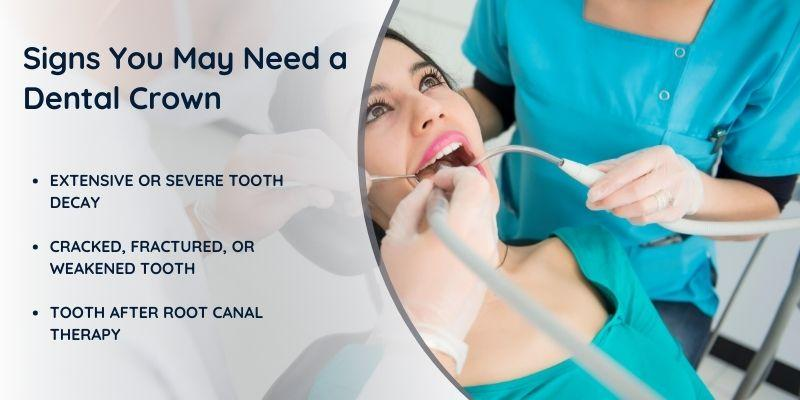
Sometimes, a simple filling isn’t enough to fix damage to your tooth. When your tooth is more damaged or weak, a dental crown can protect it and make sure it works well again.
Here are some clear signs that a crown might be the better choice for your dental care.
Extensive or Severe Tooth Decay
If you have a large cavity that takes up most of your tooth, a filling might not be strong enough. Severe tooth decay damages the structure of your tooth, making it weaker and more likely to break.
Teeth with large fillings are up to 50% more likely to fracture compared to crowned teeth.
A dental crown covers your entire tooth, protecting it from further damage. You might notice pain or sensitivity when eating or drinking hot, cold, or sweet things.
If you see a dark spot on your tooth that grows bigger or doesn’t go away, it’s a good idea to talk to your dentist. A crown can restore your tooth’s shape and strength while preventing decay from getting worse.
Cracked, Fractured, or Weakened Tooth
Teeth can crack or break from biting hard foods, injuries, or grinding your teeth. Even small cracks can cause pain and let bacteria get inside your tooth, leading to infection.
If your tooth feels weak or looks chipped, it might need the support of a dental crown. A crown holds your cracked tooth together and stops the damage from spreading.
Without a crown, the tooth could break more and possibly need to be removed. Crowns also help keep your bite even and comfortable, so you can chew without pain.
Tooth After Root Canal Therapy
After root canal treatment, your tooth is cleaned of infection but becomes more fragile. The root canal removes damaged tissue inside your tooth, which means there’s less natural support left.
Because of this, your tooth can be more likely to crack or break over time. Placing a permanent crown on a tooth that had a root canal protects it and restores its strength.
The crown covers the entire tooth, guarding it from damage while keeping your bite working properly. This helps your tooth last for many years after the root canal therapy.
If you’ve had a root canal, ask your dentist if a crown is right for you to keep your tooth healthy.
Not Sure Which Dental Treatment You Need?
When a Dental Filling Is the Right Choice
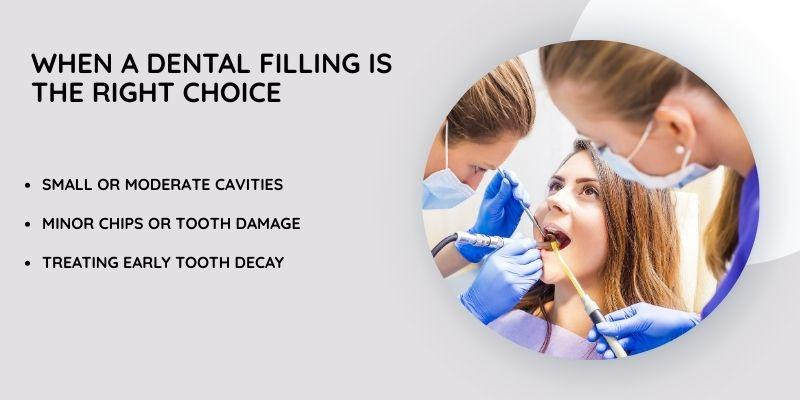
Choosing a dental filling comes down to how much damage your tooth has and the type of problem you’re facing. Fillings work best when the damage is small and your tooth can still be saved without needing extra support.
Small or Moderate Cavities
If you have a cavity that is small or moderate in size, a dental filling is usually enough to fix the problem. Fillings remove the decayed part and fill the hole with materials like composite resin or amalgam.
This stops the decay from getting worse and helps protect your tooth. Fillings are a good choice when the decay hasn’t spread deep into the tooth or affected the tooth’s structure too much.
They keep most of your natural tooth intact, unlike crowns that cover everything. You might feel tooth pain or sensitivity if decay is starting, which is a sign to get a filling soon.
Minor Chips or Tooth Damage
When your tooth has a small chip or light damage, a filling can restore it quickly. These minor issues don’t usually need the strength of a crown.
A filling can cover and protect the damaged part before it causes more trouble. The material used will match your tooth’s color, making the repair look natural.
It also helps prevent tooth sensitivity caused by exposed dentin or enamel. If you notice a small crack or chip, a filling can stop problems like increased tooth pain or decay from starting in that area.
Treating Early Tooth Decay
Early tooth decay is the best time to choose a dental filling. When caught early, the decay is just starting and only affects a small part of your tooth.
A filling removes the decayed spot and seals it, which stops the decay from spreading. Waiting too long could mean needing more extensive treatment like a crown.
Filling early keeps your tooth stronger and healthier for longer. If you feel any mild discomfort or notice white or brown spots on your teeth, it might be early decay that a filling can fix.
Factors Dentists Consider During Evaluation
When you visit the dentist to fix a damaged tooth, several important factors help decide if a crown or filling is right for you. These details focus on how much damage the tooth has and how strong it remains after treatment.
Size and Location of the Cavity
The size of the cavity is a big factor in deciding between a filling or a crown. Small to medium cavities can often be treated with fillings.
These fillings replace the lost tooth material and restore its shape without covering the entire tooth. But if the cavity is large or deep, a filling might not hold up well.
In those cases, a crown is usually better because it covers the whole tooth, providing extra strength and protection. Location matters too.
Teeth in the back, like molars, face more chewing pressure. Large cavities in these teeth often need crowns for better support, while front teeth with smaller damage can be fixed with fillings.
Condition of the Tooth Structure
The condition of your tooth’s remaining structure is critical. If your tooth has lost more than half its natural structure, it usually can’t support a filling alone.
This makes a crown the preferred choice because it surrounds and protects the weak tooth from breaking. Healthy tooth structure means you have more options for repair.
If your tooth is still strong, a filling is often enough to restore function without removing much of the tooth. When the tooth is fragile or cracked, crowns help prevent more damage and make chewing easier.
Your dentist will look closely at your tooth’s strength to make the best recommendation for your oral health.
History of Previous Fillings
If your tooth already has multiple fillings, this may affect what treatment you need next. Teeth with many past fillings tend to be weaker and more prone to fractures.
A filling may only be a short-term fix for these teeth, so dentists often suggest a crown to give long-lasting protection. A crown supports the tooth better and reduces the chances you’ll need more repairs soon.
Teeth that have healed well with simple fillings in the past might not need a crown yet, but your dentist will consider if your tooth is starting to show new cracks or decay. This helps protect your dental health by choosing the right treatment at the right time.
What to Expect During Dental Treatment
When you visit your dentist for a filling or crown, you can expect careful steps to protect and restore your tooth. The process includes preparing the tooth, managing any discomfort, and making sure the new material fits and functions well.
Treatment Procedures for Fillings
First, your dentist will clean the decayed part of your tooth. They use special tools to remove the damaged area before placing the filling.
Depending on the type of filling, the material may be composite resin, silver amalgam, or another option that fits your needs. The dentist will shape and harden the filling, often using a special light if it’s a composite.
Then, they will smooth and polish the tooth to match your bite. The entire process usually takes less than an hour.
You might feel some pressure but little to no pain with local anesthesia. Your tooth should feel natural and strong once the filling is done.
Dental Crown Placement Process
Getting a dental crown usually takes two visits. At the first visit, your dentist examines and prepares the tooth by removing some of its surface.
This step creates room for the crown to fit properly. Your dentist will take impressions of your tooth and the surrounding teeth.
These impressions help the dental lab make a permanent crown that matches your bite and smile. You’ll get a temporary crown to protect the tooth while the permanent one is made, which can take two to three weeks.
During the second visit, the temporary crown is removed. The dentist fits, adjusts, and cements the permanent crown in place.
This crown covers and protects your tooth, restoring its strength and appearance.
Pain Management and Local Anesthesia
Throughout your treatment, your comfort is a priority. Dentists use local anesthesia to numb the area around your tooth so you shouldn’t feel pain during procedures.
You may feel pressure or vibrations but not pain. After the numbness fades, you might have some mild sensitivity or soreness.
This usually goes away in a few days. Your dentist can recommend over-the-counter pain relief if needed.
If you feel discomfort that lasts longer or gets worse, let your dentist know. They can check to make sure your treatment is healing as expected.
Frequently Asked Questions
Knowing the costs, treatment differences, and what works best for certain tooth problems can help you make better dental choices. You’ll also learn about some possible downsides of crowns and when a filling just won’t do.
What are the cost considerations when choosing between a filling and a crown?
Fillings are usually cheaper than crowns because they take less time and materials. Crowns can cost more since they cover the whole tooth and require extra steps like molds and lab work.
Insurance plans might cover fillings better.
How does treatment differ between a filling, crown, and root canal?
A filling fills small holes caused by cavities. A crown covers and protects a tooth that is broken, cracked, or very weak.
A root canal treats infection inside the tooth’s root. After that, a crown is often needed to protect the fragile tooth.
What’s the better option for a chipped tooth, a crown or filling?
If the chip is small, a filling can fix it quickly and easily. For bigger chips or cracks that affect the tooth’s strength, a crown is often the best choice because it covers the entire tooth and keeps it safe from further damage.
Can you tell me about any potential downsides to getting dental crowns?
Crowns can cost more and take longer to place than fillings. Sometimes, the tooth might need to be reshaped for the crown to fit, which can cause sensitivity.
If the crown isn’t well made or cared for, it may come loose or cause discomfort.
Should a large cavity be treated with a filling or does it require a crown?
Large cavities often need crowns because fillings may not be strong enough to hold the tooth together. When decay is deep or the tooth structure is weak, a crown provides better support and protection for long-term health.
What’s the best treatment for cavities in baby teeth, fillings or crowns?
For baby teeth with small cavities, fillings are usually enough.
If the damage is bigger or the tooth is weak, crowns are often recommended to keep the tooth strong until it naturally falls out.