
Planning a trip for full-mouth restoration takes more than picking a dentist and booking a flight.
If you are traveling to Wilmington for full-mouth restoration, you will get the best results by planning your treatment plan, travel, lodging, and recovery time well before scheduling your first appointment.
This kind of trip is different from a quick vacation, since your comfort and healing depend on getting the details right.
You might be coming from another part of North Carolina or from out of state, but the steps are the same.
You need to know how many visits your treatment will take, how long you should plan to stay, and what your days will look like between appointments.
Dentures, implants, and other restorative work can affect your oral health for years, so it helps to feel confident and prepared before you even leave home.
This guide walks you through each part of the process, from choosing the right treatment plan to arranging a comfortable place to stay during your recovery.
You will find tips for budgeting, getting around town, and easing into healing once your procedures are done.
By the end, you will have a clear picture of what your trip to Wilmington can look like from start to finish.
Key Takeaways
- You will have a smoother trip if you understand your treatment plan and timeline before you travel.
- Planning your budget, lodging, and transportation ahead of time helps reduce stress during your stay.
- Following aftercare steps and staying in touch with your dental team supports your recovery once you return home.
Choosing the Right Treatment Plan Before You Travel
Before you book flights or hotel rooms, you need a clear treatment plan.
This means talking with your dentist ahead of time, understanding your restoration options, and confirming you’re ready for the procedures planned in Wilmington.
Virtual Consultation, Records, and Smile Goals
Most Wilmington dental practices offer a virtual consultation before your visit. You’ll share photos, X-rays, and any past dental records so the dentist can review your case in advance.
This step saves you time once you arrive. The dentist can start building a full mouth restoration guide tailored to your mouth instead of starting from scratch on day one.
Talk about your smile goals during this call. Do you want a natural look, or are you focused mainly on function and chewing ability?
Being clear about your goals helps the dental team plan the right mix of treatments for your trip.
Understanding Implants, Bridges, and Implant-Supported Dentures
Full-mouth restoration usually involves one or more of these options. Each affects your oral health and daily life differently.
| Option | Best For | Recovery Time |
| Dental Implants | Replacing single or multiple teeth with a permanent root | Several months for full healing |
| Bridges | Filling gaps between healthy teeth | Days to weeks |
| Implant-Supported Dentures | Replacing most or all teeth in an arch | A few months, shorter with same-day options |
Implant-supported dentures, often called All-on-4, use fewer implants to support a full arch. This can shorten your treatment timeline and reduce the number of trips you need to make.
At Otero Cosmetic & Implant Dentistry, our team evaluates your bone health, treatment needs, and travel schedule to help determine which full-mouth restoration option is appropriate for you.
Ask about your expected treatment timeline before making travel arrangements.
Confirming Candidacy, Medical Clearance, and Required Preparatory Care
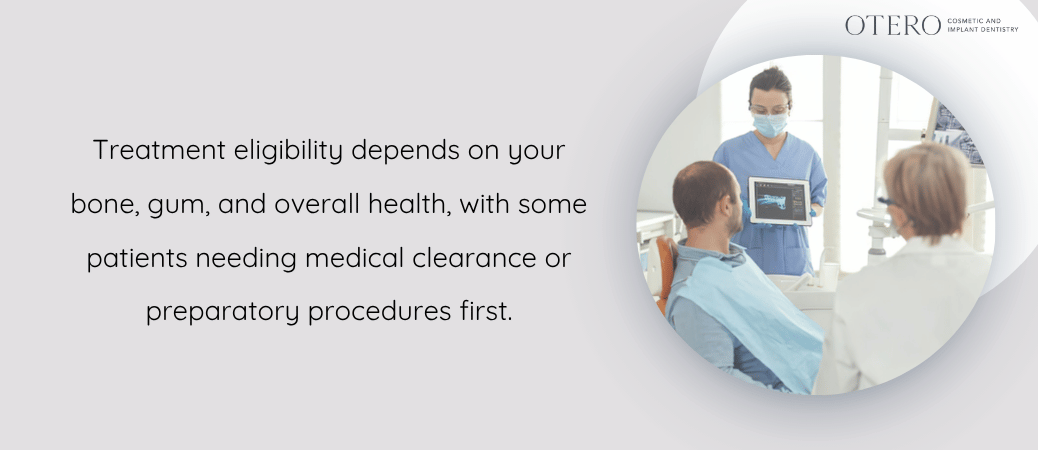
Not everyone qualifies for every treatment right away. Your dentist will check your bone density, gum health, and overall medical history before your trip.
Certain health conditions, like uncontrolled diabetes or blood clotting issues, can affect healing after surgery. These health effects matter, so be honest about your medical history during your consultation.
You may need clearance from your regular physician before traveling. Some patients also need preparatory care, such as tooth extractions or bone grafting, done before the main full-mouth dental reconstruction can begin.
Getting this confirmed early avoids delays once you’re already in Wilmington and ready for treatment.
Building a Realistic Multi-Day Wilmington Itinerary
Full-mouth restoration usually takes more than one trip, so your schedule should include time for surgery, healing, and check-ups.
A good itinerary timeline builder can help you map out each day, from flights to appointments to rest time.
What Can Be Completed in One Visit
Most full-mouth restoration plans need at least two or three separate trips to Wilmington, North Carolina. Your first visit often covers the initial exam, X-rays, and any needed extractions or bone grafts.
A second trip, scheduled weeks or months later, is usually when implants get placed. Crowns, bridges, or dentures often come during a final visit after your jaw has fully healed.
Trying to rush these steps into one trip can hurt your results. Your surgeon will let you know which steps can be grouped together and which ones need more time apart.
Planning Around Surgery, Rest, and Follow-Up Appointments
Plan your trip so you have quiet time after surgery. Most patients need at least one full day of rest before traveling home, and sometimes longer if sedation was used.
Here’s a simple way to structure a single visit:
- Day 1: Travel to Wilmington, check into lodging
- Day 2: Pre-op consultation and any needed scans
- Day 3: Surgery day
- Day 4: Rest and recovery, short follow-up check
- Day 5: Final clearance from your surgeon, travel home
If you plan to use public transportation while in town, keep in mind you may feel groggy after surgery, so a taxi or rideshare might be a safer option on procedure days.
Allowing Extra Time for Adjustments and Unexpected Delays
Even a well-planned trip can hit small bumps. Swelling, minor bleeding, or a slower-than-expected recovery can all push your timeline back a day or two.
It’s smart to build a buffer day into your schedule before you fly home. This gives your surgeon time to check your healing and make sure you’re ready to travel.
Weather delays or issues with the department of transportation can also affect your trip, especially during storm season.
Booking flexible flights or refundable lodging can save you stress if the DOT reports delays or road closures near Wilmington.
Budgeting for Treatment, Travel, and Recovery
Full-mouth restoration in Wilmington involves more than just the dental fees.
You also need to plan for travel, lodging, meals, and support during recovery, so it helps to look at the full picture before you book anything.
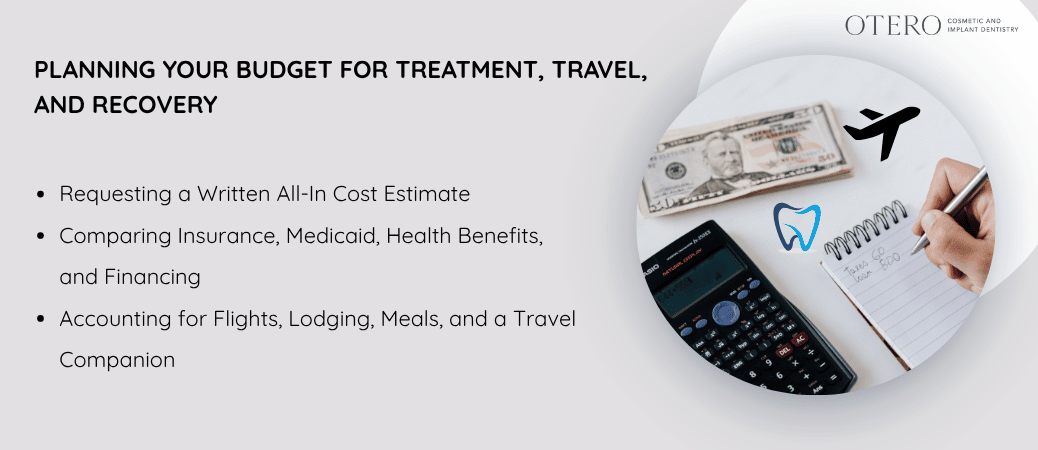
Requesting a Written All-In Cost Estimate
Ask your Wilmington dental office for a written estimate that covers every part of your treatment. This should include exams, imaging, implants, crowns, bone grafts, and any sedation fees.
A clear estimate helps you avoid surprise charges later. Make sure the contracts you sign spell out what happens if your treatment plan changes mid-visit.
Some patients need extra procedures once the dentist sees their mouth in person. Ask how the office handles these situations and whether the price can shift.
You should also ask if the quote is a firm number or a range. A firm number gives you more confidence when you are also budgeting travel costs.
This kind of all-in cost estimate approach is common with patients who travel for treatment, since it helps them compare prices across locations.
Comparing Insurance, Medicaid, Health Benefits, and Financing
Before your trip, check what your insurance actually covers. Many dental plans limit coverage for major work like implants or full-mouth rebuilds.
Medicaid rules vary by state, so call ahead to confirm what applies to adults in your situation. Some health benefits plans include a yearly maximum that won’t stretch far for this type of care.
If you’re short on coverage, ask the dental office about financing plans. Many offices offer payment plans or work with third-party lenders so you can spread out the cost.
You may also want to check if your employer offers a health savings account or flexible spending account.
These accounts often let you pay for dental work with pre-tax dollars, which can lower your overall bill. This kind of financial planning for treatment helps you avoid stress once you’re focused on your recovery.
Accounting for Flights, Lodging, Meals, and a Travel Companion
Your trip budget should include more than the flight itself. Add in ground transportation, parking, and any baggage fees.
Lodging costs can add up fast if your treatment plan spans several days. Look for hotels near the dental office that offer weekly rates or kitchenettes so you can prepare simple meals during recovery.
Soft foods are easier on your mouth after surgery, so plan your meals around that. A trip to the grocery store for smoothies, soups, and yogurt can save you money compared to eating out every meal.
Many patients also bring a travel companion to help with driving and daily tasks after sedation. Budget for their flight, meals, and lodging too, since their support can make recovery smoother and safer.
Arranging Transportation and a Comfortable Stay
Getting to Wilmington and settling into a place to stay are two of the biggest logistics pieces of your full-mouth restoration trip.
A little planning here can make the difference between a stressful week and a smooth one.
Choosing Flights, Driving Routes, and Local Transportation
If you’re flying in from a city like New York, Chicago, Baltimore, or Washington, Wilmington International Airport (ILM) offers convenient connections without the hassle of a major hub.
Patients coming from farther away, such as Miami, Dallas, Los Angeles, or San Diego, may need one connecting flight, so build in extra time for delays.
Driving works well if you’re within a few hours’ radius, and it gives you more control over your schedule between appointments.
Check current road conditions through your state’s department of transportation or the local DOT before you leave, especially if you’re traveling during storm season.
Once you’re in Wilmington, public transportation options are limited, so renting a car or arranging a rideshare is usually your best bet for getting between your hotel and the dental office.
Selecting Lodging Near the Dental Office
Pick a hotel or short-term rental within a 10 to 15 minute drive of your dental office. This cuts down on travel time when you’re sore or groggy after a procedure.
Look for places with these features:
- Ground-floor or elevator access for easier mobility
- A small refrigerator to store soft foods and medications
- Quiet rooms away from street noise for better rest
- Flexible cancellation policies in case your treatment timeline shifts
Some patients find that serviced apartments and medical hotels offer more comfort than a standard hotel room, especially for multi-day stays.
Booking directly through your dental office may also unlock a discounted rate at a partner hotel nearby.
Bringing a Companion for Surgery-Day Support
You’ll want someone with you on the day of your procedure, especially if you’re receiving sedation. Most dental offices won’t let you drive yourself home after anesthesia, so a companion isn’t optional on that day.
Your companion can also help with:
- Picking up prescriptions
- Preparing soft meals during recovery
- Reminding you to take medication on schedule
- Driving you to follow-up appointments
If travel isn’t possible for a family member or friend, some out-of-town patient programs offer coordinated support services to help fill that gap.
Having a second set of eyes and hands nearby during recovery gives you peace of mind and a smoother healing process.
Preparing for Treatment Day and the First Days of Healing
Getting ready for treatment day means packing the right items, following instructions closely, and knowing how to care for your mouth once the work is done.
A little planning now can make your recovery much smoother later.
Packing Essentials for a Dental Treatment Trip
Pack your bag a day or two before you leave so you’re not rushing at the last minute.
Bring these items:
- Comfortable, loose clothing you can easily change in and out of
- A small travel pillow to prop yourself up while resting
- Soft-bristle toothbrush and any oral care products your dentist recommends
- A list of current medications, including doses and times
- Insurance cards and treatment paperwork
- Snacks that are easy to eat, like applesauce or soup, for the first day after treatment
If you’ll be getting dentures or other restorations, ask your dental team if you need a case or container to store them safely when you take them out.
Following Food, Medication, and Sedation Instructions
Your dentist will give you specific instructions about eating, drinking, and medication before your appointment.
Follow these closely, since skipping them can delay your treatment or affect your safety during the procedure.
If you’re having sedation, you’ll likely need to avoid food and drink for several hours beforehand. You’ll also need a driver, since you won’t be able to drive yourself home.
After treatment, stick to soft foods like yogurt, mashed potatoes, or scrambled eggs for the first day or two. Take any prescribed medication exactly as directed, even if you’re not in pain yet.
This helps manage discomfort before it starts and supports better oral health during healing.
Managing Swelling, Temporary Teeth, and Oral Hygiene
Some swelling is normal after full-mouth restoration work. Using a cold pack on your cheek for 15-20 minutes at a time during the first day can help keep it under control.
If you’re given temporary teeth or dentures, wear them as instructed, even if they feel a bit odd at first. Removing them too often can slow healing or cause your gums to shift.
Keep your mouth clean, but be gentle. Rinse with warm salt water if your dentist recommends it, and avoid brushing directly on surgical sites until you’re told it’s safe.
Following these steps supports both your personal healing and broader public health practices around safe recovery from dental procedures.
Coordinating Long-Term Care After You Return Home
Once you get home, your new smile still needs some teamwork to stay healthy.
This means setting up follow-up visits, sticking to a simple care routine, and knowing when to call your dental team with questions.
Scheduling Remote Check-Ins and Local Follow-Up Care
Before you leave, ask your dentist about virtual check-ins. Many practices offer video calls to check your healing progress without another long trip.
You should also set up a follow-up plan with a local dentist near home. They can watch your gums and teeth between visits.
Here’s a simple checklist to bring home:
- Copy of your treatment records to share with your local dentist
- A list of materials used (implants, crowns, bridges)
- Contact info for your dental team
- Recommended follow-up schedule (30, 60, and 90 days is common)
This teamwork approach supports better long-term care after discharge, even for dental work. Good communication between both offices keeps your care on track.
Protecting Your Final Restoration With Daily Maintenance
Your final restoration is built to last, but only if you take care of it every day. Brush twice a day with a soft-bristle toothbrush and fluoride toothpaste.
Floss daily, too. Use a floss threader for bridges or implants, since regular floss can be tricky to get under them.
Try to avoid these habits that can damage your work:
- Chewing ice or hard candy
- Using your teeth to open packages
- Skipping your night guard if you grind your teeth
Good daily habits protect your oral health and help your restoration last for years. Small routines now can save you time and money later.
Knowing When to Contact the Wilmington Dental Team
Some issues need a quick call to your Wilmington dentist, even if you’re far away. Watch for signs like ongoing pain, swelling, or a loose crown or bridge.
Fever, unusual discharge, or a bad taste that won’t go away can point to infection. These symptoms need fast attention, not a wait-and-see approach.
Staying in touch with your Wilmington team also supports accountability for your treatment results.
They know your case best and can guide you on next steps, whether that means a virtual visit or a trip back for hands-on care.
Don’t hesitate to reach out with questions, even small ones. Catching problems early is easier and less costly than waiting until they get worse.
Frequently Asked Questions
Planning a trip for full-mouth restoration in Wilmington brings up a lot of questions about timing, safety, cost, and care after your procedure. Here are answers to the questions patients ask most often.
How many days should I plan to stay in Wilmington for full-mouth restoration treatment?
Most patients need at least 3 to 5 days for a full-mouth restoration trip. This gives your dentist time to finish exams, take X-rays, and complete your first round of treatment.
If your plan includes implants, you may need a longer stay or a return trip later. Implants often need a few months to heal before crowns can be placed on top.
Your dental team will map out a timeline based on your specific needs before you book travel.
Is it safe to fly home after dental implants, extractions, or other full-mouth procedures?
Flying home after dental work is usually safe, but timing matters. Your dentist will tell you how long to wait based on your procedure and how your body is healing.
Many dental procedures are surgical, and recovery can take weeks or months depending on the treatment. You may feel some swelling, soreness, or minor bleeding in the days after treatment, so it helps to plan a low-stress travel day.
Ask your dentist for written aftercare instructions to bring with you on your flight home.
How much should I budget for travel, lodging, and dental treatment during a multi-day visit?
Your budget should cover three main costs: the dental treatment itself, your hotel or lodging, and transportation.
Full-mouth restoration costs vary widely because they depend on how many teeth need work and what type of restoration you need, such as crowns, implants, or bridges.
Ask the dental office for a written treatment plan with an estimated cost before you travel. This helps you avoid surprise expenses once you arrive.
It’s also smart to set aside extra money for meals, parking, and any follow-up visits during your stay.
What should I arrange before traveling for a full-mouth restoration consultation and procedure?
Before you travel, confirm your appointment dates and get a clear treatment plan in writing. Ask the office what paperwork, medical history, or past dental records you should bring.
You should also arrange your lodging near the dental office to cut down on travel time between appointments.
If you take any medications, pack enough for your full trip plus a few extra days in case your schedule changes. Confirm with your dentist ahead of time whether you need any lab work or imaging done before your first visit.
Will I need someone to travel with me and help after my dental appointment?
For many procedures, having someone with you is a good idea, especially if you’ll be given sedation. Sedation can affect your coordination and memory for several hours after treatment, so you shouldn’t drive or travel alone.
Even without sedation, a travel companion can help carry bags, get food that’s easy to eat, and support you if you feel tired or sore. If you’re traveling by plane, having someone with you can make security lines and gate changes less stressful while you’re recovering.
How can I plan follow-up care if I live far from Wilmington?
Ask your Wilmington dentist about setting up follow-up care before you leave. This might include a phone check-in, video call, or a return visit to check healing progress.
It also helps to find a local dentist near home who can assist if you have questions or concerns after your trip. Ask your Wilmington dental office to send your treatment records to your local dentist so both offices stay informed about your care.
This keeps your recovery on track even after you’ve returned home.