
Not everyone with missing teeth has the same needs, which is why choosing the right denture solution starts with understanding your bone health, comfort goals, and desired stability.
Dental implants can provide a strong foundation for patients who want greater security and confidence from their replacement teeth.
For eligible patients, a palateless snap-on denture offers a comfortable alternative to a traditional upper denture by leaving the roof of the mouth uncovered.
This design can make eating, speaking, and tasting food feel more natural while implant support helps keep the denture securely in place.
Your candidacy depends largely on the amount and quality of available jawbone and whether enough implants can be placed to support the denture.
This guide explains how palateless snap on dentures work, who may qualify, and how the right level of implant support can provide greater stability and confidence.
You’ll also learn about its benefits, important considerations, treatment timeline, and aftercare so you can make a more informed decision about your smile.
Key Takeaways
- Your bone health and implant count play a bigger role in qualifying than most people realize.
- A stable fit almost always depends on committing to implant support rather than skipping it.
- Knowing the timeline, care steps, and realistic trade-offs upfront helps you choose the right clinician and avoid surprises.
What a Palateless Snap-On Design Really Requires
A palateless denture is not just a regular denture with the top cut off. Your dentist needs a specific setup, usually involving implants, to make this design work for you.
Why Upper Dentures Usually Need Palatal Coverage
Your mouth’s roof plays a big role in how well a denture stays put. Full-palate dentures cover the whole roof of your mouth, and this creates suction that holds the denture in place. Think of it like a lid on a jar.
Traditional dentures and conventional dentures rely on this seal because there’s nothing else to grip onto.
Without palatal coverage, there’s no natural way to create that suction. This is why most dentists have relied on full coverage for decades.
Your gums and jawbone alone can’t hold an upper denture steady. The palate gives extra surface area for that seal to form.
That’s the trade-off you’re working with when you consider a palateless denture.
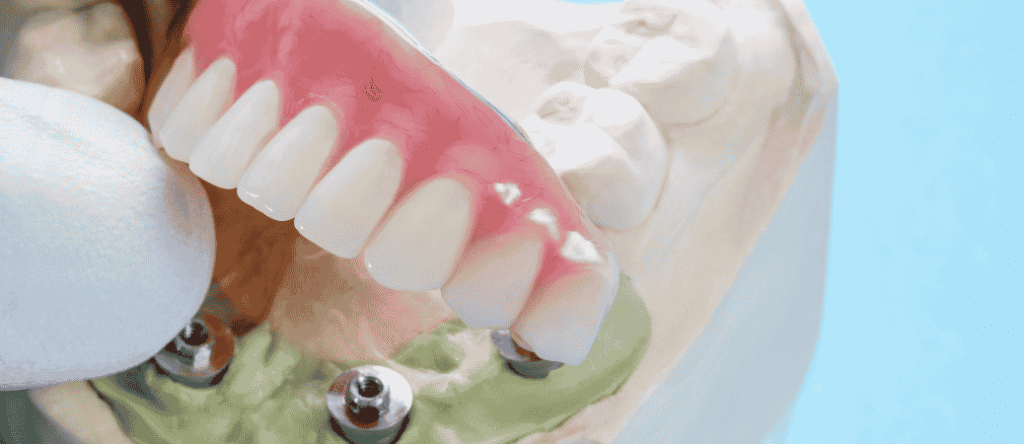
How Implant Retention Makes a Horseshoe Design Possible
If you want a horseshoe denture (also called a roofless denture) that actually stays in place, you’ll need implants.
These act as anchor points that replace the suction you’d normally get from your palate.
Most dentists recommend at least four implants for a palateless design to work well. The implants snap into attachments built into your denture, holding it steady when you eat or talk.
Without implants, a palateless design will feel loose. You’d need denture adhesive just to get through a meal, and even then, it might shift. This is why implant-supported dentures are
lmost always the standard choice for palateless designs.
Your jawbone also needs to be healthy enough to support these implants. Your dentist will check your bone density before recommending this option to you.
Snap-In Overdentures Versus Fixed Full-Arch Teeth
You have two main paths once implants are placed: removable or permanent.
Snap-in overdentures, also called implant-supported overdentures, click onto your implants but you can take them out yourself for cleaning.
Snap-in and permanent dentures work differently. Snap-in dentures can be removed at home for cleaning, while permanent dentures are secured to your implants and can only be removed by a dental professional.
| Feature | Snap-In Overdentures | Fixed Full-Arch Teeth |
| Removable by you | Yes | No |
| Implants needed | 2-4 typically | 4+ (often all-on-4 dental implants) |
| Daily cleaning | Take out to clean | Brush and floss in place |
| Feel | Slightly more bulk | Closer to natural teeth |
Your choice depends on your budget, how many implants you can support, and how you want to care for your new teeth each day.
Who Is a Good Candidate for This Option
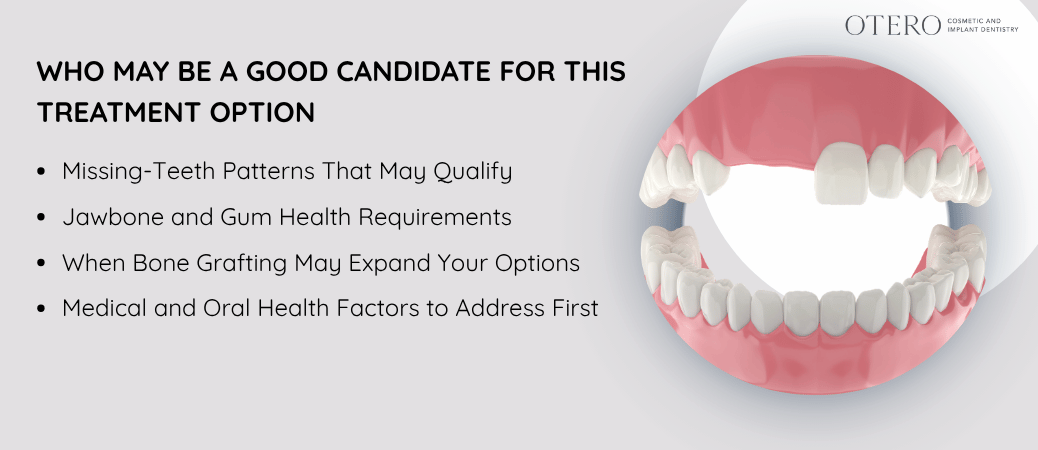
Not everyone with tooth loss is a good fit for palateless snap-on dentures. Your bone density, gum health, and how many teeth you’re missing all play a role in whether this option will work well for you.
Missing-Teeth Patterns That May Qualify
You are typically a good candidate if you are missing most or all of your upper teeth. This is often called being fully or nearly fully edentulous in the upper arch.
If you only have a few missing teeth, this option usually won’t apply to you yet. You may need tooth extractions to remove your remaining teeth first.
Dentists usually look at the full pattern of your tooth loss, not just one or two gaps.
Your dentist will check how your missing teeth are spread across your upper jaw before recommending this treatment.
Jawbone and Gum Health Requirements
Your jawbone needs enough density to support dental implants. Without healthy bone levels, the implants that hold your denture in place may not stay secure.
Your gums also matter a lot here. You need healthy gums that are free from infection or swelling.
If you have periodontal disease, your dentist will likely treat it before moving forward. Active gum disease can cause bone loss over time, which makes it harder to place implants safely.
Your dentist will check your jawbone density and gum condition closely before you start treatment.
When Bone Grafting May Expand Your Options
If you’ve lost too much bone in your upper jaw, you’re not automatically ruled out. Bone grafting can rebuild areas where bone has thinned or shrunk.
This procedure adds bone material to weak spots in your jaw. Over time, your body heals around it, creating a stronger base for implants.
Bone loss is common after you lose several teeth in a row, since your jawbone needs tooth roots to stay strong.
A graft can reverse some of this damage and open the door to snap-on dentures even if your first exam showed low bone density.
Medical and Oral Health Factors to Address First
Before your dentist approves you for this treatment, they’ll check your overall oral health. Any dental cavities or gum infections usually need treatment first.
Certain health conditions, like uncontrolled diabetes or a weak immune system, can slow healing after implant surgery. Your dentist will ask about your medical history to spot any risks early.
Good oral hygiene habits matter too. You’ll need to show you can keep your mouth clean and infection-free, since this affects how well your implants heal and how long your new denture will last.
The Implant Count and Stability Details to Know Upfront
The number of implants your dentist recommends directly affects whether you can go palateless.
Two implants often can’t support an open-palate design, but four (or more) usually can, and the attachment system you choose plays a big role in how secure your denture feels every day.
Why Two Implants May Not Support an Open-Palate Upper Denture
You might assume two implants are enough, since that’s often the case for the lower arch. But the upper jaw is different.
The bone is softer, and without a full palate covering the roof of your mouth, there’s less surface area to spread out biting force.
With only two implants, your denture may rock or shift when you chew tough foods. This can lead to sore spots, loose fit, or even implant failure over time if the implants take on more stress than they can handle.
Most dentists will tell you that two implants work fine for a covered upper denture, but a palateless design usually needs more support to stay stable.
Why Four Dental Implants Are Often Discussed for the Upper Arch
This is why four dental implants come up so often when you’re talking about palateless snap-on dentures.
Four implant placement points give your denture a wider base of support, spreading your bite force more evenly across the jaw.
Some patients need six implants for extra stability, especially if bone density is lower than average or you grind your teeth.
Your dentist may also suggest a bar-retained system that connects the implants together for a sturdier fit.
Here’s a quick comparison:
| Implant Count | Palate Coverage | Stability Level |
| 2 implants | Usually needed | Lower |
| 4 implants | Often removable | Higher |
| 6 implants | Rarely needed | Highest |
Attachment Systems and the Role of Abutments
Once your implants are placed, small connector pieces called abutments attach to them. These abutments hold the clips, balls, or bar that let your denture snap into place.
The type of abutment system you choose affects how snug your denture feels and how easy it is to clean.
Ball attachments are common and simple to use, while bar-retained systems tend to feel more solid but cost more.
Your dentist will match the attachment system to your bone structure and implant count.
This part of your treatment plan matters just as much as the number of implants, since a mismatched system can leave your denture feeling loose even with enough implants in place.
Risks of Cutting Away the Palate Without Enough Support
Removing the palate from your upper denture sounds appealing, since it can improve taste and comfort. But doing this without enough implant support carries real risks.
Without adequate implants or abutments, your denture may not stay put during eating or speaking.
This can lead you back to using denture adhesives, which defeats the purpose of upgrading to implant-supported dentures in the first place.
Poor support can also put extra stress on your existing implants, raising your risk of implant failure.
If your case doesn’t have enough bone or implants for a stable palateless fit, your dentist may recommend keeping the palate covered, adding more implants, or choosing a fixed option instead of removable dentures.
Benefits, Trade-Offs, and Realistic Expectations
Palateless snap-on dentures can improve daily comfort and function, but they also come with real trade-offs you should know about before committing.
Your results will depend on your bone health, your budget, and how well you care for your new teeth over time.

Taste, Temperature, and Tongue Movement
Removing the acrylic plate from the roof of your mouth can bring back your sense of taste.
Food and drinks feel more like they did with your natural teeth, since your palate can sense temperature and texture again.
Your tongue also gets more room to move. This matters for eating, swallowing, and even resting your tongue comfortably during the day.
Many patients say food tastes better within the first few weeks. This happens because your taste buds and nerve endings on the palate are no longer blocked by palateless denture designs that expose more of your natural mouth structure.
Gag Reflex, Comfort, and Speech Changes
If you have a sensitive gag reflex, palateless dentures can make a big difference. Without plastic covering your palate, there’s less pressure triggering that reflex when you eat or talk.
Comfort tends to improve too. Full coverage designs can feel bulky, while horseshoe-shaped dentures leave more open space in your mouth.
Speech clarity often gets better as well. You may notice fewer whistling sounds or slurred words once you adjust, since your tongue can hit your teeth and gums more naturally, similar to how palateless dentures compare to traditional designs in terms of stability and mouth feel.
Give yourself two to four weeks to adjust your speech patterns fully.
Chewing Ability and Bite Force
Chewing ability improves noticeably with implant-supported dentures compared to traditional ones. Your bite force increases because the denture is anchored to implants instead of resting loosely on your gums.
This means you can eat foods that were off-limits before, like apples, nuts, and tougher meats. You won’t need to cut everything into tiny pieces.
Costs, Surgery, and Long-Term Maintenance
Palateless snap-on dentures cost more than regular dentures because they require implant surgery and custom dentures made to fit your mouth exactly.
Your dentist will place two to six implants in your jaw, depending on your needs. Healing takes several months, since your bone needs time to bond with the implants.
Implant survival rates are generally high, but implant failure can happen, especially if you smoke or have uncontrolled diabetes. Regular checkups help catch problems early.
Long-term, you won’t need denture adhesives like you would with traditional false teeth.
But you will need periodic adjustments as the attachments holding your denture fit loosen over time, and your dentures may eventually need relining or replacement after several years of use.
Treatment Timeline, Care, and Choosing the Right Clinician
Getting palateless snap-on dentures is not a one-visit process. You will go through several stages, from planning to healing to your final fitting, and picking the right dentist or prosthodontist matters at every step.
From Consultation and Scans to Implant Placement
Your journey starts with a consultation where your dentist checks your gums, jawbone, and overall oral health.
You’ll likely get a 3D scan or CT scan so your provider can see the exact shape and density of your jaw.
This step matters because implant-supported palateless dentures need at least four implants to stay secure without covering the roof of your mouth.
Once your scans are done, your dentist creates a custom plan for implant placement. This includes deciding where each implant goes and what size is needed.
On surgery day, you’ll get local anesthesia or sedation. Implant surgery itself usually takes one to three hours, depending on how many implants you need.
Healing, Osseointegration, and Temporary Dentures
After surgery, your jawbone needs time to fuse with the implants. This process is called osseointegration, and it’s the foundation of a stable, long-lasting result.
Healing typically takes three to six months. During this time, you’ll usually wear temporary dentures so you can still eat and speak normally while your mouth heals.
Here’s what to expect during healing:
- Weeks 1-2: Swelling and soreness, soft food diet
- Months 1-3: Bone begins bonding with implants
- Months 3-6: Full osseointegration completes
- Follow-up visits: Your dentist checks progress and gum health
Take care of your temporary dentures the same way you would permanent ones. Clean them daily and avoid hard or sticky foods that could shift your implants out of place.
Final Denture Delivery and Everyday Cleaning

Once osseointegration is confirmed, your dentist attaches small connector pieces called abutments to your implants. These abutments hold your final denture in place.
Your custom dentures are then made to match your bite, jaw shape, and facial structure. A good denture fit is one that feels stable when you talk or chew, without pinching or rocking.
Daily care is simple once you get the hang of it:
- Remove your denture nightly to let your gums rest
- Brush the denture with a soft brush and non-abrasive cleaner
- Clean around abutments with a small interdental brush
- Rinse your mouth after meals to clear food debris
Keeping healthy gums is just as important as caring for the denture itself, since gum infections can affect your implants.
Questions to Ask a Dentist Before Committing
Choosing an experienced implant dentist matters when planning a palateless restoration.
Dr. Misael Otero can evaluate your bone health, implant needs, and denture design to determine an appropriate treatment approach.
Consider asking:
- How many palateless implant cases have you completed?
- What implant brand and abutment system do you use?
- What happens if osseointegration fails for one implant?
- How often will I need follow-up visits after delivery?
- What does your warranty or redo policy cover?
A confident, experienced provider should answer clearly and without hesitation.
If something feels rushed or unclear, it’s fair to get a second opinion before moving forward with surgical planning for palateless dentures.
Frequently Asked Questions
Choosing palateless snap-on dentures involves questions about implants, cost, comfort, and daily function. Here are answers to the questions you’re most likely to have before you make a decision.
Who is a good candidate for palateless snap-on dentures?
You’re likely a good candidate if you have enough jawbone to support dental implants. Your dentist will check bone density with an X-ray or CT scan before moving forward.
Good oral health also matters. Gum disease or infections need to be treated first, since they can affect how well implants heal in your jaw.
Your overall health plays a role too. Conditions like uncontrolled diabetes or a history of radiation therapy on your jaw can make snap-on dentures riskier, so your dentist will review your medical history closely.
Can you get upper dentures without a palate if you do not have implants?
No, you need dental implants to get palateless upper dentures. Without implants, your denture needs the palate to create suction and stay in place on your gums.
If you skip implants, your denture will likely feel loose or fall when you talk or eat.
The palate acts as an anchor point for traditional dentures, so removing it means you need another way to hold the denture steady.
How many dental implants are usually needed to support palateless upper dentures?
Most dentists use between four and six implants for palateless upper dentures. The exact number depends on your jawbone quality and how much support your denture needs.
Some clinics offer options with as few as two to four implants for a snap-on style. However, more implants generally mean better stability and a stronger bite.
Your dentist will recommend a specific number based on your jaw scan and denture design.
What are the most common problems people experience with snap-on dentures?
Some patients notice food gets stuck around the attachment points where the denture meets the implants. This means you may need to clean these areas more carefully than you would with regular teeth.
Gum irritation can also happen, especially in the first few weeks as your mouth adjusts to the new denture.
The attachments that hold your denture in place can wear down over time, so you may need occasional adjustments or replacements.
Some patients also mention a learning curve with removing and inserting the denture correctly at first.
Are palateless snap-on dentures more expensive than traditional dentures?
Yes, palateless snap-on dentures cost more than traditional dentures. This is because the price includes the surgical placement of implants, plus the lab work needed to fit your denture to those implants.
Traditional dentures only require the denture itself, without any implant surgery.
Snap-on dentures can range widely in total cost depending on your location and provider, so it’s worth asking for a detailed quote before starting treatment.
Is it difficult to speak or eat with palateless snap-on dentures?
Most people find speaking and eating easier with palateless snap-on dentures compared to traditional dentures.
Without the palate covering the roof of your mouth, you can taste food more fully and feel less of a barrier when you talk.
There’s usually a short adjustment period as your tongue and mouth get used to the new fit.
Once you’re past that, chewing tends to feel more secure since the denture won’t shift or slide the way traditional dentures sometimes do.