
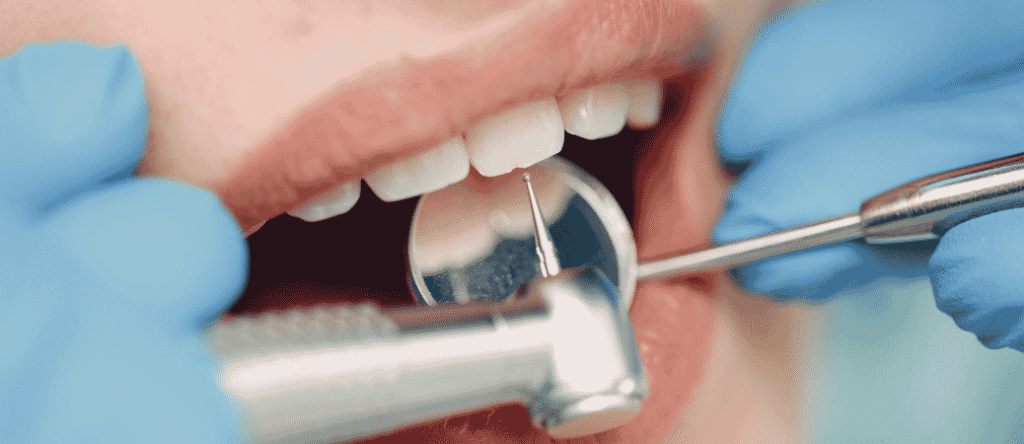
If you’re wondering how often should you get a dental cleaning, the answer depends on your gum health, cavity risk, tartar buildup, and personal dental history.
Some people may do well with routine six-month visits, while others need a different schedule based on what their dental exam shows.
If your dentist has ever changed your schedule, or you’re wondering whether you really need to go twice a year, you’re asking a fair question.
Dental cleaning frequency isn’t one-size-fits-all, and your recall schedule should reflect your own gum health, not just a calendar habit.
Key Takeaways
- Your ideal cleaning interval depends on gum health, cavity risk, and how fast tartar builds up for you personally.
- Deep cleanings and periodontal maintenance follow different timelines than routine six-month prophylaxis.
- Research on checkup intervals doesn’t automatically apply to how often you need professional tartar removal.
How Many Months Should You Wait Between Cleanings?
Most adults fall somewhere between three and six months, and the right number comes down to gum health, cavity risk, and how fast tartar builds up on your teeth.
There’s no universal countdown clock. Your dentist sets the interval based on what shows up during your exam.
When Might Six Months Be Right?
Six months works well if your gums don’t bleed during probing, you have no history of cavities piling up, and your home care is consistent.
This is the standard starting point for most new patients. It gives enough time between visits while still catching problems early.
Can a Low-Risk Adult Wait Longer?
Some low-risk adults can stretch beyond six months without harm to their gums or teeth.
A large UK trial comparing six-month, twenty-four-month, and risk-based recall found no meaningful difference in gum bleeding or oral health quality of life between groups over four years.
That said, this trial measured routine checkups, not professional cleanings specifically, so it’s worth discussing with your dentist before assuming a longer gap fits your own mouth.
Who May Need Visits Every Three to Four Months?
Patients with active gum disease, fast tartar formation, or a recent history of cavities often do better on a three-to-four-month schedule.
Dry mouth from medication, smoking, and diabetes also push people toward shorter intervals.
If you fall into this group, closer spacing isn’t a punishment. It’s how your dental team keeps small problems from growing between visits.
What Determines Your Personal Recall Interval?
Your recall interval gets built from a handful of specific findings: gum measurements, bleeding on probing, your cavity history, and any medical conditions that affect saliva or healing.
When decay does develop, cavity restoration can repair the affected area and help preserve healthy tooth structure, while regular preventive visits can help identify new concerns early.
Two people with the same age and the same brushing habits can land on very different schedules once these factors are weighed.
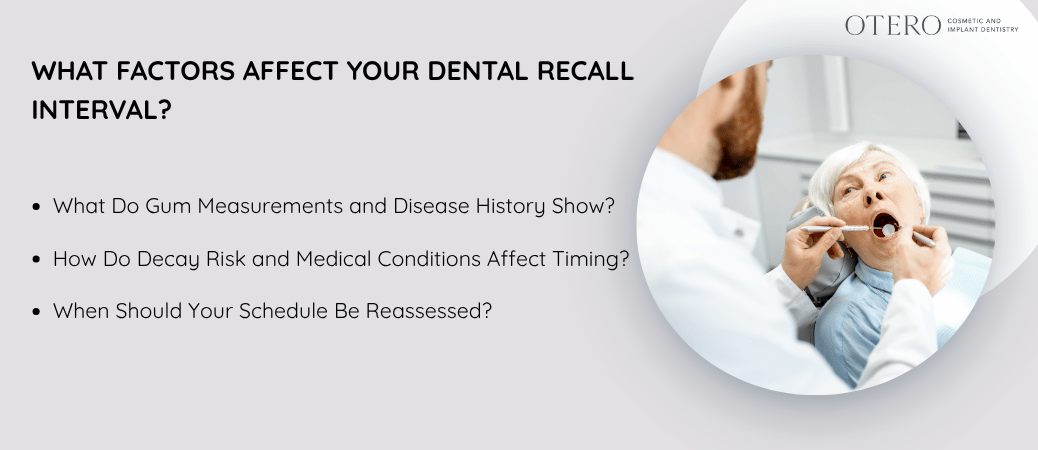
What Do Gum Measurements and Disease History Show?
Pocket depths and bleeding on probing help your dentist evaluate gum inflammation and signs of periodontal disease.
Gingivitis affects the gums without the attachment and bone loss associated with periodontitis, while periodontitis can damage the tissues and bone supporting the teeth.
A history of periodontitis may lead to more frequent maintenance visits based on your current gum health, disease history, and response to treatment.
How Do Decay Risk and Medical Conditions Affect Timing?
Caries risk looks at your cavity history, fluoride exposure, and diet, while conditions like dry mouth reduce saliva’s natural ability to fight decay.
Saliva washes away food particles and neutralizes acid, so less of it generally means more cavities.
Patients managing diabetes, taking medications that cause dry mouth, or wearing braces often need a tighter dental cleaning schedule to offset these added risks.
When Should Your Schedule Be Reassessed?
Your interval should be revisited at every cleaning, not set once and forgotten. If inflammation clears up and home care improves, your dentist may space out your visits.
If new bleeding or bone loss shows up on X-rays, the interval often gets shorter again.
Does the Type of Cleaning Change the Schedule?
Yes, the kind of cleaning you need changes how often you come in, because prophylaxis, deep cleaning, and periodontal maintenance treat different levels of gum disease.
Knowing which category you fall into explains why your schedule might look different from a family member’s or friend’s.
Routine Prophylaxis for Healthy Gums
Prophylaxis is the standard cleaning for patients with healthy gums or mild, reversible inflammation.
It removes plaque and tartar above the gumline and just below it, and it’s typically paired with a six-month interval for low-risk adults.
Deep Cleaning for Active Periodontal Disease
Scaling and root planing, often called deep cleaning, treats active periodontal disease by removing tartar and smoothing root surfaces below the gumline.
This is a treatment phase, not an ongoing routine, and it’s usually followed by a specific maintenance plan rather than a return to standard prophylaxis.
Maintenance After Gum Disease Treatment
Periodontal maintenance is commonly recommended after treatment for periodontitis to help manage gum health and monitor for signs of recurring disease.
The frequency and duration of these visits depend on your periodontal history, current gum health, home care, and your dentist’s ongoing assessment.
What Does the Evidence Say About the Six-Month Rule?
Research supports individualized, risk-based recall over a flat six-month rule for routine checkups, though it does not settle the separate question of how often professional cleanings themselves should happen.
These are two different questions, and mixing them up is where a lot of confusion starts.
What Can Research on Routine Checkup Intervals Tell Us?
A Cochrane systematic review looked at trials comparing different fixed recall intervals for dental checkups and found only one study that met its quality criteria, concluding there’s insufficient evidence from randomized trials to support or refute six-month checkups as a blanket rule.
This gap in trial evidence doesn’t mean six months is wrong for you. It means the research can’t crown one interval as correct for every patient.
Why Might Periodontal Maintenance Follow a Different Schedule?
Checkup-interval research and periodontal maintenance research ask different questions.
Patients who have been treated for periodontal disease may need more frequent maintenance visits based on their disease history, current gum health, home care, and response to treatment.
If you’ve completed deep cleaning, your dentist can recommend a maintenance interval based on your individual periodontal needs.
What If You Need More Frequent Dental Cleanings?
Your cleaning schedule should be based on your oral health needs rather than a fixed calendar.
If your dentist recommends more frequent visits because of gum health, tartar buildup, or other risk factors, ask the dental team to explain the recommended schedule and what each visit is designed to address.
Choose a Schedule That Fits Your Oral Health

The right schedule is the one your dentist builds around your own gum health, not a number borrowed from someone else’s chart.
A fast tartar-former and a patient with healthy gums and strong home care shouldn’t be on the same calendar, even if they’re the same age.
If dental anxiety has kept you from booking regular visits, say so at your next appointment.
A shorter, more predictable recall interval can actually make visits feel less overwhelming, since your dentist can catch small issues before they turn into bigger procedures.
Otero Cosmetic & Implant Dentistry sets recall intervals based on gum measurements, X-rays, and your personal history at each visit, adjusting as your mouth changes over time.
If you’re not sure which schedule fits you, an exam is the clearest way to find out.
Frequently Asked Questions
Do you really need dental cleaning every six months?
Not everyone does. Six months is a reasonable default for adults with healthy gums and low cavity risk, but patients with gum disease, dry mouth, or fast tartar buildup often need visits every three to four months instead.
How often do you need a deep cleaning of your teeth?
Deep cleaning, or scaling and root planing, is a treatment for periodontal disease rather than the same type of visit as routine preventive cleaning.
After treatment, your dentist may recommend periodontal maintenance based on how your gums respond and your ongoing risk factors.
Can you get dental cleanings more often than twice a year?
Yes, and for many patients with gum disease or heavy tartar formation, more frequent visits are the recommended approach.
Your dentist can tell you whether three or four visits a year fits your gum health better than the standard twice-yearly schedule.
Should you book a cleaning sooner if your gums bleed?
Bleeding gums are worth mentioning to your dentist sooner rather than waiting for your next scheduled visit.
Bleeding on probing can signal gingivitis or active periodontal disease, and catching it early often means a simpler, less costly fix.