
If you’re researching candidacy for porcelain veneers in Wilmington, NC, the answer usually comes down to four things: healthy gums, enough enamel for reliable bonding, a stable bite, and realistic goals for what veneers can change.
A professional evaluation can determine whether your teeth provide the right foundation for treatment.
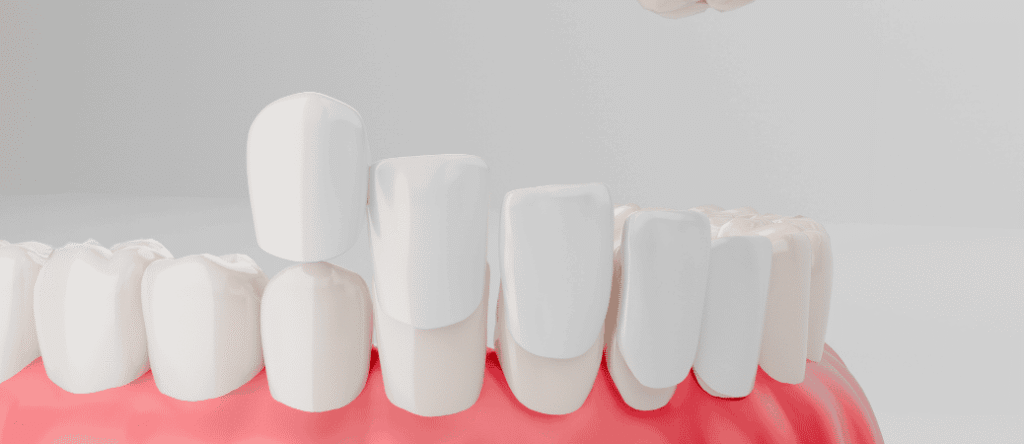
Porcelain veneers are thin shells bonded to the front of your teeth to change their color, shape, or length.
A cosmetic dentist decides if they’re right for you by looking past the surface, checking the health of your teeth and gums, how much enamel you have, and whether your bite puts unusual stress on your front teeth.
This article walks through the specific signs your dentist looks for, which tooth problems veneers handle well, and when something else needs to happen first.
Key Takeaways
- Healthy gums, enough enamel, and a stable bite are the three physical requirements for veneers.
- Veneers cover cosmetic issues like stains, chips, and small gaps, not decay, gum disease, or major bite problems.
- A consultation with a cosmetic dentist is the only way to know for sure, since enamel removal for veneers can’t be undone.
Do Your Teeth Meet the Basic Requirements for Veneers?
You’re a good candidate for porcelain veneers if your teeth and gums are healthy, you have enough enamel left for bonding, and your bite doesn’t put excess stress on your front teeth.
These three factors determine whether a veneer will bond well and hold up over the years.
Are Your Teeth and Gums Healthy?
Gum health comes first. Active gum disease, cavities, or tooth decay need treatment before a dentist will even talk about veneers.
That’s because the edge of a veneer sits right at the gum line. If your gums are inflamed or infected, that margin won’t seal properly, and the veneer is more likely to fail early.
Oral health has to be stable before cosmetic work starts.
Do You Have Sufficient Enamel for Bonding?
Veneer preparation varies depending on the tooth, material, and treatment plan.
Because porcelain veneers rely heavily on enamel for predictable bonding, your dentist will evaluate how much healthy enamel is available before recommending treatment.
When a tooth needs more structural coverage than a veneer can provide, a dental crown can restore and protect the tooth by covering more of its visible structure.
Is Your Bite Stable, and Is Grinding Under Control?
A stable bite protects your veneers from cracking or chipping. If you grind your teeth at night, a condition called bruxism, that habit can put serious force on thin porcelain shells.
If you grind or clench your teeth at night, your dentist may recommend a custom nightguard to help reduce the forces placed on your veneers during sleep.
Which Tooth Changes Are Porcelain Veneers Suited to?
Porcelain veneers work best on cosmetic flaws, not structural or health problems.
Stained teeth that won’t respond to whitening, chipped or worn edges, misshapen teeth, and small gaps are the classic reasons people choose veneers.
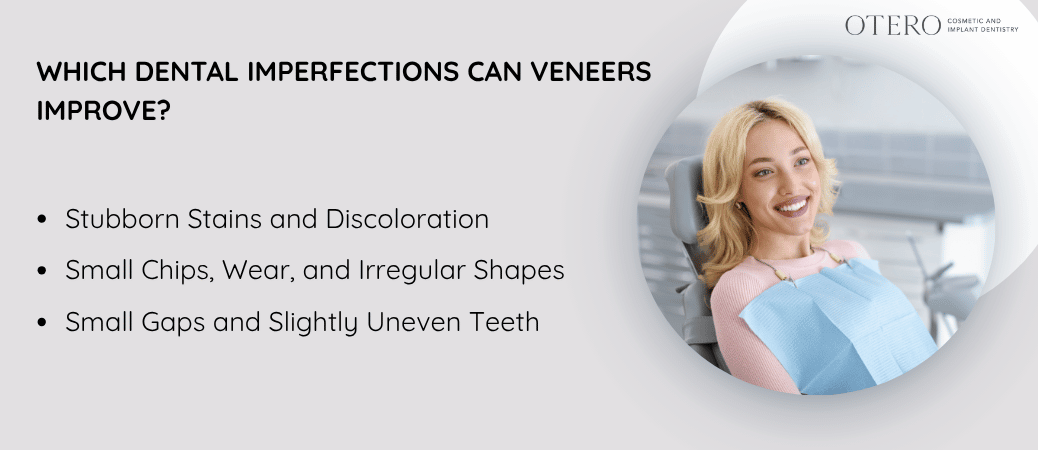
Stubborn Stains and Discoloration
Professional teeth whitening can effectively brighten many types of tooth discoloration, but some deeper stains may respond less predictably.
When whitening cannot produce the desired shade change, veneers may be considered for appropriate candidates.
Veneers can mask that color completely since the porcelain itself holds its own shade.
Keep in mind veneers don’t whiten over time the way natural teeth can respond to treatment, so your shade is chosen once and stays that way.
Small Chips, Wear, and Irregular Shapes
A chipped front tooth, a tooth that’s shorter than the others from years of wear, or a tooth that’s just oddly shaped are all good reasons to consider veneers.
The shell covers the flaw and restores a natural, even look.
This works well when the underlying tooth structure is otherwise sound. Veneers aren’t meant to rebuild a tooth that’s lost significant structure; that’s a job for a crown.
Small Gaps and Slightly Uneven Teeth
Veneers can improve the appearance of small gaps and mild unevenness when the underlying bite and tooth position are otherwise suitable.
They change the visible shape of the teeth rather than physically moving them.
Smile design during your consultation maps out exactly how much a veneer can shift the appearance of spacing or alignment without looking unnatural.
When Should Treatment Come Before Veneers?
Veneers go on hold until any active decay, gum disease, or major alignment problem is resolved first.
Placing a veneer over an unhealthy tooth or unstable bite sets the whole treatment up to fail early.
Treating Decay or Gum Disease First
Active cavities and gum disease generally need to be addressed before veneer treatment so the restoration is placed on a healthier, more stable foundation.
This means a round of fillings, professional cleaning, or other restorative dentistry sometimes comes first. It adds a step, but it protects the long-term success of your veneers.
Considering Orthodontics for Significant Alignment or Bite Problems
When tooth position needs to be addressed before cosmetic treatment, Invisalign can provide a discreet approach to moving appropriate teeth into better alignment.
Correcting significant crowding, rotation, or bite concerns first may create a healthier foundation for cosmetic treatment afterward.
Trying to mask major alignment problems with veneers alone tends to look unnatural and puts uneven pressure on the shells. Straightening first gives you a stronger, more predictable final result.
Choosing a Crown When a Tooth Needs More Support
A tooth with a large filling, a root canal, or significant structural damage usually needs a crown rather than a veneer.
Crowns cover the entire tooth and provide more support than a thin shell bonded only to the front surface.
Your dentist will tell you plainly if a crown is the better long-term choice for a specific tooth, even if you came in asking about veneers.
What Happens at a Veneer Consultation in Wilmington?
A veneer consultation is a full check of your enamel, gums, and bite, paired with an honest conversation about what veneers can and can’t do for your smile. This visit is where theory meets your actual mouth.
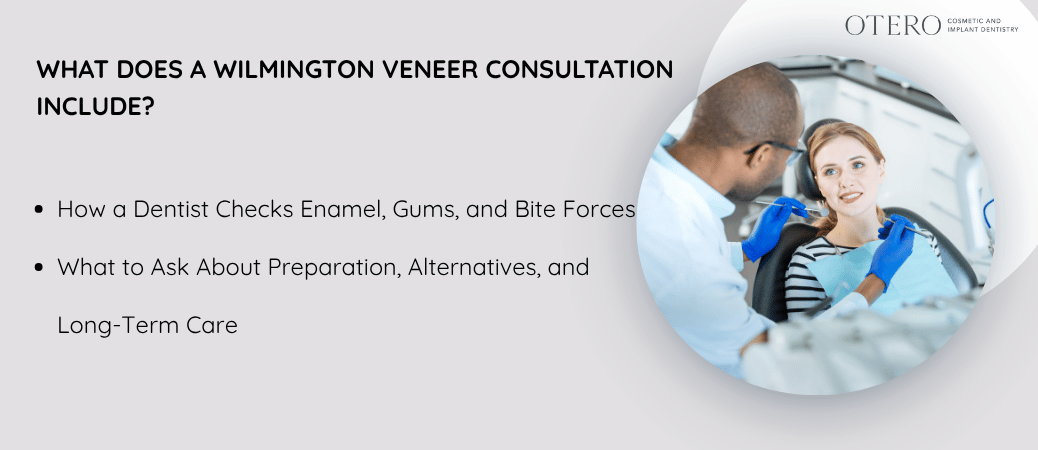
How a Dentist Checks Enamel, Gums, and Bite Forces
Your dentist examines each tooth that’s being considered, checking enamel thickness, gum tissue, and how your teeth come together when you bite down.
X-rays or digital scans usually come into play too, especially to spot decay that isn’t visible on the surface.
This exam decides not just whether you’re a candidate, but how many teeth need veneers to get a balanced, natural result.
What to Ask About Preparation, Alternatives, and Long-Term Care
Ask whether composite bonding or another cosmetic option might suit your goals, and discuss how preparation, materials, and long-term maintenance differ between treatment choices.
Bring up your oral hygiene routine honestly. Veneers can be a long-term dental solution, often lasting 10 to 15 years with good care, but that depends on how well you keep up with brushing, flossing, and regular checkups.
Choose Veneers Only When the Foundation Is Right

Porcelain veneers change the way your smile looks, but they only work as well as the teeth underneath them. Healthy teeth and gums, enough enamel, and a bite under control are what make a veneer last for years instead of months.
At Otero Cosmetic & Implant Dentistry, Dr. Misael Otero can evaluate your enamel, gum health, bite, and cosmetic goals to determine whether porcelain veneers provide an appropriate option for your smile before treatment begins.
Frequently Asked Questions
What disqualifies you from getting porcelain veneers?
Active gum disease, untreated cavities, and insufficient enamel are the main reasons someone isn’t ready for veneers yet.
Severe bite problems or uncontrolled teeth grinding can also delay treatment until those issues are managed.
None of these are permanent disqualifications; they just mean other treatment needs to happen first.
Can you get porcelain veneers if you have thin enamel?
Thin or weakened enamel makes veneers harder to bond successfully, and very thin enamel sometimes rules out traditional porcelain veneers.
A dentist may recommend a crown instead, since it covers more of the tooth and doesn’t rely as heavily on the enamel surface. Conditions like fluorosis can also affect enamel quality and bonding success.
Can you get veneers if you grind your teeth at night?
Grinding, known as bruxism, doesn’t automatically rule you out. A custom nightguard may be recommended to help reduce the forces placed on veneers during nighttime grinding or clenching.
Severe or unmanaged bruxism may increase the risk of chipping or other complications.
Do you need braces before veneers if your teeth are crooked?
Small, cosmetic gaps or mild unevenness can often be improved with veneers alone. Significant crowding, rotation, or bite misalignment usually calls for orthodontic treatment first, since veneers can’t physically move teeth into better position. Your dentist can tell you which category your smile falls into.
What should you know before deciding to get veneers?
Enamel removal for veneers is permanent, so it’s worth being confident in the decision before starting. Veneers don’t whiten over time and typically need replacement after 10 to 15 years, even with good care. A consultation is the best way to get a clear, honest answer about your own teeth and gums.