
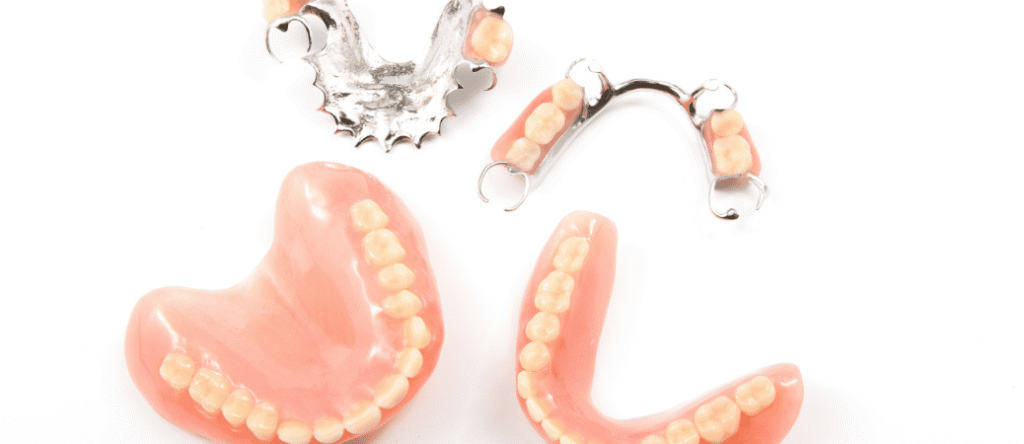
If you’re missing a few back teeth but still have healthy teeth everywhere else, a partial denture is usually the right fit.
Choosing between partial vs full dentures depends on how many teeth need replacement and the health of the teeth you still have.
A partial denture replaces specific missing teeth and uses remaining natural teeth for support, while a full denture replaces every tooth in an entire arch.
Back teeth do a lot of quiet work. Your molars grind food, hold your bite steady, and keep your front teeth from taking on pressure they weren’t built for.
Losing even two or three of them can throw off how you chew without you noticing right away.
The good news is that you do not need to lose all your teeth to restore your smile.
Dentures can be designed around the number and location of missing teeth, whether you need to fill a few gaps or replace an entire arch.
The health of your remaining teeth and gums helps determine which design may provide the best support.
Key Takeaways
- A partial denture fills specific gaps and uses remaining teeth for support, while a full denture replaces an entire arch and is supported by the gums and underlying tissues.
- Partial dentures for back teeth come in metal, acrylic, and flexible designs, each with different costs and durability.
- Conventional removable dentures replace missing teeth but do not replace their roots, so some patients may also consider implant-supported options when discussing long-term tooth replacement.
When Do You Need a Partial Rather Than a Full Denture?
You need a partial denture when you still have enough healthy teeth to support one, and a full denture when all the teeth in an arch are gone or too compromised to keep.
The decision isn’t about how many teeth you’re missing alone; it’s about the condition of what’s left behind.
Choosing between partial and full dentures comes down to one basic question: how many of your natural teeth are still strong enough to provide reliable support?
If you’ve lost a handful of back teeth but your front teeth and a few molars are solid, a removable partial denture fills those gaps without touching the healthy ones.
If tooth loss has spread across the whole arch, or if remaining teeth have advanced decay or gum disease, complete dentures may serve you better.
What Does Each Denture Replace?
A partial denture replaces one or more missing teeth within an arch, leaving your natural teeth in place. A full denture replaces an entire row, top or bottom, after all teeth in that arch have been removed.
Removable partial dentures are built around your existing teeth, with artificial teeth and a gum-colored base filling in the gaps only where you need them.
What Holds Each Denture in Place?
A partial denture stays in place using clasps or precision attachments that grip your natural teeth. A full denture relies on suction and the shape of your gums and jaw, sometimes with the help of denture adhesive for extra hold.
That difference in support is why remaining tooth health matters so much when choosing between the two.
How Do Partials Work for Missing Back Teeth?
A removable partial denture for back teeth restores your chewing surface by filling the gap with artificial teeth attached to a framework that clips onto nearby natural teeth.
This brings back a meaningful share of your chewing function, though it won’t fully match the strength of natural teeth or an implant-supported replacement.
Back teeth carry a big share of your bite force. When they’re missing, your front teeth often pick up the slack, wearing down faster than they should.
A well-fitted partial spreads that pressure back where it belongs, which helps protect bite alignment and can make speech clearer, since gaps in the back of the mouth sometimes affect how air and tongue placement work together.
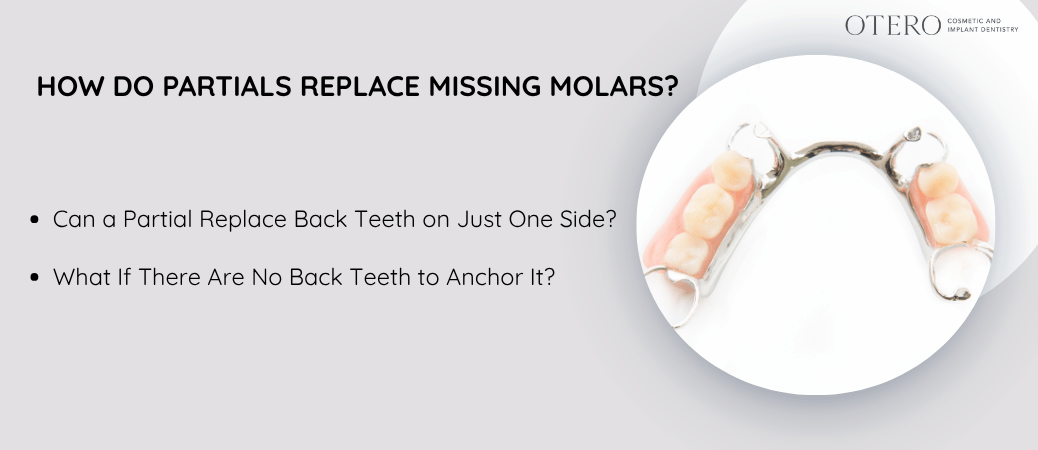
Can a Partial Replace Back Teeth on Just One Side?
Yes, a partial denture can replace back teeth on only one side of your mouth. However, the framework design depends on the location of the missing teeth and the support available from your remaining teeth.
Your dentist will determine how the appliance should be supported to provide appropriate stability during chewing.
What If There Are No Back Teeth to Anchor It?
When no back teeth remain to provide support, the partial denture requires more careful treatment planning.
Depending on your oral health and the location of the missing teeth, the design may use other remaining teeth for support or incorporate dental implants to improve stability.
Which Denture Designs Might Your Dentist Recommend?
Your dentist will likely recommend a cast metal, acrylic, or flexible partial for isolated back-to-tooth gaps, and reserve conventional or immediate full dentures for cases where most or all teeth in an arch need replacing.
Each denture design fits a different combination of missing teeth, remaining tooth strength, comfort needs, and treatment goals.
Cast Metal, Acrylic, and Flexible Partials
Cast metal partial dentures may be recommended for back teeth because their framework can provide strength and stability while remaining relatively thin.
Acrylic partial dentures use a plastic base with metal wire clasps; they cost less upfront but tend to be bulkier and more prone to breaking.
Flexible partial dentures use a thermoplastic material that bends slightly with your mouth and skips metal clasps entirely, which many patients find more comfortable for back-tooth gaps.
| Feature | Cast Metal | Acrylic | Flexible |
| Durability | High | Lower | Moderate |
| Comfort/bulk | Thin, lightweight | Bulkier | Flexible, snug |
| Repairable if broken | Yes | Yes | No |
| Relative cost | Higher | Lower | Mid-range |
Conventional and Immediate Full Dentures
Conventional full dentures are generally made after the tissues have had time to heal following tooth extraction. The timing varies depending on the extent of treatment and how your mouth heals.
Immediate dentures are placed the same day teeth are removed, letting you leave the office without a gap, though they’ll need adjusting once your gums finish healing and shrinking.
How Do Implants Change Denture Stability?
Dental implants add a fixed anchor point that neither a partial nor a full denture has on its own. Implant-supported dentures attach to implants placed in the jawbone, providing added stability during chewing compared with conventional removable dentures.
Dental implants may also be used to support certain removable restorations or replace individual missing teeth.
What Should You Weigh Before Choosing?
Weigh the health of your remaining teeth and gums, how much the appliance will cost, and how it compares with fixed options like bridges before deciding on a denture.
These factors interact, so it helps to look at them together rather than one at a time.
How Do Tooth and Gum Health Affect Your Options?
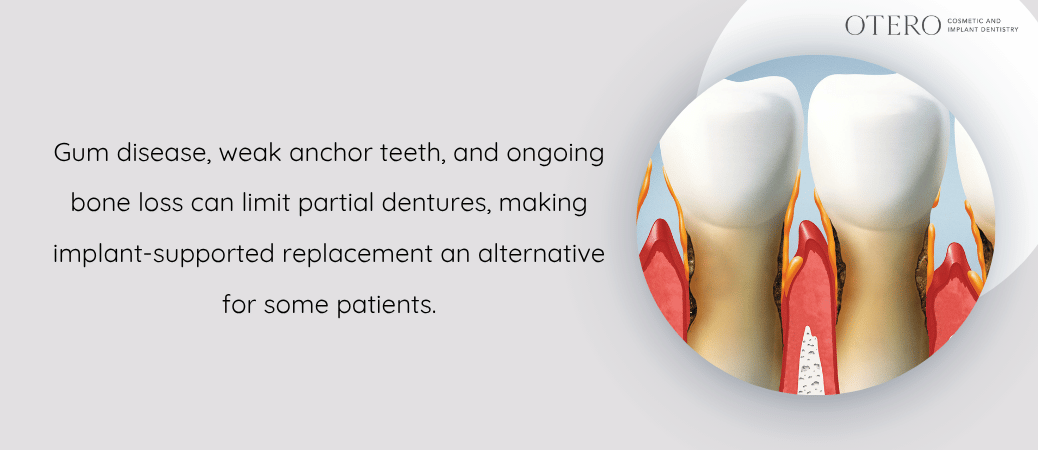
Gum disease and weak remaining teeth can rule out a partial denture, since the appliance depends on healthy anchor teeth to stay in place.
Jawbone changes can continue after tooth loss because conventional removable dentures do not replace the tooth roots that once stimulated the surrounding bone.
This is one reason some patients explore implant-supported tooth replacement.
How Do Fit, Cost, and Other Replacements Compare?
Denture fit changes over time as your gums and jawbone shift, which is why regular check-ups matter for both partials and full dentures.
Treatment cost varies based on the type of denture, materials used, number of teeth being replaced, and whether additional dental procedures are needed.
Fixed options such as bridges and dental implants involve different treatment considerations, so comparing the overall treatment plan is more useful than choosing based on price alone.
If you’re also weighing whether modern fabrication methods affect fit, this comparison of digital dentures vs. conventional dentures is worth a look.
Choose a Replacement That Fits the Teeth You Still Have

The teeth you still have should guide this decision more than the number of teeth you’ve lost.
Partial dentures protect and work alongside healthy natural teeth, while full dentures make sense once an entire arch needs replacing.
Either way, the goal is the same: steady chewing, a comfortable fit, and protection for your remaining oral health.
At Otero Cosmetic & Implant Dentistry, Dr. Misael Otero can evaluate your remaining teeth, gums, bite, and tooth-replacement needs to help determine whether a partial denture, full denture, or another restorative option better fits your smile.
Frequently Asked Questions
Can you get a partial denture if you have no back teeth left?
Yes, but your dentist may need to adjust the design. Options include anchoring the partial on front teeth with extended connectors or placing a dental implant in the back to give the appliance a stable point to clip onto.
Can a partial denture replace back teeth on only one side?
Yes, a partial denture can replace back teeth on only one side of the mouth. The framework and support needed depend on the location of the missing teeth, the condition of the remaining teeth, and the overall denture design.
What type of partial denture works best for back teeth?
Cast metal partial dentures may be recommended for back teeth because their framework can provide strength and stability while remaining relatively thin. Your dentist can recommend a material based on the location of the missing teeth, available support, and your individual needs.
Are partial dentures easier to wear than full dentures?
Many patients find partial dentures easier to adjust to because natural teeth help anchor and stabilize them, improving chewing ability right away.
Full dentures rely on suction and gum contact alone, which can take longer to feel secure.
How much do partial dentures cost compared with full dentures?
The cost of partial and full dentures varies based on the materials used, number of teeth being replaced, appliance design, and any additional treatment needed.
Your dentist can evaluate your needs and provide an estimate based on your individual treatment plan.
Why should you take a partial denture out at night?
Removing a partial denture at night gives the gums and supporting tissues a break and allows you to clean both the appliance and your natural teeth thoroughly.
Follow your dentist’s instructions for how long to leave your denture out and how to store it overnight.