
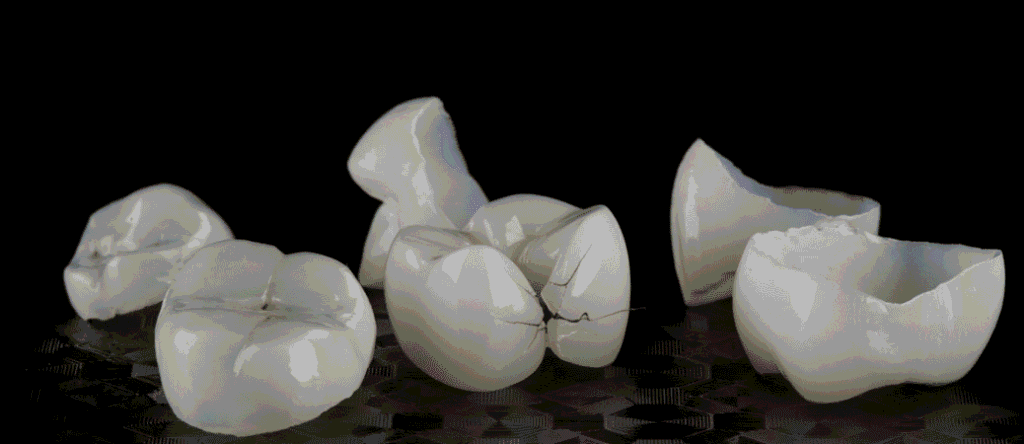
When a crown breaks or comes off a second time, the cause is usually something beneath or around it.
A well-planned dental crown can restore and protect a damaged tooth when enough healthy structure remains, but repeated failure may point to an unsolved problem with your bite, a grinding habit, or the tooth beneath the restoration.
That is frustrating, especially after you paid for a replacement. The good news is that each type of failure leaves clues.
A cracked crown, a crown that pops off whole, and a crown that takes a piece of tooth with it all tell your dentist something different.
If this is your first crown problem, the background in our post on why dental crowns fail is a better starting point. This article explores why dental crowns keep breaking.
Key Takeaways
- Repeat crown failure is a sign to look for a root cause before replacing anything.
- A broken crown and a broken tooth under the crown lead to very different next steps.
- Bite checks, X-rays, and a nightguard often protect the next crown more than a stronger material does.
Why Did the Replacement Crown Break Again?
The most common reasons a second crown fails are too much biting force, weak support underneath, or a fracture in the tooth itself.
Grinding and a high bite overload porcelain, a short or decayed tooth lets the crown work loose, and a cracked root can make a perfectly good crown look like the culprit.
Did the Bite Put Too Much Pressure on the New Crown?
Your bite is the first thing to question. If the new crown sits even slightly high, it takes a hard hit every time you chew. Over months, that repeated force chips porcelain or loosens the cement.
Teeth grinding, called bruxism, adds even more force. Many people grind at night and never know it. Signs include:
- Flat or chipped edges on your other teeth
- A sore jaw or headache when you wake up
- Sensitive teeth with no clear cause
- A partner who hears grinding sounds
Was the Crown Loose or Poorly Supported?
A loose crown that keeps coming off whole often lacks grip. Crowns need enough healthy tooth structure and a suitable shape to provide adequate retention and suppor.
When a tooth is short, worn, or tapered, the crown has little to grab.
Other support problems include:
- Cement that broke down or washed out
- A small gap at the edge that let bacteria in
- Decay softening the tooth under the crown
- A core build-up that cracked or came loose
If the same crown has been re-cemented more than once, re-cementing it again rarely fixes the reason it fell out.
Did the Crown Break, or Did the Tooth Beneath It Break?
This is the key question, and the answer changes your options. Look at what came out of your mouth.
| What You See | Likely Problem | Practical Next Step |
| Crown intact, inside looks clean | Cement or grip failure | Check fit and tooth height; possible re-cement |
| Chip or crack in the porcelain | Bite force or grinding | Bite adjustment, nightguard, possible new crown |
| Tooth piece stuck inside the crown | Fractured tooth structure | X-rays to see how much tooth remains |
| Dark, soft material inside | Decay under the crown | Remove decay, then reassess the tooth |
When a piece of tooth is inside the crown, the crown may be fine. The foundation gave way. That tooth needs a careful look before anyone talks about another crown.
When Is the Tooth Itself the Recurring Problem?
The tooth itself may be the recurring problem when too little healthy structure remains, decay or a crack has developed, or a root canal-treated tooth has already lost substantial structure from previous decay and restorative treatment.
Cracks can be harder to identify, particularly in a tooth that has already undergone extensive treatment. Root canal-treated teeth may be more vulnerable to fracture when substantial tooth structure has been lost.
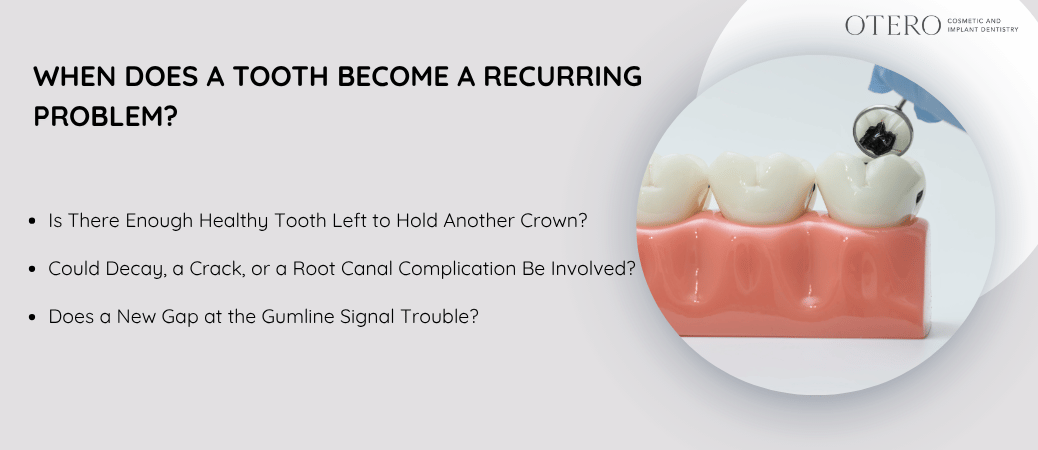
Is There Enough Healthy Tooth Left to Hold Another Crown?
Every crown replacement removes a little more tooth. Old cement, decay, and the reshaping needed for a new fit all take material away.
After two or three rounds, some teeth are too short or thin to grip a crown well.
Your dentist may suggest a few ways to add support:
- A core build-up to rebuild height
- A post inside a root canal tooth to anchor the core
- Crown lengthening, a gum procedure that exposes more tooth
- Moving to an implant if the tooth cannot be rebuilt
It’s fair to ask your dentist directly: “How much tooth is left, and will it hold another crown for years?”
Could Decay, a Crack, or a Root Canal Complication Be Involved?
Hidden decay under a crown is a frequent reason for repeat failure. It forms at tiny gaps along the edge, where your toothbrush cannot reach.
Cracks are harder to see. A tooth after root canal treatment has no nerve, so a crack can grow with no pain at all. These teeth also tend to be more brittle.
If you have had a root canal, our guide to a crown after root canal explains why these teeth need extra support.
Signs of a root canal problem include a pimple on the gum, a bad taste, or soreness when you bite.
Does a New Gap at the Gumline Signal Trouble?
Yes, a new gap or dark line at the gumline deserves attention. Gum recession can pull the gums away from the crown edge. That exposes the root, which is softer than enamel and decays faster.
A gap also traps food and plaque. Over time, decay eats under the crown edge, the crown loosens, and it may break off right at the gumline.
If you can catch a fingernail on the edge, mention it at your visit.
What Should Your Dentist Check Before Replacing It Again?
Repeated crown failure deserves more than another replacement.
An experienced dentist such as Dr. Misael Otero can evaluate the bite, remaining tooth structure, restoration margins, and imaging to identify factors that could put another crown at risk.
How Can an Exam Identify the Original Cause?
A thorough exam combines several checks. Ask whether each of these was done:
- Bite test with marking paper to find high spots
- Wear check on other teeth for signs of grinding
- Bitewing and periapical X-rays to look for decay and bone loss
- Nerve testing if the tooth has not had a root canal
- Inspection of the old crown to see where and how it broke
For suspected root cracks, a 3D scan helps. The American Association of Endodontists supports limited cone beam CT for diagnosing suspected vertical root fractures.
Your dentist may also want to see the broken crown, so bring it.
Can the Crown Be Repaired or Re-Cemented?
Re-cementing works when the crown is undamaged, fits snugly, and the tooth underneath is healthy. It is quick and costs far less than a new crown.
Repair is limited. A small porcelain chip can sometimes be smoothed or patched with tooth-colored resin. Cracks through the crown, or chips on the chewing surface, call for replacement.
Re-cementing is the wrong move if the crown has come off before for the same reason. Ask what will be different this time.
When Would a New Crown or Dental Implant Make More Sense?
A new crown may make sense once the cause of the previous failure has been addressed and enough healthy tooth remains to support the restoration.
Material selection may also be considered based on the location of the tooth, bite forces, and individual restorative needs.
A dental implant makes more sense when the tooth is cracked into the root, too short to hold a crown, or keeps decaying.
Dental implants need time to integrate with the surrounding bone before the final restoration is placed, and the healing timeline varies according to the treatment site, bone health, and individual healing.
| Situation | Best Fit |
| Crown intact, tooth healthy | Re-cement after fixing bite |
| Crown cracked, tooth solid | New crown plus nightguard |
| Tooth too short or weak | Build-up, post, or crown lengthening |
| Root cracked or tooth unsalvageable | Extraction and implant |
What Should You Do While Waiting for an Appointment?
Keep the crown, protect the exposed tooth, and call your dentist within a day or two. Most broken crowns can wait a few days, but some symptoms need same-day care.
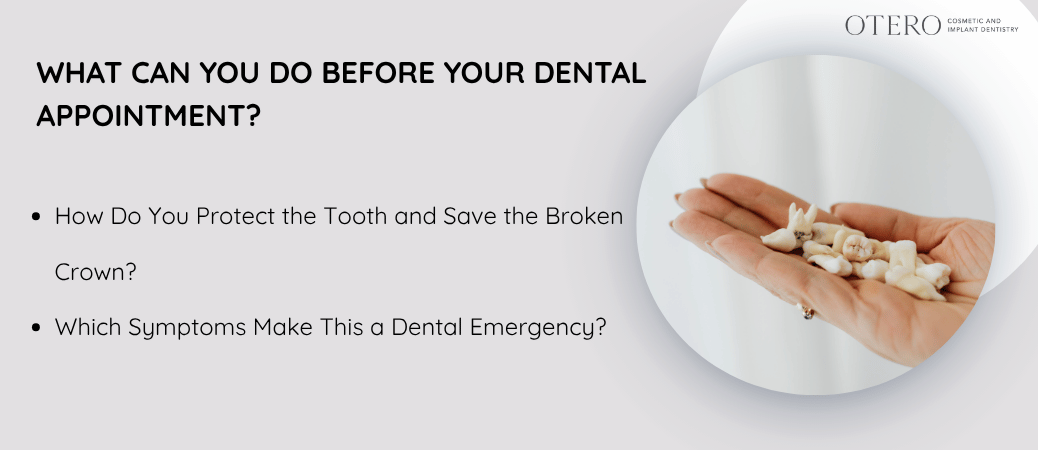
How Do You Protect the Tooth and Save the Broken Crown?
Start with the crown itself:
- Pick it up by the edges and rinse it with water
- Store it in a clean, dry container
- Save any tooth pieces too
- Do not scrub the inside
Then care for the tooth. Rinse with warm salt water (half a teaspoon in 8 ounces of water). Chew on the other side. Dental wax from a pharmacy covers sharp edges.
Keep the crown in a clean container and protect the exposed tooth until it can be evaluated.
Never use superglue or household adhesives, and do not force the crown back into place if it does not fit comfortably.
Which Symptoms Make This a Dental Emergency?
Call right away or seek urgent care if you have:
- Severe or constant pain
- Swelling in your face or gums
- Fever
- Trouble swallowing or breathing
- A sharp edge cutting your cheek or tongue
These signs can mean infection or a nerve problem.
How Can You Reduce the Chance of Another Failure?
You lower the odds of a third failure by controlling biting force and keeping the crown edge clean. Those two habits address the most common repeat causes.
Should You Ask About a Nightguard or Bite Adjustment?
Yes, ask about both if you grind or if your crown keeps cracking. A custom nightguard spreads grinding force across all your teeth and takes the strain off the crown.
Store-bought guards fit loosely and can shift; a dentist-made guard fits snugly.
A bite adjustment smooths high spots so one tooth stops taking the hardest hit. It takes only a few minutes. After any new crown, report a bite that feels “off” within the first week. Small fixes early prevent cracks later.
Also skip habits that crack porcelain: chewing ice, biting pens, and opening packages with your teeth.
How Can Daily Care Protect the Crown Margin?
The crown margin, the edge where the crown meets tooth, is where decay starts. Good oral hygiene there protects the tooth holding up your crown.
- Brush twice a day with fluoride toothpaste, angling bristles toward the gumline
- Floss daily, sliding the floss out sideways near the crown
- Use a small interdental brush if food packs next to the crown
- Get professional cleanings every six months so tartar and early decay get caught
Fix the Cause Before Replacing the Crown Again

A crown that broke a second time is giving you useful information. Grinding, a high bite, a short or decayed tooth, or a cracked root can all sit behind repeat failure.
Each one has its own fix, from a nightguard to an implant.
Before you agree to another crown, ask your dentist to check your bite, take X-rays, and explain how much healthy tooth remains.
Frequently Asked Questions
How many times can a dental crown be replaced?
There is no set number, but each replacement removes a bit more tooth. Many teeth handle two or three crowns over a lifetime.
Once too little healthy structure remains, a build-up, post, or implant becomes the better option.
Why did my replacement crown break off at the gumline?
A crown that snaps off at the gumline usually means the tooth broke, not just the crown. Decay at the edge or a fracture in a heavily restored root canal-treated tooth may be involved.
Can a crown that fell out again wait if it doesn’t hurt?
It can wait a day or two, but not weeks. A painless tooth may have a dead nerve or hidden crack, and the exposed tooth decays and shifts quickly. Call for an appointment within a few days.
Is my dentist responsible if a replacement crown fails?
Warranty policies vary by dental practice and laboratory. Ask your dentist what may have caused the failure and whether any replacement or warranty policy applies to your restoration.
What are the signs that my replacement crown doesn’t fit properly?
A crown that feels high when you bite, traps food, or has an edge you can catch with your fingernail may not fit well.
Sensitivity that lingers past two weeks or gums that stay sore around the crown are also warning signs. Report these early so your dentist can adjust or redo the crown.