

Getting a root canal can feel scary, especially when people worry about pain after the procedure. Many patients wonder if the discomfort they feel is normal or something to worry about.
Most people experience mild to moderate pain for a few days after a root canal, which is completely normal and part of the healing process.
Pain after root canal treatment happens because the dentist cleans deep inside the tooth, which causes some swelling and soreness. The good news is that this pain should get better each day.
Understanding what to expect can help patients feel more comfortable and know when everything is healing properly. Learning about pain management and warning signs helps people take better care of themselves during recovery.
Key Takeaways
- Root canal pain typically lasts only a few days and can be managed with over-the-counter medications
- Inflammation from the cleaning process causes most post-procedure discomfort, which decreases over time
- Patients should contact their dentist if pain lasts longer than three days or gets worse instead of better
Causes of Post-Root Canal Pain

Several factors can cause pain after a root canal procedure. The most common reasons include tissue inflammation from the cleaning process, problems with how teeth fit together after treatment, and areas inside the tooth that weren’t fully cleaned.
Inflammation and Tissue Trauma
The root canal cleaning process naturally causes some tissue damage around the tooth. During endodontic treatment, dentists remove infected pulp and clean the inside of tooth roots.
This cleaning creates inflammation in the surrounding tissues. The area around the tooth becomes swollen and tender as the body starts healing.
Common signs of normal inflammation include:
- Mild to moderate pain for 2-3 days
- Sensitivity when biting down
- Slight swelling around the gum line
Pain after a root canal procedure typically peaks within 24-48 hours. The discomfort should slowly get better each day.
Over-the-counter pain medicine usually helps control this type of post-root canal pain. Ice packs can also reduce swelling during the first day.
Bite Misalignment and High Fillings
When temporary fillings or permanent restorations are placed too high, they create bite problems. The treated tooth hits other teeth before the rest of the mouth closes properly.
This makes the tooth work harder than normal when chewing. The extra pressure causes ongoing pain and sensitivity.
Signs of bite problems include:
- Sharp pain when biting down
- Tooth feels “tall” or different
- Jaw muscle soreness
- Pain that gets worse with eating
Dentists can easily fix this issue by adjusting the filling height. A simple grinding procedure removes the extra material and evens out the bite.
Most patients feel immediate relief after bite adjustment. The tooth should feel normal when closing the mouth.
Missed or Untreated Canals
Some teeth have extra canals that are hard to find and clean. When a missed canal contains infected tissue, it continues causing pain after treatment.
Root canals can have complex shapes and branches. Even skilled dentists sometimes miss small canals, especially in back teeth.
Teeth most likely to have missed canals:
- Upper molars (often have 4+ canals)
- Lower molars (may have extra canals)
- Teeth with curved or split roots
Recurring pain after root canal treatment may signal incomplete cleaning. The pain often throbs and doesn’t improve with regular pain medicine.
Gutta-percha filling material might not seal all areas if canals were missed. This allows bacteria to remain inside the tooth.
Additional treatment is usually needed to find and clean missed canals. Some cases require referral to an endodontic specialist.
Managing and Relieving Root Canal Pain
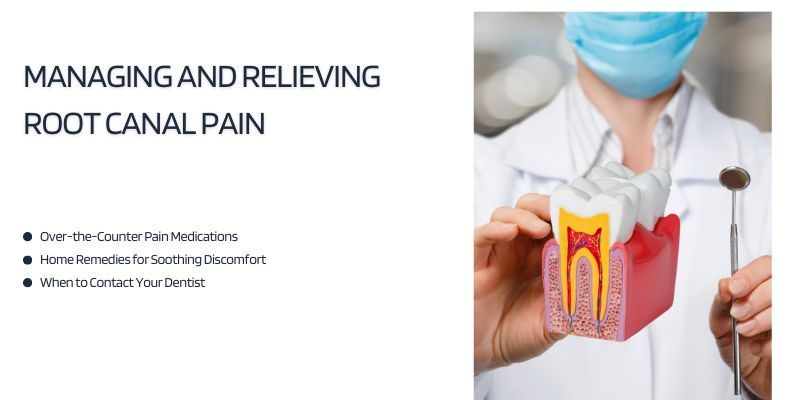
Pain after a root canal typically lasts only a few days and can be managed with simple medications and home care techniques. Knowing when to seek additional dental care helps ensure proper healing.
Over-the-Counter Pain Medications
Over-the-counter pain relievers are usually enough to manage mild to moderate discomfort after a root canal. Ibuprofen (Advil, Motrin) works well because it reduces both pain and swelling.
Acetaminophen (Tylenol) is another good option, especially for patients who cannot take ibuprofen. Some people find that alternating between these two medications provides better pain control.
Patients should check with their doctor before taking any pain medications. This helps avoid problems with other medications or supplements they might be taking.
The dentist may recommend prescription-strength ibuprofen for more severe pain. Narcotic pain relievers are sometimes needed but only for temporary use.
Home Remedies for Soothing Discomfort
Cold compresses help reduce swelling and numb pain around the treated tooth. Patients can wrap ice or frozen vegetables in a clean towel and apply it to the outside of their cheek for 15-20 minutes at a time.
Salt water rinses can help keep the area clean and reduce irritation. Mix half a teaspoon of salt in warm water and gently swish it around the mouth.
Avoiding hard, crunchy, or very hot and cold foods helps prevent additional pain. Soft foods are easier on the treated tooth while it heals.
Good oral health practices like gentle brushing and daily flossing support proper healing. Patients should brush carefully around the treated area.
When to Contact Your Dentist
Pain that lasts longer than three days needs attention from a dentist or endodontist. Severe pain or swelling may mean the tooth needs additional cleaning.
Signs that require immediate dental care include severe throbbing pain, visible swelling of the face or gums, or pain that gets worse instead of better. Fever along with dental pain is also concerning.
Some patients need additional cleaning sessions to fully treat the tooth. Recurring pain often indicates this need.
If over-the-counter medications do not help control the pain, the dentist can prescribe stronger options. They may also check if the temporary filling or crown is causing problems.
Don’t let root canal pain hold you back! Schedule an appointment with our Wilmington, NC team today for expert care and relief.
Promoting Recovery and Preventing Complications
Proper oral hygiene, careful food choices, and completing the final restoration are essential for healing after a root canal. These steps help prevent infection and ensure the treated tooth remains healthy for years to come.
Brushing and Flossing After a Root Canal
Patients should continue brushing their teeth gently after a root canal procedure. They need to be extra careful around the treated tooth to avoid irritation.
A soft-bristled toothbrush works best during the healing period. Patients should brush with light pressure and avoid scrubbing the area too hard.
Maintaining good oral hygiene helps prevent complications after the dental procedure. Clean teeth reduce the risk of new infections forming.
Flossing remains important but requires extra care. Patients should floss gently around the treated tooth without pulling or snapping the floss.
Salt water rinses can help keep the mouth clean between brushings. Mix half a teaspoon of salt in warm water and rinse gently twice daily.
Diet and Eating Tips Post-Procedure
Eating soft foods helps protect the treated tooth during healing. Hard or crunchy foods can cause pain and damage.
Recommended soft foods include:
- Mashed potatoes
- Yogurt
- Scrambled eggs
- Soups and broths
- Smoothies
Patients should chew on the opposite side of their mouth when possible. This reduces pressure on the treated tooth and prevents discomfort.
Foods to avoid during recovery:
- Hard candy or nuts
- Sticky foods like caramel
- Crunchy snacks like chips
- Very hot or cold beverages
These dietary changes typically last 3-5 days after the procedure. Patients can gradually return to normal foods as healing progresses.
Importance of Final Restoration
The final restoration protects the treated tooth from future damage. Most root canal procedures require a crown or large filling to complete the treatment.
Temporary fillings placed after root canals are not meant to last long. They only protect the tooth until the final restoration appointment.
Patients should schedule their final restoration within 2-4 weeks of the root canal. Delaying this step increases the risk of tooth fracture or reinfection.
A permanent crown or filling:
- Seals the tooth completely
- Restores full chewing function
- Prevents bacteria from entering
- Strengthens the remaining tooth structure
Without proper final restoration, the success of the entire dental procedure is at risk. The treated tooth may break or develop new problems that require additional treatment.
Ensure your recovery stays on track. Schedule an appointment with our Wilmington, NC team today to manage your post-root canal healing.
When Pain Persists: Next Steps and Retreatment
Severe pain several days after treatment requires immediate dental attention, as persistent infection or incomplete nerve removal may be the cause. Professional retreatment can address these complications and restore comfort.
Warning Signs of Persistent Problems
Patients should watch for specific symptoms that indicate their root canal treatment needs additional attention. Pain that continues beyond three days or gets worse instead of better signals a potential problem.
Immediate concerns include:
- Severe throbbing pain that doesn’t respond to over-the-counter medications
- Swelling around the treated tooth or jaw
- Fever or general feeling of illness
- Gum bleeding or other complaints reemerging
Some patients experience pain that goes away and then returns. This pattern often indicates persistent infection that wasn’t completely eliminated during the initial procedure.
If nerves remain in the tooth after the procedure, ongoing discomfort will continue. The treated tooth may also need proper restoration to prevent further complications.
Role of Retreatment and Additional Procedures
An endodontist can perform retreatment when the initial root canal doesn’t fully resolve the problem. Root canal retreatment is a non-surgical procedure that involves reopening the tooth to clean out any remaining infected tissue.
During retreatment, the dentist removes the previous filling material and thoroughly cleans the root canals again. This process allows them to reach areas that may have been missed during the first treatment.
The retreatment process typically involves:
- Removing the crown or filling
- Cleaning out old root canal material
- Disinfecting the canals thoroughly
- Sealing the tooth with new materials
Patients can expect a recovery period similar to the initial root canal treatment following retreatment. Most people experience mild discomfort for a few days as the area heals.
In some cases, surgical procedures may be necessary if non-surgical retreatment isn’t successful. These options help save the natural tooth when standard retreatment isn’t enough.
Frequently Asked Questions
How long should I expect some discomfort after a root canal treatment?
Normal pain after a root canal usually lasts for a few days. Most patients feel mild to moderate discomfort during this time.
The pain should get better each day. If someone still has pain after three days, they should call their dentist.
Some patients may have mild pain for up to a week after the procedure. This is still normal for most people.
What can I do at home to manage pain following a root canal?
Over-the-counter pain medications work well for most root canal pain. People can take acetaminophen (Tylenol) or ibuprofen (Advil, Motrin IB).
Patients should check with their doctor before taking any new medications. This makes sure the pain medicine won’t mix badly with other drugs they take.
Avoiding hard foods right after the procedure helps reduce pain. Soft foods put less pressure on the treated tooth.
People can also try stress-relief activities like meditation or gentle yoga. These activities can help take their mind off the pain.
Is it normal to experience severe pain after a root canal, and what should I do if it happens?
Severe pain after a root canal is not normal. Most people should only feel mild to moderate pain for a few days.
If someone has severe pain, they should contact their dentist right away. This could mean the tooth needs more cleaning or treatment.
Pain that gets worse instead of better may need prescription-strength pain medicine. The dentist might also need to do additional procedures.
Why might a tooth that had a root canal years ago start to hurt?
A tooth with an old root canal can hurt for several reasons. The crown or filling might be damaged or loose.
Sometimes bacteria can get into the tooth again. This can happen if the seal breaks down over time.
The tooth might have developed a crack or fracture. Even treated teeth can still get damaged from normal wear and tear.
Patients should see their dentist if an old root canal tooth starts hurting. The dentist can check what’s causing the new pain.
Should I be concerned if I feel pain when biting down after a root canal?
Some pressure and sensitivity when biting is normal right after a root canal. This usually goes away in a few days.
If the pain when biting gets worse or lasts more than a week, patients should call their dentist. The bite might need to be adjusted.
Sometimes a new crown can cause bite problems. The dentist can fix this by making small adjustments to the crown.
What steps should I take if my tooth is sensitive to pressure following a root canal?
Pressure sensitivity in the first few days after treatment is normal. Patients should avoid chewing on that side of their mouth.
Over-the-counter pain medicine can help with pressure sensitivity. Taking the medicine as directed on the package usually provides relief.
If pressure sensitivity lasts longer than a week, patients should schedule a follow-up visit. The dentist may need to check if the root canal was completely successful.
Eating soft foods and avoiding very hot or cold drinks can also help reduce sensitivity.