

A root canal is supposed to end tooth pain for good. So when discomfort shows up again months after you thought the problem was solved, it can feel confusing and a little scary.
You may wonder if the infection came back, if something new is wrong, or if the tooth is failing.
Root canal pain that returns after a symptom-free stretch almost always has a specific, findable cause.
It might be a bit of infection that never fully cleared, a hidden canal that was missed the first time, a crack in the tooth, or even a problem with your bite.
The tooth rarely “just starts hurting” for no reason, and figuring out the exact cause is what determines whether the tooth can be saved.
Experiencing root canal pain months later is different from the mild soreness you may feel right after treatment.
Early tenderness can be part of normal healing, but pain that returns after the tooth has felt fine for weeks or months deserves a dentist’s evaluation rather than more time alone.
Key Takeaways
- Pain returning after a quiet period usually means an identifiable problem, not just bad luck or a “sensitive tooth.”
- Causes range from reinfection and missed canals to cracks, bite problems, or pain coming from somewhere other than the tooth.
- Imaging, a bite test, and a specialist opinion help pinpoint the cause before deciding between retreatment, surgery, or extraction.
Why Pain Can Return After a Symptom-Free Period
Pain that comes back after months of feeling fine usually means bacteria have found their way back into the tooth, a crack has developed, or the bite is putting uneven pressure on the area.
Root canal treatment removes infected pulp tissue and seals the space, but the tooth is not immune to new problems just because it no longer has a nerve.
Why a Treated Tooth Can Still Feel Pain
A root canal-treated tooth loses its nerve, but the tissue and bone around the root can still feel pain. That surrounding tissue is where infection, pressure, or inflammation shows up.
Discomfort that returns after treatment usually has a specific, identifiable cause rather than being random.
When Returning Symptoms Suggest Root Canal Failure
Certain symptoms point more directly toward root canal failure than simple sensitivity.
These include gum swelling near the tooth, a small bump on the gum (called a fistula) that may drain fluid, pain when biting or chewing, and a dull ache that lingers instead of coming and going quickly.
This kind of delayed pain can signal infection, a crack, or bite problems, and each of these needs a different fix.
Recurrent infection, sometimes called reinfection, happens when bacteria that were never fully removed start multiplying again, or when new bacteria find a path back into the tooth.
Which Symptoms Need Same-Day Care
Some symptoms are not something to wait out. Get same-day dental care if you notice:
- Facial swelling that is spreading or getting worse
- Fever along with tooth pain
- Difficulty swallowing or breathing
- Rapidly worsening pain or swelling in the gum
These signs can point to a dental infection that is spreading beyond the tooth, which needs prompt treatment rather than a routine appointment.
If you cannot reach your regular dentist, an urgent care dental visit or emergency room evaluation is appropriate.
What Can Cause a Previously Treated Tooth to Hurt Again?
A tooth that hurts again months after root canal treatment usually falls into one of a few categories: leftover or new infection, a leaking restoration, a crack or fracture, a bite problem, or pain that is not actually coming from that tooth at all.
Sorting out which one you are dealing with changes the entire treatment plan.
Missed Canals, Accessory Canals, and Remaining Bacteria
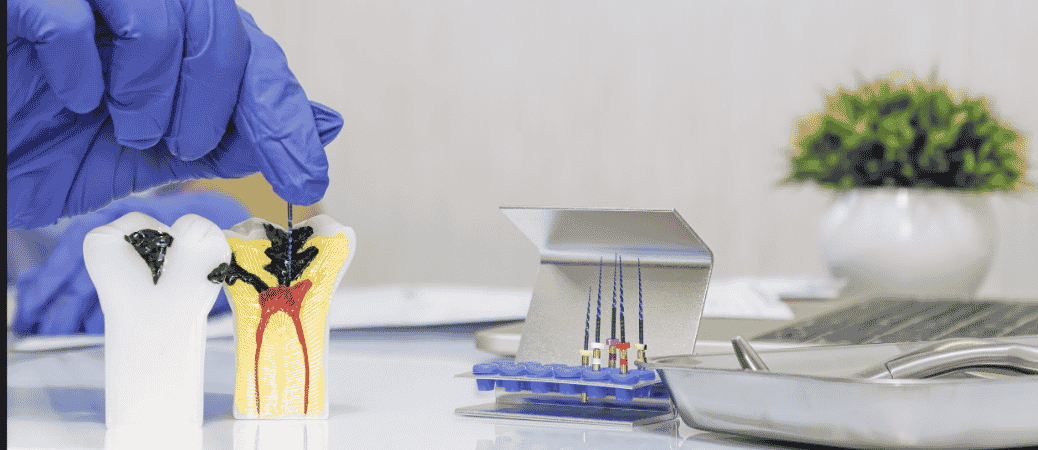
Tooth roots often have more canals than standard imaging shows. Small side branches, called accessory canals, or an entire missed canal can hide infected pulp that was never cleaned out during the original procedure.
Even a tiny amount of bacteria left behind can multiply slowly over months before causing noticeable pain.
This is one of the most common reasons a root canal-treated tooth starts hurting again, especially in molars with complex root shapes.
A Leaky Restoration or New Decay
A root canal filling depends on a well-sealed crown or filling on top to keep bacteria out.
When appropriate, a properly fitted dental crown can protect the remaining tooth structure and provide lasting coverage after root canal treatment.
If the restoration develops a gap, wears down, or develops new decay around its edges, bacteria may find a path back into the tooth.
Cracks, Fractures, and Structural Damage
A cracked tooth or cracked root can let bacteria in even when the root canal itself was done well.
A vertical root fracture is especially hard to catch early because it may not show pain until the crack has widened enough to let infection spread through the bone.
Root-canal treated teeth can be more prone to fracture over time since they tend to be more brittle after losing part of their structure.
A High Bite, Grinding, or Occlusal Trauma
A high bite from a new crown or filling can put too much pressure on the tooth every time you chew, which shows up as pain when biting down.
Occlusal trauma from a bite that does not line up correctly, or from bruxism (teeth grinding), can stress the root and surrounding bone even without any infection present.
When the Pain Is Not From the Root Canal Tooth
Pain months after a root canal is not always coming from that tooth at all.
Gum disease near the tooth, sinusitis (especially for upper back teeth close to the sinus), temporomandibular joint (TMJ) problems, or nerve-related pain called atypical odontalgia can all mimic root canal pain.
Dentists describe pain coming from the tooth itself as odontogenic pain, and pain from another source as non-odontogenic pain.
Telling these apart is part of what a thorough exam is for, since treating the wrong source will not resolve the discomfort.
How a Dentist Finds the Source of Delayed Pain
A dentist finds the source of delayed root canal pain by combining a hands-on exam with imaging like periapical X-rays or a CBCT scan (cone beam CT).
This combination shows both the physical condition of the tooth and what is happening beneath the gum line, where infection or fractures often hide.
Examining the Tooth, Crown, Gums, and Bite
The exam starts with a visual and physical check of the tooth, its crown, and the surrounding gum tissue. Your dentist looks for swelling, drainage, gum recession, and any visible cracks in the tooth or restoration.
What a Bite Test Can Reveal
A bite test asks you to bite down on a small stick or tool at different points on the tooth.
Sharp pain in one specific spot can point to a cracked cusp or root, while general pressure pain across the whole tooth suggests a high bite or occlusal trauma that may need a bite adjustment.
When Periapical X-Rays and CBCT Scans Are Needed
A periapical X-ray shows the root and surrounding bone in two dimensions and can reveal bone loss or a dark shadow at the root tip that signals infection.
A CBCT scan builds a 3D image and can catch missed canals, small fractures, or bone changes that a flat X-ray misses entirely. Your dentist may order a CBCT scan if the standard X-ray does not explain your symptoms clearly.
When to See an Endodontist
An endodontist is a root canal specialist with two to three years of extra training beyond dental school, focused specifically on diagnosing and treating problems inside the tooth.
Complex cases, like a tooth with unclear imaging results or one that has already failed once, often benefit from this specialized evaluation.
At Otero Cosmetic & Implant Dentistry, patients with unexplained or returning tooth pain are evaluated with both a clinical exam and imaging before any treatment decision is made, and keeping up with regular dental checkups makes it easier to catch these problems early.
Treatment Options for a Failing Root Canal
Treatment for a failing root canal depends entirely on what the exam and imaging reveal, and options range from a second root canal to surgery to removing the tooth.
No single treatment works for every case, which is why an accurate diagnosis has to come first.
When Root Canal Retreatment Can Save the Tooth
Root canal retreatment, also called endodontic retreatment or a second root canal, reopens the tooth to clean out missed canals, remaining bacteria, or a poorly sealed filling.
This approach works well when the tooth structure is still sound and the problem is inside the canal system itself.
The tooth is reopened, the old filling material is removed, the canals are recleaned and disinfected, and then resealed with a new restoration on top.
When Root-End Surgery or an Apicoectomy Is Considered
Root-end surgery, known as an apicoectomy, treats infection at the very tip of the root from outside the tooth, through the gum.
This is considered when a post or crown makes it hard to reopen the tooth from above, or when a prior retreatment has not resolved a persistent infection at the root tip.
Why Antibiotics Are Sometimes Needed but Are Not a Standalone Fix
Antibiotics can help control swelling or a spreading dental infection, but they do not clean out the infected tissue inside the tooth.
Bacteria trapped in the canal system are protected from the bloodstream, so the tooth still needs mechanical cleaning through retreatment, surgery, or extraction for the infection to actually resolve.
When Extraction and Tooth Replacement Are the Better Choice
Tooth extraction becomes the better option when a root has fractured badly, when there is not enough healthy tooth structure left, or when retreatment and surgery have already failed.
After extraction, a dental implant can provide a stable option for replacing the missing tooth, while a fixed bridge or partial denture may also be considered depending on your bite and the condition of neighboring teeth.
Comparing root canal treatment against extraction side by side can help you understand what each path involves before deciding, and the team at Otero Cosmetic & Implant Dentistry can walk through implant and bridge options if extraction becomes necessary.
Managing Discomfort While You Wait for Care
Over-the-counter pain relief, like ibuprofen or acetaminophen, can help manage discomfort while you wait for your appointment.
Avoid chewing on the affected side, and call your dentist right away if swelling, fever, or throbbing pain develops before your scheduled visit.
Acting Early Gives the Tooth Its Best Chance
Acting on returning root canal pain early gives your dentist more options and gives the tooth a better chance of being saved.
Waiting allows infection to spread further into the bone or lets a small crack worsen into one that cannot be repaired.
Good oral hygiene around the treated tooth, including careful brushing along the gumline and flossing, helps prevent new decay from developing under the crown.
If grinding is part of the picture, a nightguard worn at night protects the tooth from the repeated pressure of bruxism, which can otherwise stress a root canal-treated tooth over time.
Regular dental checkups matter even more for a tooth that has already had a root canal, since a dentist can spot a failing restoration or early bone changes on X-rays before pain even starts.
Otero Cosmetic & Implant Dentistry recommends routine follow-up visits for any patient with a history of root canal treatment, simply because catching a problem early keeps the options open
A tooth caught in the early stages of reinfection or a small crack has a much better shot at retreatment succeeding than one where the problem has been left untreated for months.
Frequently Asked Questions
Is it normal for a root canal ache to disappear and then reappear?
It is not something to brush off, even though it can happen. A tooth that felt fine for weeks or months and then starts hurting again usually means an underlying problem, like reinfection or a crack, has developed or was never fully resolved.
Why does a root canal tooth hurt when I bite down months later?
Pain when biting months after treatment often points to a high bite, a cracked tooth, or infection building pressure near the root tip. A bite test and X-ray can usually tell your dentist which of these is causing the discomfort.
Can a root canal infection come back years after treatment?
Yes, a recurrent infection can develop years after a root canal, sometimes without warning.
Small amounts of bacteria can survive in hidden canals or re-enter through a leaking crown, slowly building into a noticeable problem over time.
What are the signs that a root canal has failed?
Common signs include pain that returns after healing, gum swelling near the tooth, a small bump on the gum that drains fluid, and pain when chewing.
Some failed root canals show no symptoms at all and are only caught on a routine X-ray.
Can a second root canal save a tooth with recurring pain?
Root canal retreatment saves many teeth with recurring pain, especially when the tooth structure is still strong and the problem is inside the canal system.
Success depends on the specific cause, which is why imaging and a full exam come before any treatment decision.
Is gum pain or swelling months after a root canal serious?
Gum swelling near a root canal-treated tooth is a sign of active infection and should be checked promptly. It will not resolve on its own, and waiting can allow the infection to spread further into the surrounding bone.