

When your dentist mentions same-day dentures, you might picture walking out with a perfect new smile in just a few hours. The reality is a bit different from what the name suggests.
Same-day dentures, also called immediate dentures, mean you get temporary false teeth placed right after your tooth extraction during the same appointment, but they require multiple visits before and after that day.
The process starts weeks before your extraction day. Your dentist takes impressions and measurements of your mouth while your natural teeth are still in place.
They use these measurements to create dentures that fit over your healing gums after the extraction.
Understanding the same day dentures limitations helps you prepare for the journey ahead. This guide breaks down the real clinical process, costs, and what to expect as your mouth heals.
Key Takeaways
- Same-day dentures are temporary replacements placed immediately after tooth extraction but require planning visits beforehand and adjustment appointments afterward
- Your gums and jawbone will change shape as they heal, meaning your immediate dentures will need frequent refitting over several months
- Same-day dentures cost more than traditional dentures but let you avoid the healing period without teeth
What Are Same-Day Dentures?
Same-day dentures are prosthetic teeth that your dentist makes before your appointment and places in your mouth right after removing your natural teeth.
You walk out of the dental office with a complete set of teeth on the same day as your extractions, which means you never have to go without teeth during the healing process.
Immediate vs. Temporary Dentures
Immediate dentures and temporary dentures are terms that often get used interchangeably, but they have slightly different meanings in dental practice.
Immediate dentures are placed right after tooth extraction, giving you teeth to wear while your gums heal over the next several months.
These dentures serve as a temporary solution because your gums and jawbone will change shape as they heal. The bone shrinks and the gum tissue reshapes itself, which means your immediate dentures will become loose over time. You’ll need regular adjustments during the healing period to keep them fitting properly.
Most dentists plan to replace your immediate dentures with permanent ones after about six to twelve months. During that time, the temporary dentures protect your gums, help you eat and speak, and maintain the appearance of your smile.
Think of them as a placeholder that keeps you functional while your mouth prepares for your final dentures.
Understanding Dentures in a Day and One-Day Dentures
Dentures in a day and one-day dentures are marketing terms that describe the same process as immediate dentures. The term “dentures in a day” refers to getting a full smile in just one appointment, but the clinical process remains identical to immediate dentures.
Your dentist takes impressions and measurements during an earlier visit before your extraction appointment. They send these specifications to a dental lab that creates your dentures in advance.
On your extraction day, your dentist removes your remaining teeth and places the pre-made dentures immediately into your mouth.
Instant dentures is another term you might hear for this same procedure. All these names describe the convenience of leaving your dental appointment with teeth rather than waiting weeks or months for healing before getting dentures.
The Clinical Process: From Extraction to Fitting
Getting same-day dentures involves several steps that happen in a specific order. Your dentist takes impressions before surgery, removes your teeth, and places the dentures immediately after extraction.
Pre-Treatment Assessment and Impressions
Your dentist starts by taking detailed impressions of your mouth while your natural teeth are still in place. These molds help create your immediate dentures before your extraction appointment.
During this visit, your dentist also takes measurements of your jaw, bite alignment, and facial structure.
The impressions need to be precise because the dentures are made in advance. Your dentist will also take photos and choose the right tooth shade and shape that matches your natural appearance.
X-rays help identify any bone issues or infection that need attention during extraction.
This planning phase typically happens one to two weeks before your tooth removal. Your dental lab uses these impressions to fabricate your dentures so they’re ready on surgery day.
Tooth Extraction and Immediate Placement
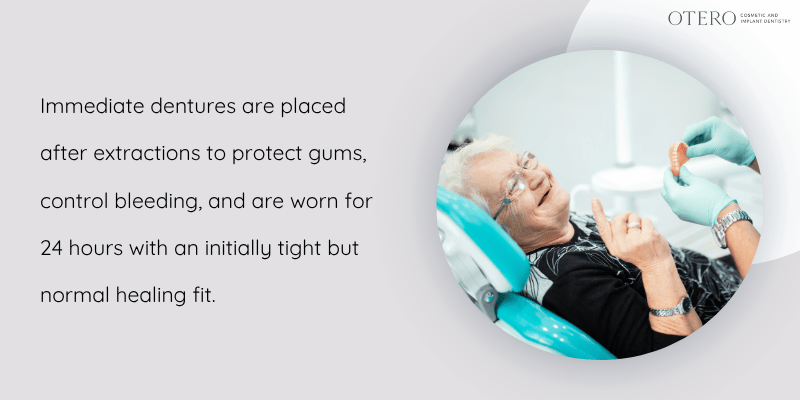
On the day of your procedure, your dentist removes the teeth that need extraction. Immediate dentures are placed right after tooth removal, often within minutes of completing the extractions.
The dentures fit snugly over your gums and act like a bandage to protect the surgical sites.
You’ll leave the office with your dentures already in place. The denture stays in your mouth for the first 24 hours without removal, even while sleeping. This helps control bleeding and swelling during the initial healing phase.
The fit might feel tight at first, which is normal and actually helpful for the healing process.
Adjustments During the Healing Phase
Your gums and bone change shape as they heal after extraction. This means your one-day dentures will need multiple adjustments over the following weeks and months. You’ll return to your dentist within 24 to 48 hours for your first check-up and adjustment.
Additional follow-up visits happen over the next few months as swelling goes down and tissues shrink. Your dentist may add soft liners or adjust the denture base to maintain proper fit.
Most patients need a reline or even new dentures within six to twelve months once healing is complete.
These adjustments are a normal part of the dentures in a day process and help ensure your comfort.
Comparing Same-Day Dentures to Other Options
Same-day dentures work differently from traditional options and serve a specific purpose in your treatment timeline. Understanding how they compare to conventional dentures and implant-based solutions helps you make the right choice for your situation.
Same-Day vs. Traditional Dentures
Traditional dentures require you to wait several weeks or months after tooth extraction before receiving your prosthetic teeth.
Your gums need to heal completely before impressions are taken and your final dentures are created. This means you go without teeth during the entire healing period.
Same-day dentures are fabricated before your teeth are removed. Your dentist takes impressions and measurements while your natural teeth are still in place. On extraction day, you leave with teeth already inserted.
The main trade-off involves fit and adjustments. Conventional dentures fit more precisely because they’re made after your gums have fully healed and settled into their final shape.
Same-day versions require more follow-up visits for adjustments as your gums change during healing.
Most people wear same-day dentures for three to six months while healing occurs. After that period, you typically need a new set made to match your healed gum tissue.
Temporary to Permanent Denture Transition
Your same-day dentures function as temporary teeth while your mouth heals from extractions. They prevent you from being toothless but aren’t meant as a long-term solution.
During the first few weeks, swelling decreases and your dentures may feel loose. Your dentist will schedule adjustments to improve comfort. Between three and six months after placement, your gums and bone reshape significantly.
Once healing stabilizes, you’ll work with your dentist to create permanent dentures. These final dentures fit better because they’re made from impressions of your fully healed gums.
The result is improved comfort, better function, and more reliable fit during eating and speaking.
Some patients choose to upgrade to implant-supported options at this stage for added stability.
Role of Dental Implants in Tooth Replacement
Dental implants offer a different approach to tooth replacement that can work alone or with dentures. Implants are titanium posts surgically placed into your jawbone that act as artificial tooth roots.
Implant-supported dentures attach to dental implants for improved retention and chewing strength. They don’t slip or move like traditional removable dentures.
You can choose between dentures that snap onto implants but remain removable or fixed versions that stay permanently attached.
Full-arch dental implants provide maximum stability with a non-removable solution. This option costs more upfront but eliminates daily removal and adhesives.
Your dentist can discuss whether starting with same-day dentures and transitioning to implant support later fits your timeline and budget. Many patients begin with immediate dentures and add implants once healing is complete.
Benefits and Potential Drawbacks
Same day dentures offer immediate tooth replacement, but this speed comes with both clear advantages and important limitations.
Understanding what you gain and what you might compromise helps you make an informed decision about whether immediate dentures are right for your situation.
Aesthetic and Functional Advantages
The most obvious benefit is that you never have to go without teeth. You’ll leave your dental appointment with a complete smile, which protects your confidence and allows you to continue social and professional activities without interruption.
Immediate dentures act as a protective barrier over your extraction sites. This coverage reduces bleeding and shields healing gum tissue from food particles and bacteria. The protection can make your recovery more comfortable.
Your facial structure also benefits from immediate support. When teeth are removed, the jawbone and gums begin changing shape.
Same day dentures help maintain the natural contours of your cheeks and lips during this transition period, preventing the sunken appearance that can develop after tooth loss.
You’ll also avoid the cost and inconvenience of multiple dental visits. Since temporary dentures are prepared in advance and placed immediately after extraction, you consolidate what would normally require several appointments into one treatment day.
Possible Drawbacks and Limitations
The fit of immediate dentures presents the biggest challenge. Because they’re made before your teeth are extracted, they can’t account for the exact shape of your gums after removal.
This often means the initial fit isn’t as precise as dentures made after healing is complete.
Your gums and jawbone will shrink and reshape significantly over the first few months. As your mouth heals and changes shape, your dentures may require more frequent adjustments compared to traditional dentures.
You’ll likely need multiple follow-up appointments for realignments, and eventually, you might need the dentures relined or replaced entirely.
The adjustment period can be uncomfortable. You may experience soreness, difficulty speaking clearly, and challenges eating certain foods while you adapt to wearing dentures for the first time.
These temporary dentures might also look slightly less natural than custom dentures fitted after your gums have fully healed.
Aftercare, Longevity, and Costs
Same-day dentures require specific care routines during the initial healing period, regular adjustments over time, and involve different cost structures than traditional dentures.

Immediate Post-Placement Care
Your gums will need time to heal after tooth extraction while wearing your immediate dentures. You should keep the dentures in place for the first 24 to 48 hours, even while sleeping, to help control bleeding and protect the extraction sites.
Proper aftercare is crucial to prevent infection and support healing. Your dentist will give you instructions about cleaning your dentures and mouth. You’ll typically rinse with warm salt water several times daily to keep your gums clean.
Expect some swelling, discomfort, and minor bleeding during the first week. Your dentist may recommend soft foods like yogurt, mashed potatoes, and smoothies. Avoid hard, crunchy, or sticky foods that could damage your dentures or disturb the healing sites.
Pain medication and ice packs can help manage swelling and discomfort. Contact your dentist if you experience severe pain, excessive bleeding, or signs of infection.
Adjustments and Long-Term Maintenance
Your gums and jawbone will shrink as they heal over the first six months. This means your same-day dentures will need frequent adjustments and relining to maintain a proper fit.
Most patients need their first adjustment within a few days of placement. Additional visits may be needed every few weeks during the initial healing period. These adjustments help prevent sore spots and ensure your dentures stay secure.
After the healing period, you may need permanent dentures to replace your immediate dentures. Your jawbone and gums will have changed shape significantly, and a new set made from fresh impressions will fit better and function more comfortably.
Daily cleaning with a soft brush and denture cleaner keeps your dentures in good condition. Soak them overnight in a denture solution as recommended by your dentist. Handle them carefully over a towel or sink filled with water to prevent damage if dropped.
Cost Factors and Value Considerations
Same-day dentures typically cost between $1,500 and $3,000 per arch. This price usually includes the initial dentures, tooth extractions, and some follow-up adjustments.
Permanent dentures made later may cost an additional $1,000 to $3,000 per arch.
Several factors affect the total cost:
- Number of teeth requiring extraction
- Type of denture material used
- Geographic location of your dental practice
- Complexity of your case
- Additional procedures like bone grafting
Many dental insurance plans cover a portion of denture costs. Check with your insurance provider about coverage limits and waiting periods. Some dental offices offer payment plans to spread costs over several months.
While same-day dentures may seem more expensive initially, they eliminate the need to go without teeth during healing. This provides immediate function and appearance, which many patients find valuable for work and social situations.
Frequently Asked Questions
Immediate dentures involve specific timing, costs, and adjustment periods that patients need to understand. The first few days require careful management, and knowing whether these dentures serve as a permanent option helps set realistic expectations.
Can immediate dentures be considered permanent solutions?
Immediate dentures are not permanent solutions. They serve as a temporary bridge while your gums heal after tooth extraction.
Your mouth changes shape significantly during the healing process. The bone and gum tissue reshape over several months, which means the immediate dentures that fit on day one won’t fit the same way later.
Most patients need permanent dentures after healing is complete. This usually happens about six to eight months after your extractions.
The permanent set will be custom-made to fit your fully healed mouth, providing better comfort and function than the temporary immediate dentures.
What is the cost range for immediate dentures?
Immediate dentures typically cost more than traditional dentures because they require advance preparation and additional appointments.
The process involves creating dentures before your teeth are removed, which adds complexity and material costs.
You’ll also pay for multiple adjustment visits as your mouth heals. These adjustments are necessary to maintain proper fit and comfort.
The total cost varies based on your location, the dentist’s experience, and the materials used. Many patients find the investment worthwhile because they never have to go without teeth during the healing period.
What should you expect during the first three days after getting immediate dentures?
The first three days after receiving immediate dentures can feel uncomfortable. Your gums are healing from extractions while adjusting to wearing dentures at the same time.
Swelling is normal and expected. You might notice your dentures feel loose as the swelling goes down, which is why early follow-up appointments are important.
Eating will be challenging at first. Stick to soft foods like yogurt, mashed potatoes, and smoothies. You’ll likely experience some soreness and may need to take pain medication as your dentist recommends.
Speaking might feel awkward initially. Your tongue needs time to adapt to the dentures, so practice reading aloud to help speed up the adjustment.
How are same day dentures created within one day?
Same day dentures are actually made before your extraction appointment. Your dentist takes impressions of your mouth while your natural teeth are still in place.
The dental lab uses these impressions to create the dentures in advance. They estimate what your gums will look like after the teeth are removed.
On extraction day, your dentist removes your teeth and immediately places the pre-made dentures. This is why you can leave the office with teeth the same day, even though the dentures were actually crafted beforehand.
What are the main steps involved in the immediate denture procedure?
The immediate denture procedure starts with a consultation and initial impressions. Your dentist examines your mouth and takes molds before any teeth are removed.
The dental lab creates your dentures based on these impressions. This happens over several weeks while you still have your natural teeth.
On the day of your extraction, your dentist removes the teeth that need to come out. The immediate dentures are placed right after the extractions are complete.
Follow-up appointments happen regularly during the healing period. Your dentist adjusts the dentures to maintain proper fit as your gums change shape.
Is it possible to comfortably eat food after receiving same day dentures?
You can eat after receiving same day dentures, but comfort takes time to develop. Your ability to chew will be limited at first because your gums are healing and the dentures are still being adjusted.
Start with very soft foods that require minimal chewing. Avoid anything hard, sticky, or crunchy for at least the first few weeks.
Cut your food into small pieces and chew slowly on both sides of your mouth. This helps distribute pressure evenly and prevents the dentures from shifting.
Your eating ability will improve as your mouth heals and you get used to the dentures. Most people need practice and patience before eating feels natural again.