
Snap-in dentures offer more stability than traditional dentures, but many dentists don’t fully explain the ongoing care these devices need. Most patients think they can just snap them in and forget about them. That’s not true.
The locator inserts inside your snap-in dentures need to be replaced every 3-6 months, and this critical maintenance step often catches patients by surprise. These small nylon parts wear down from daily use. When they get loose, your dentures won’t fit as securely as they should.
You also need to remove and clean your dentures daily, which requires more work than permanent dental implants. Understanding the real maintenance requirements before you commit to snap-in dentures helps you avoid frustration and unexpected costs down the road.
Key Takeaways
- Snap-in dentures require locator insert replacements every 3-6 months to maintain a secure fit
- Daily removal and cleaning is necessary, making them higher maintenance than some patients expect
- Proper implant placement by a skilled surgeon reduces future maintenance problems and improves denture stability
Book your snap-in denture checkup in Hampstead, NC to keep your attachments secure and comfortable.
What Are Snap-In Dentures?
Snap-in dentures are removable dentures that attach to dental implants placed in your jawbone, giving you a more stable option than traditional dentures that simply rest on your gums. These implant-supported dentures use a special attachment system that clicks into place, which is why they’re also called overdentures.
How Snap-In Dentures Work
Your dentist will surgically place two to four dental implants into your jawbone during the first step of the process. These implants are small posts that act as anchors for your denture. The area needs about three to four months to heal so the implants can fuse with your bone through a process called osseointegration.
Once healing is complete, your dentist attaches special connectors to the implants. Your denture has matching connectors built into its base that line up with these implant attachments. When you put your denture in, it snaps firmly onto the implants with an audible click.
You can remove your snap-in denture easily for cleaning and sleeping. This gives you the best of both worlds: the stability of implants during the day and the ability to take them out at night to clean them and let your gums rest.
Differences Between Snap-In Dentures and Traditional Dentures
Traditional dentures sit directly on your gums and may require messy adhesives to stay in place. They often slip while you’re eating, speaking, or laughing because they rely only on suction and your gum ridges for support.
Key differences include:
- Stability: Snap-in dentures stay firmly attached to implants while traditional dentures can shift around in your mouth
- Bone health: Implant-supported dentures help preserve your jawbone while traditional dentures allow bone loss to continue
- Comfort: You won’t need adhesives with snap-in dentures, and they distribute pressure more evenly
- Speech: Your speech stays clearer because snap-in dentures don’t move unexpectedly
The main tradeoff is cost. Snap-in dentures require surgery and cost more upfront than traditional dentures, but many patients find the improved function worth the investment.
Who Is a Good Candidate for Snap-In Dentures
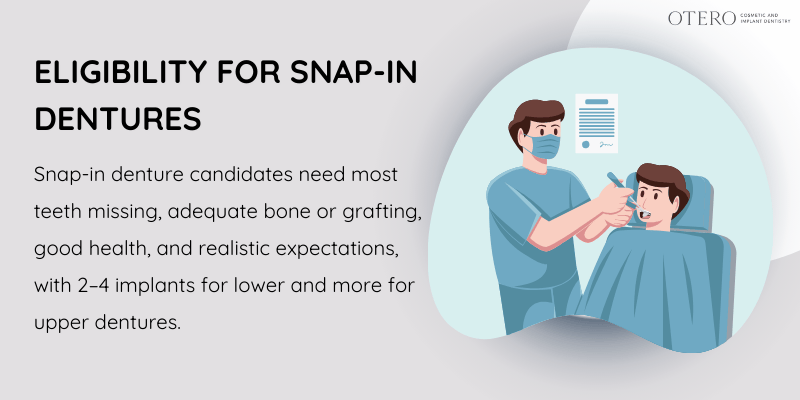
You’re likely a good candidate if you’ve lost most or all of your teeth and want something more stable than traditional removable dentures. Your jawbone needs enough density to support the implants, though bone grafting can help if your bone has thinned.
Good general health matters because you’ll need minor oral surgery to place the implants. Your dentist will check that you don’t have conditions that slow healing or prevent osseointegration. Smoking can affect implant success, so you may need to quit before treatment.
Most lower snap-in dentures require at least two implants, though four provides better stability. Upper dentures may need more implants due to differences in bone density between your upper and lower jaw.
You should have realistic expectations about the process. Getting snap-in dentures takes several months from start to finish, including healing time between surgery and when you receive your final denture.
Schedule a denture maintenance visit in Hampstead, NC to prevent loosening or wear.
Key Maintenance Requirements for Snap-In Dentures
Snap-in dentures need both daily at-home care and regular professional attention to work properly. The small parts that connect your dentures to implants wear out over time and must be replaced to keep everything fitting snugly.
Daily Cleaning and Denture Hygiene
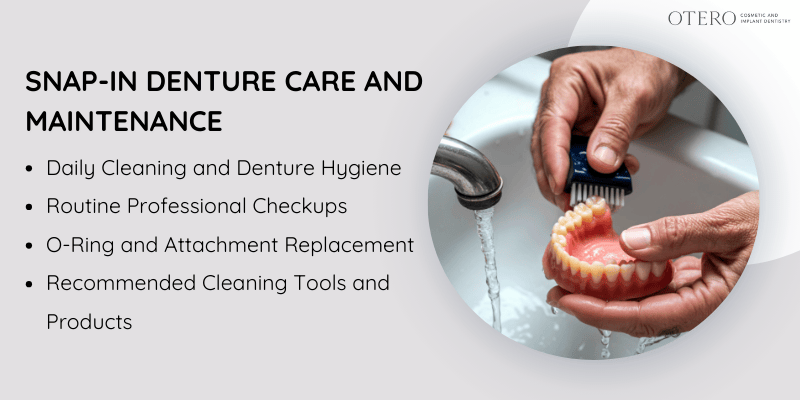
You should remove your snap-in dentures every night for cleaning. This gives your gums a chance to rest and lets you clean both the dentures and implants properly.
Use a soft-bristled brush and denture cleaner to gently scrub your dentures. Avoid regular toothpaste because it can scratch the surface. Rinse them with cool or warm water, but never use hot or boiling water since this can warp the material.
Your implant abutments also need attention. Brush around each implant post with a soft brush to remove plaque and food particles. A water flosser works well for cleaning around the implants without causing damage.
Store your dentures in water or denture cleanser solution overnight to keep them from drying out and losing their shape. This simple step helps them stay comfortable and fit properly.
Routine Professional Checkups
Your dentist needs to check your snap-in dentures every 3 to 6 months. These visits catch problems early before they get worse.
During checkups, your dentist examines how well your dentures fit and checks the health of your gums and implants. They look for signs of loosening or wear on the attachment pieces. Regular visits also let your dentist clean areas you might miss at home.
These appointments are when you’ll get necessary adjustments and repairs to keep your dentures working right. Skipping checkups can lead to bigger problems that cost more to fix later.
O-Ring and Attachment Replacement
The locator inserts (also called o-rings) in your snap-in dentures wear down from daily use. These nylon parts need replacement every 3 to 6 months depending on how quickly they wear out.
You’ll know it’s time for new inserts when your dentures feel loose or don’t snap in as tightly. The inserts come in different strengths marked by color: zero, low, medium, and high. Most people do best with the high-strength white inserts because they hold the tightest.
Your dentist handles this replacement during regular visits. How long the inserts last depends partly on how well your implants were placed. Implants that sit parallel to each other cause less wear on the attachments than ones placed at angles.
Recommended Cleaning Tools and Products
Having the right cleaning supplies makes snap-in denture maintenance easier. Here’s what you need:
Essential Items:
- Soft-bristled denture brush
- Denture cleaning solution or mild dish soap
- Water flosser or interdental brushes
- Storage container for overnight soaking
What to Avoid:
- Regular toothpaste (too abrasive)
- Stiff brushes that scratch
- Hot water
- Harsh chemicals or bleach
A water flosser is especially helpful for implant care. It removes debris around the implant posts without irritating your gums. Use it on a low setting to avoid discomfort.
Keep a separate brush just for your dentures. This prevents cross-contamination and ensures thorough cleaning of both your dentures and natural oral tissues.
Request a maintenance evaluation to keep your snap-in dentures functioning properly.
Common Snap-In Denture Problems Patients Aren’t Told
Snap-in dentures come with challenges that many dental offices don’t fully explain before you commit. The attachment parts wear out faster than you’d expect, the dentures themselves break more easily than traditional ones, and bacteria can build up quickly around your implants if you’re not careful.
Wear and Tear of Attachments
The snap mechanisms that hold your dentures in place don’t last as long as most patients think. The plastic inserts that connect to your implants compress under daily chewing forces and typically need replacement every 6 to 12 months.
When these attachments start wearing down, you’ll notice your dentures feel loose or less secure. This happens gradually, so you might not realize how much stability you’ve lost until the fit becomes really uncomfortable.
Signs your attachments need replacing:
- Dentures feel wobbly when eating
- Snaps require less pressure to attach
- Food gets trapped under the denture more often
- Clicking sounds when you chew
Worn attachments can irritate your gums if you keep using them. The good news is that replacing snap inserts is quick and affordable compared to other dental work. Most dentists can swap them out during a regular visit.
Fragility and Breakage
Snap-on dentures are more delicate than traditional dentures, especially where they attach to the implants. The connection points are thinner and lighter to make the dentures more comfortable, but this makes them easier to crack or break.
Dropping your dentures on a hard surface can crack them near the snap sites. Biting into hard foods like nuts, ice, or raw apples puts too much pressure on these weak spots. You need to change how you eat to protect your investment.
Foods to avoid or eat carefully:
- Hard candies and ice cubes
- Whole apples and raw carrots
- Nuts and hard pretzels
- Tough or chewy meats
Use both sides of your mouth when chewing to spread out the pressure. Cut harder foods into small pieces before eating them. While most breakage issues can be repaired quickly in-office, preventing damage saves you time and money.
Plaque Buildup and Oral Health Risks
Plaque buildup around your implant sites is one of the most serious problems with snap-in dentures that patients don’t hear enough about. Food particles and bacteria collect where your dentures meet your gums and around the implant posts in your mouth.
If you don’t clean thoroughly every day, this buildup leads to inflammation and infection. The bacteria can cause bone loss around your implants, which threatens the entire foundation holding your dentures in place.
You need to remove and clean your dentures at least twice daily. Brush the implant posts in your mouth gently with a soft toothbrush. Use an antibacterial rinse to kill bacteria you can’t reach with brushing alone.
Gum soreness often develops when plaque irritates the tissue around your implants. This discomfort isn’t just an annoying side effect; it’s a warning sign that you need better cleaning habits.
Patients with limited hand movement might benefit from water flossers or angled brushes designed specifically for implant care.
Factors Impacting Longevity and Comfort
The placement of your implants and changes in your jawbone play major roles in how well your snap-in dentures work over time. These factors directly affect whether your dentures stay comfortable and how long they last.
Implant Placement and Fit
The location and angle of your dental implants determine how stable your dentures feel. When implants are placed incorrectly, your dentures may not snap in properly or could sit unevenly in your mouth. This poor fit creates pressure points that cause sore spots on your gums.
Your dentist needs to space implants evenly across your jaw. Most snap-in dentures use two to four implants in the lower jaw and four to six in the upper jaw. The exact number depends on your bone density and jaw shape.
Problems with snap-in dentures often start when the initial fit is not precise. The attachment points that connect your denture to the implants wear down faster when implants are positioned at odd angles. You may need adjustments every six to twelve months to keep everything fitting correctly.
Bone Loss and Jawbone Changes
Your jawbone naturally shrinks over time in areas without implants. This bone loss changes how your dentures fit and can make them feel loose or uncomfortable. The parts of your jaw between implants lose bone density faster than areas around the implants.
Peri-implantitis is an infection around implants that speeds up bone loss. Bacteria build up on implants when you don’t clean them properly. This infection causes gum swelling, bleeding, and damage to the bone supporting your implants.
Severe bone loss can lead to implant failure. Your implants may become loose or fall out completely if too much bone disappears. Regular dental visits help catch bone loss early before it causes serious problems with your dentures.
Advantages and Disadvantages of Snap-In Dentures
Snap-in dentures offer significant improvements in stability and comfort compared to traditional options, but they also require surgery and cost more upfront. Understanding both sides helps you make the right choice for your situation.
Main Benefits Over Traditional Solutions
Snap-in dentures provide superior stability compared to conventional dentures. They stay firmly in place while you eat and talk, so you won’t worry about them slipping at awkward moments.
You’ll enjoy better chewing ability with snap-in dentures. Hard and sticky foods that were off-limits with traditional dentures become easier to eat. This means you can have a more varied diet.
The fit is more comfortable too. Snap-in dentures reduce friction on your gums because they don’t rely on suction or adhesives. Many people find them more natural-looking than regular dentures.
One important long-term benefit is bone preservation. The implants help prevent jaw bone loss that normally happens after tooth loss. This keeps your facial structure more stable over time.
Potential Drawbacks to Consider
The biggest drawback is the need for implant surgery. You’ll need at least local anesthetic, and the procedure carries some risk of infection or nerve damage.
The cost ranges from $5,000 to $10,000, which is significantly more than traditional dentures. Most insurance plans and Medicare don’t cover this expense.
The timeline is lengthy. After implant placement, you’ll wait 2 to 6 months for the bone and implants to bond together. Some people need a bone graft first, which extends healing time even more.
Snap-in dentures eventually wear down and need replacement. The attachments can become loose over time and require tightening by your dentist.
Expert Advice and Practical Tips for Patients
Knowing when to contact your dentist and how to care for your snap-in dentures at home can prevent bigger problems down the road. Small issues can become serious if you ignore them or try to fix them yourself.
When to Seek Professional Repairs
You should call your dentist right away if your dentures feel loose or won’t snap into place properly. This could mean the attachments are worn or your gums have changed shape. Don’t try to adjust the fit yourself with household tools or adhesives.
Schedule an appointment if you notice cracks, chips, or broken attachments on your dentures. These problems won’t fix themselves and can get worse quickly. Professional relines or adjustments keep your dentures working right when your jawbone or gums change over time.
Watch for pain, sore spots, or bleeding around your implants. These signs might point to infection or poor fit that needs attention. Regular dental visits help catch problems before they become serious.
If cleaning doesn’t remove bad odors or you see buildup you can’t clean off, your dentist has special tools to help. They can also check your implants to make sure everything stays healthy underneath your overdentures.
Enhancing Comfort and Durability at Home
Remove your dentures every night to give your gums a rest. This simple step reduces irritation and helps prevent infections while keeping your implants healthy longer.
Rinse your dentures with lukewarm water after eating to remove food particles. Use a soft-bristled brush with non-abrasive denture cleanser for daily cleaning. Regular toothpaste is too rough and can scratch the surface of your overdentures.
Clean the attachments gently on both your dentures and implants each day. Buildup in these areas affects how well your dentures snap into place. Store your dentures in water or denture solution overnight to prevent them from drying out and warping.
Proper denture maintenance protects your investment and keeps you comfortable. Handle your dentures carefully over a folded towel or sink filled with water in case you drop them.
Frequently Asked Questions
Many patients have questions about the daily care requirements and long-term maintenance needs of snap-in dentures. Understanding proper cleaning techniques, common problems, and replacement schedules helps you avoid unexpected issues and costs.
How should I properly clean my snap-in dentures daily?
You need to remove your snap-in dentures and clean them at least twice a day. Use a soft-bristled toothbrush with mild dish soap or denture cleaner to gently scrub all surfaces.
After removing your dentures, you should also clean the implant attachments in your mouth. A soft toothbrush works well for this task. Be gentle around the implant sites to avoid irritation.
Rinse your mouth with an antibacterial mouthwash to reduce bacteria buildup. This step is important for preventing inflammation around the implants.
Soak your dentures in a denture cleaning solution overnight when you’re not wearing them. This helps remove stubborn bacteria and keeps the material fresh.
What are some common issues with snap-in dentures and how can they be addressed?
The snap mechanisms can wear down or loosen after 6 to 12 months of regular use. The plastic inserts that hold your dentures in place compress under chewing pressure over time.
Your dentures may crack or break at the attachment points because this area is thinner and more delicate. Avoid biting directly into hard foods like nuts or apples.
You might experience gum soreness during the first few weeks as you adjust to wearing snap-in dentures. This discomfort typically goes away as your mouth adapts.
If your snaps feel loose, schedule a visit with your dentist for a quick adjustment. Most repairs can be completed during a single appointment.
Can snap-in dentures affect my oral health over time?
Poor cleaning habits can lead to plaque and food debris building up around your implant sites. This buildup may cause inflammation or infection if left untreated.
You could experience bone loss around the implants if bacteria accumulate and cause gum disease. Regular cleaning and dental checkups help prevent this serious problem.
Loose or poorly fitting dentures can irritate your gums and create sore spots. These issues may also put extra stress on your implants.
Maintaining good oral hygiene protects both your implants and your overall oral health. Daily cleaning and professional checkups keep problems from developing.
What should I do if my snap-in dentures no longer fit properly?
Contact your dentist as soon as you notice your dentures feeling loose or uncomfortable. Waiting too long can cause additional problems with your gums or implants.
Your dentist can tighten the snap attachments or replace worn parts during a routine visit. These adjustments are usually quick and straightforward.
Sometimes your jaw bone can change shape over time, affecting how your dentures fit. Your dentist may need to reline your dentures to match your current mouth shape.
Never try to adjust or repair your snap-in dentures yourself at home. Professional fixes ensure your dentures continue working properly without damaging the implants.
How often should snap-in denture attachments be replaced or serviced?
Most patients need to replace their snap inserts once a year as part of normal maintenance. The plastic components naturally wear down from daily use and chewing forces.
You should visit your dentist at least once per year for a thorough checkup. During these visits, your dentist will inspect the condition of your attachments and recommend replacements if needed.
Some patients may need more frequent replacements depending on how hard they chew or how much they use their dentures. Your dentist can tell you what schedule works best for your situation.
Regular servicing helps catch small problems before they become bigger issues. Staying on top of maintenance reduces the need for major repairs.
What are the long-term costs associated with maintaining snap-in dentures?
You’ll need to budget for annual snap insert replacements, which are generally affordable compared to major dental work. These routine replacements keep your dentures functioning properly.
Occasional repairs for cracks or breaks add to your maintenance costs over time. Unlike permanent dental implants, snap-in dentures require more frequent adjustments and part replacements.
Regular dental checkups are essential and should be factored into your yearly expenses. Most dentists recommend at least one professional cleaning and inspection per year.
Cleaning supplies like denture cleaner, antibacterial mouthwash, and soft brushes are ongoing costs. These products help protect your investment and prevent more expensive problems down the road.