

Choosing between snap-in dentures and permanent dentures can feel overwhelming, especially when you want a solution that fits your lifestyle and budget.
Snap-in dentures are removable and attach to a few implants for easy cleaning and comfort, while permanent dentures are fixed to implants for greater stability but require professional removal.
Understanding these differences helps you pick the best option for your needs.
Both types of dentures improve your ability to eat and speak confidently.
Snap-in dentures often suit those who want a less invasive procedure and easier maintenance.
Permanent dentures provide a more natural feel and long-term durability but involve a more complex process.
Key Takeaways
- Snap-in dentures are removable and easier to maintain.
- Permanent dentures are more stable and long-lasting.
- Your choice depends on comfort, cost, and lifestyle needs.
How Snap In Dentures and Permanent Dentures Work
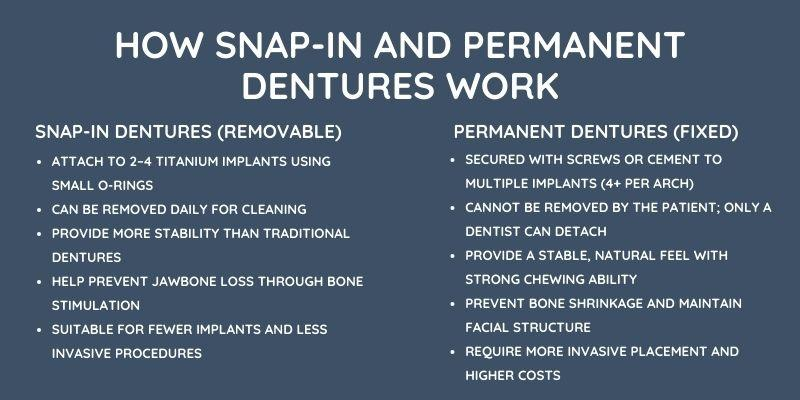
Both snap-in and permanent dentures use dental implants for support, but they differ in how they attach and how you care for them.
Understanding these differences helps you decide which option fits your needs for comfort, stability, and maintenance.
Research shows that more than 85% of patients with implant-supported dentures keep their prosthesis functional without major complications for over 15 years, emphasizing the long-term reliability of these solutions.
What Are Snap In Dentures
Snap-in dentures, also called snap-on dentures or implant-supported dentures, are removable false teeth.
They snap onto 2 to 4 titanium screws that are placed in your jawbone.
The implants act like anchors, holding the denture firmly in place.
You can take snap-in dentures out daily for cleaning.
The denture has small attachments called O-rings that click onto the implants to prevent slipping.
This gives you more stability than traditional dentures that rely on suction or adhesives.
Snap-in dentures are good if you want fewer implants but still want dentures that don’t move around.
They help prevent bone loss by stimulating the jaw and improve your ability to eat and speak more naturally.
What Are Permanent Dentures
Permanent dentures, also known as fixed dentures, are attached directly to your titanium implants with screws or cement.
These dentures are not meant to be removed by you.
Only your dentist can take them out during check-ups or repairs.
They provide a stable, natural feel since they are securely fixed to the bone.
This helps prevent bone shrinkage and keeps your facial structure intact.
Permanent dentures usually require more implants than snap-in dentures, often around 4 or more per arch.
Because they are permanently attached, chewing, speaking, and smiling feel more like natural teeth.
However, their placement is more invasive and costly compared to snap-in dentures.
Core Differences in Attachment and Use
| Feature | Snap In Dentures | Permanent Dentures |
| Attachment | Snap onto 2-4 titanium implants (removable) | Screwed or cemented to implants (fixed) |
| Removal | Removable by you daily for cleaning | Removed only by a dentist |
| Number of implants | Fewer implants needed | More implants needed |
| Maintenance | Regular cleaning at home, replace O-rings | Professional hygiene visits, careful oral care |
| Comfort & Stability | More stable than traditional dentures, may feel less secure than fixed | Very stable with natural feel |
| Cost | Generally lower than permanent | Typically more expensive |
Both types help keep your jaw healthy and give you better function than traditional removable dentures.
Benefits and Drawbacks of Each Option
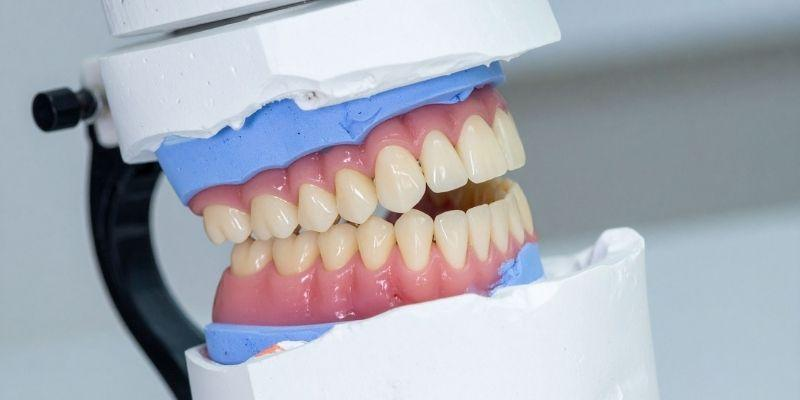
Choosing between snap in dentures and permanent dentures means weighing factors like comfort, cost, and how each affects your oral health.
Both options aim to improve your smile and function but differ in how they fit and feel.
Advantages of Snap In Dentures
Snap in dentures use two to four implants to stay securely in place.
They snap on and off easily, giving you the option to remove them for cleaning.
This makes oral hygiene simpler and lets you inspect your gums regularly.
Because they are removable, snap in dentures often cause less worry about slippage compared to traditional dentures.
They also help reduce jawbone deterioration better than regular dentures since the implants stimulate your bone.
Snap in dentures usually cost less than permanent dentures and require less surgery.
If you need a bone graft to have enough bone for implants, the process tends to be less intense than with permanent dentures.
Advantages of Permanent Dentures
Permanent dentures, also known as All-on-4 dentures, use four to six implants to fix your teeth in place.
These dentures are screwed in and cannot be removed by you, which means they feel more like natural teeth.
Because of their strong implant support, permanent dentures prevent slippage and eliminate the need for denture glue.
They also slow jawbone deterioration by providing constant stimulation to your jawbone.
With permanent dentures, you care for your teeth like natural ones by brushing and flossing daily.
This can improve your overall oral health and feel more comfortable in the long run.
However, the cost is higher due to the surgery and more implants.
Disadvantages of Snap In Dentures
Since snap-in dentures are removable, they can still move slightly while you eat or speak, even if much less than traditional dentures.
This might need occasional adjustment for comfort.
You must remove snap in dentures daily for cleaning, which some people find inconvenient.
They also may require replacement parts over time.
Snap in dentures may not fully stop jawbone loss since implants support only parts of the denture.
If your jawbone quality is poor, you might need a bone graft before implants can be placed, adding to the time and cost.
Disadvantages of Permanent Dentures
Permanent dentures need more implants and usually involve more complex surgery.
You might need a bone graft if your jawbone is not thick or strong enough to hold the implants.
Because permanent dentures are fixed, you cannot remove them yourself.
This means professional cleaning and maintenance are necessary, which may require regular dental visits.
The price is significantly higher, often between $35,000 and $50,000 for a full set.
The recovery time can be longer, and some find adapting to a fixed denture challenging at first.
If you’re weighing your options and want expert guidance, schedule a consultation with Otero Cosmetic & Implant Dentistry in Wilmington, NC, to see which solution fits your lifestyle and oral health needs.
Ideal Candidates and Suitability
Choosing the right type of denture depends on your oral health, lifestyle, and how your jawbone supports implants.
It’s important to know what fits your personal needs and how your mouth can handle the treatment.
Who Should Consider Snap In Dentures
Snap-in dentures are great if you want more stability than traditional dentures but still want the option to remove them easily.
If you have some jawbone strength and can handle a minor surgery to place implants, these dentures might be a good fit.
You should consider snap-in dentures if you often struggle with loose dentures that slip while eating or talking.
They attach to two to four implants, so they offer better hold and comfort.
If you want a natural feel without a big commitment to permanent implants, snap-in dentures provide a balance between function and convenience.
Who Should Consider Permanent Dentures
Permanent dentures, often called implant-retained or fixed dentures, are best if you want a long-term, solid solution.
These dentures attach to multiple implants, usually four or more, and stay in place all the time.
You might choose permanent dentures if you want to avoid denture adhesives or removals.
They offer the most stability and chewing power and help support your facial structure to avoid sinking.
This option is ideal if you want a natural look and feel and are ready for a more involved dental process.
Jawbone and Oral Health Requirements
Both snap-in and permanent dentures need a healthy jawbone to support implants.
If your jawbone isn’t strong enough, you might need a bone graft before implants.
Good oral health is also crucial.
You should be free from uncontrolled conditions like severe gum disease or infections that could affect healing.
Non-smokers or those willing to quit heal better after implant surgery.
Your dentist will check bone density and overall health to see which option fits your situation best.
Procedure, Healing, and Maintenance
Getting either snap-in or permanent dentures involves a few important steps.
You’ll go through surgery to place implants, then a healing period, and finally, regular care to keep your dentures working well and your mouth healthy.
The Implant Surgery Process
The surgery to place titanium implants is done by a prosthodontist or oral surgeon.
They will embed 2 to 4 small screws into your jawbone.
These implants act like roots for your dentures.
You will receive local anesthesia during the procedure.
The surgery usually takes about 1 to 2 hours, depending on how many implants you need.
After the implants are set, your dentures will either snap on or be fixed with screws or cement.
Snap-in dentures are removable, while permanent dentures are attached for long-term use.
Healing and Recovery Time
After surgery, your jawbone needs time to heal around the implants, a process called osseointegration.
This often takes 3 to 6 months.
During healing, you might feel some swelling or discomfort, which your dentist can help manage with medication.
It’s important to avoid hard foods and follow your dentist’s instructions to protect the implant sites.
You might use temporary dentures during this time.
Everyday Care and Cleaning
For snap-in dentures, remove them every night to clean them with a soft brush and non-abrasive cleaner.
Check and replace the rubber O-rings every few years to keep your dentures secure.
Permanent dentures require good oral hygiene too.
Brush your dentures and gums twice daily with a soft brush and use floss or interdental brushes for cleaning around implants.
Visit your prosthodontist regularly, usually every 6 months, to check your implants and clean deep areas.
Proper care helps your dentures last longer and keeps your mouth healthy.
Need guidance? Book a consultation in Wilmington, NC, with us for expert advice on denture care and maintenance.
Cost, Longevity, and Lifestyle Factors
Choosing between snap-in dentures and permanent dentures means thinking about money, how long they last, and how they fit your daily life.
Both options offer benefits but differ in price, durability, and the way they affect your confidence and routine.
Cost Comparison
Snap-in dentures usually cost less upfront than fixed implant bridges but more than traditional or conventional dentures.
You might pay between $3,000 and $10,000 for snap-in dentures per arch.
This price depends on where you live and if you need extra procedures like bone grafts.
Permanent dentures, or fixed implant bridges, tend to be more expensive, often ranging from $8,000 to $12,000 per arch.
They require more implants and a longer surgery process, which drives up costs.
Insurance may not cover either type fully, so you should check your plan carefully.
Cost highlights:
- Snap-in dentures: medium upfront cost, some maintenance needed
- Permanent dentures: higher upfront cost, but long-term investment
Durability and Lifespan
Permanent dentures last longer because they are fixed to implants with screws or cement.
With good care, they can serve you well for 10 years or more.
Regular dental visits and cleaning help keep them in good shape.
Snap-in dentures are removable, relying on 2-4 implants for support.
The parts that snap on can wear out, especially the rubber O-rings, which you may need to replace every few years.
Their lifespan is usually 5-10 years, depending on how well you maintain them.
Both types help prevent jawbone loss better than traditional dentures, which rest on your gums and can cause bone shrinkage.
Impact on Daily Life and Confidence
Snap-in dentures give you flexibility because you can remove and clean them easily.
They tend to be lighter and are often more comfortable for older adults.
You get better chewing and speaking abilities than with conventional dentures, and they reduce slipping.
Permanent dentures feel more like natural teeth since they don’t move, which can boost your confidence when you smile or talk.
They might feel a bit heavier and need professional help if you want them removed or adjusted.
Think about your lifestyle: if you like a removable option that’s easier to clean, snap-in dentures could suit you.
If you want something permanent and don’t mind extra care, permanent dentures might be better.
Schedule a consultation with Otero Cosmetic & Implant Dentistry in Wilmington, NC, to explore the best denture solution for you.
Frequently Asked Questions
Snap-in dentures and permanent dentures differ in costs, benefits, and possible challenges. You’ll find differences in how insurance may help, how comfortable each option is, and how they compare to dental implants.
What are the cost differences between snap-in dentures and permanent dentures?
Snap-in dentures generally cost less because they use fewer implants. Permanent dentures usually require more implants and a more involved procedure, which raises the price.
What are the pros and cons of choosing snap-in dentures over permanent dentures?
Snap-in dentures offer easier removal and fewer implants, so they tend to be lighter and simpler to clean. However, the parts that hold them in place may wear out and need replacement.
Permanent dentures feel more natural and stay fixed, but they cost more and require surgery to install.
How does the cost of permanent dentures compare with and without insurance?
Without insurance, permanent dentures can be quite expensive due to surgery and implant costs. If your insurance covers implants or dentures, it may reduce your out-of-pocket expenses significantly.
Can you explain the potential issues one might face with snap-in dentures?
Snap-in dentures may loosen over time as the rubber rings wear down. You might need regular maintenance to keep them fitting well.
If your jawbone isn’t strong enough, you might need a bone graft before implants can be placed.
In terms of satisfaction, do patients tend to prefer permanent dentures or snap-in dentures?
Many patients prefer permanent dentures for their stability and natural feel. Others like snap-in dentures for being easier to remove and clean.
The best choice depends on your lifestyle and comfort.
How do permanent dentures and snap-in dentures differ from dental implants?
Dental implants replace individual teeth directly in your jawbone. Dentures, whether snap-in or permanent, replace a full set of teeth.
Implants offer the most natural function. However, they can be costly when replacing many teeth.
Dentures rely on implants for support but do not replace each tooth individually.