

When choosing dental implants, one of the biggest decisions you’ll face is picking between titanium and zirconia materials. Both options can successfully replace missing teeth, but they work differently in your mouth and offer distinct benefits.
Titanium has been the gold standard for decades with proven long-term success rates, while zirconia is a newer ceramic option that appeals to patients looking for a metal-free alternative.
The choice between titanium and zirconia dental implants affects everything from how your implant looks to how it heals. Understanding what makes each material unique helps you make a choice that fits your health needs and goals.
Your dentist will consider factors like bone quality, appearance preferences, and budget when recommending an implant material. Zirconia implants typically cost $500 to $1,500 more than titanium due to higher manufacturing costs, but the extra expense may be worth it for certain patients.
Key Takeaways
- Titanium implants offer proven long-term success with decades of clinical data, while zirconia provides a metal-free ceramic alternative
- Both materials are biocompatible and bond well with bone, though they differ in strength, appearance, and how they integrate with your jaw
- Your final choice depends on factors like aesthetic goals, metal sensitivities, bone health, and whether you’re willing to pay the premium for zirconia
Book your implant consultation in Hampstead, NC to find the right implant material for your smile.
Understanding Dental Implant Materials
Dental implant materials determine how well your replacement tooth integrates with your jawbone and how long it lasts. The implant post material affects healing time, strength, and compatibility with your body.
What Are Dental Implants?
Dental implants are artificial tooth roots that dentists surgically place into your jawbone to replace missing teeth. They provide a stable foundation for replacement teeth that look and function like natural ones.
Unlike dentures or bridges, dental implants fuse directly with your bone through a process called osseointegration. This creates a permanent anchor that won’t slip or shift when you eat or speak.
Most dental implants consist of three distinct parts that work together. The implant post goes into your bone, an abutment connects to the top of the post, and a crown sits on top to complete your new tooth.
Key Components: Implant Post, Abutment, and Crown
The implant post is a small screw-shaped piece that your dentist places into your jawbone during surgery. This post serves as the root of your new tooth and must bond with your bone to succeed.
The abutment is a connector piece that attaches to the top of your implant post after it heals. Your dentist places this component during a second procedure, and it extends slightly above your gum line.
The dental crown is the visible part of your tooth replacement that matches your natural teeth in color and shape. Your dentist custom-makes this crown to fit your mouth and attaches it to the abutment with cement or a tiny screw.
How Implant Materials Influence Outcomes
The material used for your implant post directly affects how quickly your bone heals around it and how strong the final result will be. Different materials bond with bone at different rates and with varying degrees of success.
Implant materials also determine how your body responds to the implant. Some people have sensitivities to certain metals, while others prefer metal-free options for personal or health reasons.
Your choice of material impacts the appearance of your final restoration too. Some materials show through thin gums as a gray shadow, while others blend more naturally with your tissue and teeth.
Visit our Hampstead, NC dental team for expert guidance on titanium vs zirconia implants.
Titanium Dental Implants: Properties and Benefits
Titanium dental implants have earned their reputation through decades of proven success in replacing missing teeth. These implants offer strong bonding with bone, resist wear and damage, and work well for most patients seeking tooth replacement.
What Makes Titanium Implants the Gold Standard?
Titanium implants became the gold standard for dental replacements because of their unique ability to fuse with your jawbone. This process, called osseointegration, happens when bone cells grow directly onto the titanium surface and create a stable foundation for your new tooth.
Your body accepts titanium without triggering immune reactions or rejecting the implant. The metal forms a thin oxide layer on its surface that protects against corrosion and helps bone cells attach more easily.
Titanium dental implants have been used since the 1960s. This long history means your implant dentist can predict how well they will work based on millions of successful cases.
Titanium Alloys and Surface Treatments
Most titanium implants use either pure titanium or titanium alloys that contain small amounts of other metals. Grade 4 commercially pure titanium offers good strength for single-tooth replacements. Titanium alloys like Ti-6Al-4V provide extra strength for cases where you need to support multiple teeth or handle higher stress.
Manufacturers treat the implant surface to improve how well bone attaches. Common treatments include:
- Sandblasting to create a rough texture
- Acid etching to form tiny pits
- Plasma spraying to add a coating layer
These surface modifications help speed up osseointegration. Your new implant can bond with bone faster, which may reduce your overall healing time.
Durability, Longevity, and Flexibility in Use
Titanium implants handle bite forces that reach up to 200 pounds in the back teeth. The material bends slightly under pressure instead of breaking, which protects both the implant and your surrounding bone.
Studies show titanium dental implants last 20 years or more in over 90% of cases when you maintain good oral care. Their strength and longevity make them reliable for long-term tooth replacement.
The corrosion resistance of titanium means these implants stay stable in your mouth despite constant exposure to saliva, food acids, and bacteria. Your implant dentist can use titanium for single teeth, bridges, or full-arch replacements. This flexibility makes titanium suitable for almost any tooth replacement situation you might need.
Request a consultation to compare implant materials with a specialist.
Zirconia Dental Implants: Properties and Advantages
Zirconia dental implants offer a metal-free alternative for tooth replacement with distinct benefits for appearance and compatibility. These ceramic implants address concerns about metal sensitivities while providing natural-looking results.
Why Choose Zirconia Implants?
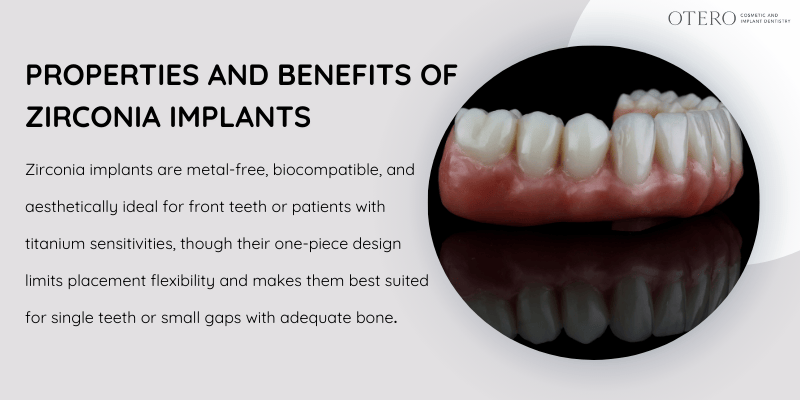
Zirconia implants are made from a white ceramic material called zirconium dioxide. This material has become popular in metal-free dentistry because it contains no metal components.
The main reason patients choose zirconia is to avoid metal in their bodies. If you have metal sensitivities or allergies to titanium, zirconia provides a safe option. Some people prefer zirconia based on holistic health beliefs or simply want to limit metal exposure.
Zirconia implants are often more expensive than titanium options due to higher material and manufacturing costs. The price difference can range from $500 to $1,500 more per implant depending on your location and dentist.
Biocompatibility and Aesthetic Appeal
Zirconia implants rarely cause allergic reactions or immune responses in your body. The material integrates well with bone tissue and surrounding gums. Because zirconia is white, it won’t show through your gums if they are thin.
Aesthetic advantages include:
- No gray shadowing at the gum line
- Natural tooth color that blends with your smile
- No risk of gum discoloration over time
- Better appearance for front teeth replacements
The white color makes zirconia especially useful for visible areas of your mouth. If you have a thin gum type or high smile line, the ceramic material helps maintain a natural look.
Limitations and Indications
Zirconia implants have some restrictions compared to titanium. They typically come in one-piece designs, which means less flexibility during placement. This design can make the surgical process more challenging for your dentist.
The treatment process requires careful planning to ensure proper positioning. Two-piece options exist but are less common. Zirconia works best for single-tooth replacements or smaller gaps rather than full-mouth reconstructions.
You need adequate bone density for zirconia implants to succeed. They may not be ideal if you need complex angling or immediate placement after tooth extraction.
Key Differences: Titanium vs Zirconia Implants
Titanium and zirconia implants differ in their structure, how they bond with bone, and their appearance in your mouth. These differences affect healing time, strength, and how natural your implant looks.
Structural and Mechanical Differences
Titanium implants are made from metal and come in two pieces. The implant post goes into your jawbone, and your dentist attaches a separate crown on top. This design lets your dentist adjust angles and customize the final result.
Zirconia implants are ceramic and usually come as one solid piece. The post and crown are connected, which means fewer parts but less flexibility during placement.
Strength comparison:
- Titanium handles chewing force very well and rarely breaks
- Zirconia is strong but can crack under extreme pressure
- Titanium bends slightly under stress without breaking
- Zirconia is more rigid and less forgiving
The material and manufacturing costs for zirconia are typically higher than titanium options. Your choice between titanium vs zirconia often depends on where the implant goes in your mouth and how much force it will handle daily.
Osseointegration: Bone Integration and Healing
Osseointegration is how your jawbone grows around and fuses with the implant. Titanium has decades of research showing excellent bone integration. Your bone cells attach directly to the titanium surface, creating a strong bond in three to six months.
Zirconia also integrates with bone, but the process works differently. The ceramic surface encourages bone growth through a mechanical bond rather than direct fusion. Studies show zirconia implants can achieve good stability, though the long-term data is more limited.
Healing timeline:
- Titanium: 3-6 months for full integration
- Zirconia: 3-6 months, similar to titanium
- Both materials require adequate bone density for success
Your healing time depends on your bone quality and overall health. Some patients prefer zirconia because it’s metal-free, which matters if you have metal sensitivities.
Aesthetics: Gum Tissue and Color Considerations
Zirconia implants are white and match the color of natural tooth roots. If you have thin gum tissue, the implant won’t show through as a dark shadow. This makes zirconia a better choice for front teeth where appearance matters most.
Titanium is gray and can show through your gums, especially if you experience gum recession over time. The metal color becomes visible at the gum line, which looks less natural. This is more noticeable in the front of your mouth where your gums are thinner.
Gum tissue responds well to both materials. However, zirconia may attract less plaque buildup on the surface. If you’re concerned about maintaining healthy gums long-term, this can be an advantage. Your dentist will consider your gum thickness and risk of recession when helping you choose between zirconia vs titanium implants.
Clinical Considerations for Material Selection
Material choice affects treatment success based on your health status, bone quality, and ability to maintain proper oral care. Your implant dentist evaluates metal sensitivities, jawbone structure, and daily hygiene habits before recommending titanium or zirconia.

Patient Health and Metal Sensitivities
Your body’s response to implant materials plays a major role in treatment planning. If you have a known titanium allergy or metal sensitivity, zirconia provides a metal-free alternative that eliminates allergic reaction risks.
Titanium allergies remain rare, affecting less than 1% of patients. However, if you’ve experienced reactions to metal jewelry or have autoimmune conditions, your oral surgeon may recommend allergy testing before proceeding with titanium implants.
Zirconia’s ceramic composition makes it suitable if you prefer avoiding all metals in your body. The material causes no reported allergic reactions and works well for patients with multiple chemical sensitivities.
Your dentist will review your complete medical history to identify any factors that might influence material selection.
Bone Density and Surgical Implications
Your jawbone quality directly impacts which material your oral surgeon recommends. Titanium offers greater tensile strength at 810 MPa compared to zirconia’s 690 MPa, making it preferable if you have lower bone density.
If you need bone grafting due to insufficient bone volume, titanium implants typically integrate more predictably during the healing phase. The material’s flexibility and proven track record in compromised bone make it the standard choice for complex cases.
Zirconia’s higher stiffness (208 GPa modulus of elasticity versus titanium’s 112 GPa) requires adequate bone support. Your implant dentist will assess bone density through CT scans to determine if your jaw can handle zirconia’s rigid structure without stress fractures.
Oral Hygiene, Plaque Accumulation, and Long-Term Maintenance
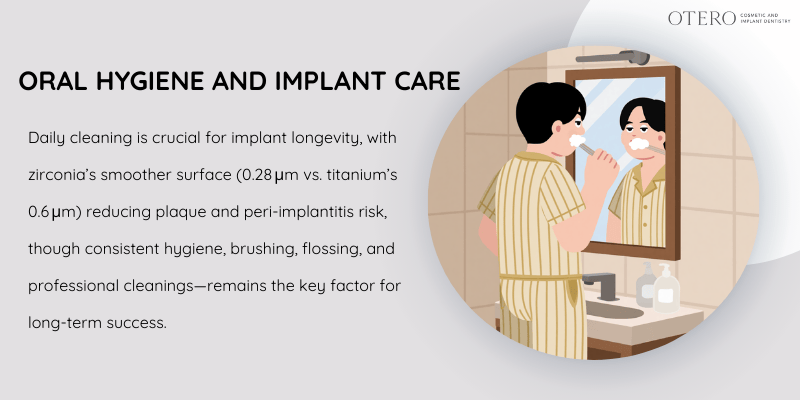
Your daily cleaning routine affects implant longevity regardless of material choice. Zirconia demonstrates lower surface roughness at 0.28 μm compared to titanium’s 0.6 μm, which reduces plaque accumulation around the implant.
Smoother surfaces make zirconia easier to clean during your regular brushing and flossing. Less plaque buildup means reduced risk of peri-implantitis, the inflammatory condition that threatens implant stability.
Both materials require consistent oral hygiene including twice-daily brushing, daily flossing, and regular professional cleanings. Your ability to maintain proper care determines long-term success more than material selection alone.
If you struggle with thorough cleaning, zirconia’s smooth surface provides a slight advantage in preventing bacterial colonization.
Making the Right Choice: Factors, Costs, and Future Trends
Selecting between titanium and zirconia depends on your specific needs, budget, and health conditions. Material costs vary based on brand reputation and manufacturing complexity, while new developments in implant dentistry continue to expand your options beyond these two traditional choices.
How to Decide: Aligning Needs and Priorities
Your choice between titanium or zirconia should start with your aesthetic priorities. If you have thin gums or need front teeth replaced, zirconia prevents the gray shadow that sometimes shows through tissue with metal implants.
Consider your bone density and health history. Titanium works well in most situations and has decades of clinical success behind it. If you have metal sensitivities or allergies, zirconia offers a metal-free alternative that your body tolerates well.
Your dentist should evaluate the location of your missing tooth. Back teeth handle more chewing force, which makes titanium’s proven durability important. Front teeth need to look natural, where zirconia’s white color provides an advantage.
Think about your long-term expectations. Titanium implants have research showing they last 20 years or more. Zirconia is newer, so long-term multicenter trials remain limited beyond 10-15 years. Your smoking habits, oral hygiene, and existing health conditions all affect which material your dentist recommends.
Cost Comparison and Insurance Considerations
Zirconia implants typically cost $1,500 to $3,000 per tooth compared to titanium’s $1,000 to $2,500 range. The price difference comes from more complex manufacturing processes and newer technology.
Several factors influence dental implant material costs including brand reputation, quality standards, and supply chain logistics. Premium brands charge more for both materials, but you’re paying for research, testing, and reliability.
Your dental insurance may cover part of the implant procedure, though coverage varies widely. Most plans treat implants as major restorative work with 50% coverage after you meet your deductible. Some insurers don’t distinguish between titanium and zirconia in their reimbursement rates.
Additional costs include the abutment, crown, and surgical fees. These expenses stay similar regardless of which implant material you choose. Your location and dentist’s experience level also affect the total price.
Emerging Materials and Innovations in Implant Dentistry
Titanium-zirconium alloys combine strength and biocompatibility to create narrower implant structures that fit in tight spaces. These hybrid materials show enhanced mechanical strength and better bone integration, especially for small-diameter implants.
PEEK (polyetheretherketone) represents another development in implant dentistry. This flexible polymer material matches bone’s natural movement better than rigid metals, though it needs surface modifications to improve bone attachment.
3D printing technology now creates custom implants that match your exact tooth root shape. These root-analogue implants reduce surgical complications and healing time, though standardization remains limited.
Smart implants with built-in sensors may soon monitor your implant health in real-time. These devices could detect early signs of infection or loosening, but they’re still in experimental stages and raise questions about cost and data privacy.
Bioactive coatings and growth factors applied to implant surfaces enhance bone integration and reduce healing time. Your dentist may recommend these enhanced surfaces if you have diabetes or other conditions that slow bone healing.
Frequently Asked Questions
Patients often wonder about price differences, long-term performance, and safety when comparing these two implant materials. Zirconia typically costs more upfront, while both materials offer strong track records when placed correctly.
What are the cost differences between zirconia and titanium dental implants?
Zirconia implants cost more than titanium implants in most dental practices. The higher price comes from increased material and manufacturing costs.
You can expect to pay a premium of $500 to $1,500 for zirconia compared to titanium options. Your final cost also depends on the implant system used, how many implants you need, and whether you require bone grafting or other procedures.
It helps to ask your dentist for itemized quotes so you can compare the total costs clearly.
Are there any advantages of choosing zirconia implants over titanium?
Zirconia implants offer several benefits that matter to certain patients. The white ceramic color matches natural tooth roots better, which can look better if you have thin gums or a high smile line.
These implants work well for people who have metal sensitivities or allergies. Some patients prefer zirconia because they want metal-free dental work as part of a holistic approach to their health.
Zirconia is also a biocompatible material that integrates with your jawbone naturally.
Is there a noticeable difference in longevity between zirconia and titanium dental implants?
Titanium implants have been used for over fifty years and have a longer track record of success. Zirconia implants are newer to the market but show promising results in studies conducted so far.
Both materials can last many years when your dentist places them correctly and you maintain good oral hygiene. The actual lifespan depends more on your bone health, oral care habits, and whether you attend regular dental checkups.
Titanium has more long-term data available because it has been used longer in dental practices worldwide.
What are the potential risks or problems associated with zirconia dental implants?
Zirconia implants can break more easily than titanium during placement because they are less flexible. Your dentist needs specific training and experience to place them properly.
These implants come in one-piece designs more often, which gives your dentist fewer options to adjust the angle of your final tooth. If a zirconia implant fails, it can be harder to remove than a titanium one.
The research on zirconia is still growing compared to the decades of studies on titanium. You should discuss these factors with your dentist to see if zirconia suits your specific situation.
Have there been any concerns regarding titanium implants and cancer?
No scientific evidence links titanium dental implants to cancer. Titanium is a biocompatible metal that has been used safely in medical and dental procedures for decades.
Your body tolerates titanium well, and it does not cause harmful reactions in most people. Millions of patients worldwide have titanium implants without any cancer-related complications.
If you have specific health concerns, talk to your dentist and doctor about your individual risk factors.
What material is typically recommended for All-on-4 dental implants?
Titanium is the most common material used for All-on-4 dental implants. Its flexibility and strength make it easier for dentists to place implants at precise angles, which the All-on-4 technique requires.
The two-piece design of most titanium implants gives your dentist more options to adjust the angle of your final teeth. This flexibility is important when replacing a full arch of teeth.
Zirconia options for full-arch treatments exist but are less common because they offer fewer adjustment possibilities during placement.