

Getting your wisdom teeth removed might feel scary, but knowing what to expect can help you feel ready and calm. Wisdom tooth extraction is a common procedure that often helps prevent pain, infection, and other dental problems before they start.
Understanding the steps before and after the surgery makes your recovery smoother and less stressful. Before the extraction, you will have some important instructions to follow, like avoiding food and drinks for a while and preparing for the day of surgery.
After the procedure, proper care like resting, eating soft foods, and keeping your mouth clean is key to healing well. This guide will give you clear advice so you can face your wisdom tooth removal with confidence.
Key Takeaways
- Following your dentist’s instructions before surgery helps prevent problems.
- Rest and gentle care after removal speed up healing.
- Avoiding hard foods and tobacco lowers the risk of complications.
Need Help With Wisdom Tooth Extraction Recovery in Wilmington?
Why Wisdom Tooth Extraction May Be Necessary
Wisdom teeth, or third molars, can cause problems when they don’t have enough room to grow properly. These issues can lead to pain, infections, or damage to nearby teeth if left untreated. More than 10 million wisdom teeth are removed each year in the U.S.
Understanding the risks and signs can help you know when removing wisdom teeth is the best choice.
Common Problems Caused by Wisdom Teeth
When wisdom teeth grow in, they often come in crowded or at an angle because your jaw might not have enough space. This crowding can push your other teeth out of place, causing misalignment.
You might notice discomfort or soreness in your jaw as a result. Sometimes, food and bacteria get trapped around wisdom teeth because they are hard to clean.
This buildup can cause gum disease or tooth decay. Cavities on wisdom teeth are hard to treat, so extraction is often recommended to protect your overall oral health.
Cysts, which are fluid-filled sacs, can also form around wisdom teeth. These cysts can damage the jawbone, nerves, or nearby teeth if not removed.
Risks of Impacted or Partially Erupted Wisdom Teeth
Impacted wisdom teeth don’t fully emerge from your gums. They might be stuck in your jawbone or behind other teeth.
This can cause pain or swelling in your gums and may lead to infection if bacteria enter the area. Partially erupted wisdom teeth create an opening where bacteria can enter, increasing your risk of infections like gum disease.
These infections can cause redness, swelling, and discomfort in your mouth. Sometimes impacted teeth grow at odd angles, pressing on nearby teeth or roots, which can damage or loosen those teeth over time.
Signs You May Need Removal
You should consider wisdom tooth extraction if you experience any of the following:
- Pain or tenderness near the back of your mouth
- Swelling or redness around your wisdom teeth
- Recurring infections or gum inflammation
- Difficulty opening your mouth or chewing comfortably
- Headaches or jaw stiffness related to tooth pressure
- Formation of cysts or noticeable damage on X-rays
If you have any of these signs, visiting your dentist or oral surgeon for a check-up is important. They can help decide if removing your wisdom teeth will improve your comfort and oral health.
Experiencing Pain After Wisdom Tooth Removal in Wilmington?
What to Expect Before Wisdom Tooth Extraction
Before your wisdom tooth extraction, you’ll have important steps to prepare. This includes meeting with your dentist, getting necessary scans, and understanding how you will be numb or relaxed during the procedure.
Consultation and X-Rays
Your first step is a consultation with your dentist or oral surgeon. During this visit, they will ask about your health history and any medications you take.
This helps them plan the best way to remove your wisdom teeth safely. You will get X-rays or sometimes a 3D scan to see the position of your wisdom teeth.
These images show if your wisdom teeth are impacted, meaning they are trapped under the gum or pressing on other teeth. This info tells your dentist how difficult the removal might be and what tools will be needed.
Make sure to ask questions during this consultation. It’s a good time to share any worries or concerns and get clear instructions about what to expect.
Pre-Operative Instructions
After your consultation, your dentist will give you specific steps to follow before your surgery. These can include avoiding food or drinks for a certain time before the procedure, especially if you’ll have sedation or general anesthesia.
You should plan to wear loose, comfortable clothes on the day of your appointment. Avoid smoking and alcohol at least 24 hours before the extraction, as these can affect healing and anesthesia.
If you take medications, your dentist will tell you which ones are okay to take and which to avoid. It’s important to follow these guidelines closely to reduce risks and help with a smooth surgery.
Discussing Sedation and Anesthesia Options
You have several choices for anesthesia during wisdom tooth removal. Most commonly, dentists use local anesthesia to numb only your mouth and keep you awake.
If you prefer not to feel any discomfort or anxiety, your dentist may offer IV sedation, which relaxes you deeply but keeps you conscious. Some patients get general anesthesia, which means you’ll be fully asleep and unaware during the procedure.
Each option has its own preparation rules. For example, general anesthesia usually requires fasting longer than local numbing.
Your dentist will explain the pros and cons of each type and help you pick what suits your comfort and health needs best.
Recover Faster After Wisdom Tooth Removal
Wisdom Tooth Extraction Procedure Overview
Your wisdom tooth extraction involves several important steps, from getting ready for the appointment to the actual surgical process. Knowing what will happen can help you feel more comfortable and prepared for the procedure.
Preparing for the Appointment
Before your wisdom tooth extraction, you’ll need a dental exam. This usually includes X-rays to see the exact position of your wisdom teeth.
The dentist or oral surgeon uses these images to plan how to remove the teeth safely. You may be asked to share your medical history and any medications you are taking.
This helps the dentist choose the best anesthesia and avoid complications. Before the surgery, you might need to arrange transportation if you will receive sedation or general anesthesia since you won’t be able to drive afterward.
Also, you may need to fast from midnight if general anesthesia is planned. Brushing your teeth the night before keeps the surgery area cleaner and lowers infection risk.
Step-by-Step Surgical Procedure
On the day of the surgery, the area around your wisdom teeth is numbed with local anesthesia or you might be given sedation or general anesthesia to help you relax or sleep during the procedure. The dentist or oral surgeon may need to cut gum tissue to expose the tooth.
They then loosen your wisdom tooth with special tools. If the tooth is difficult to remove, it may be broken into smaller pieces.
Once the tooth is out, the dentist cleans the area to prevent infection. Stitches might be used to close the wound, and gauze is placed to control bleeding.
The entire process usually takes about 45 to 60 minutes, but it depends on how many teeth are removed and how complex the extraction is.
Types of Tooth Extraction
There are two main types of wisdom tooth extraction. The first is a simple extraction, used when the tooth is fully visible and easy to remove.
This is similar to pulling out any other tooth and often only requires local anesthesia. The second type is a surgical extraction, which is needed if your wisdom tooth is impacted or partially hidden under the gum or bone.
This method is more involved since the dentist may need to cut into your gum or remove some bone around the tooth. Your dentist will decide which type suits your case based on the position and condition of your wisdom teeth to ensure the safest removal possible.
Recovery and Aftercare Instructions
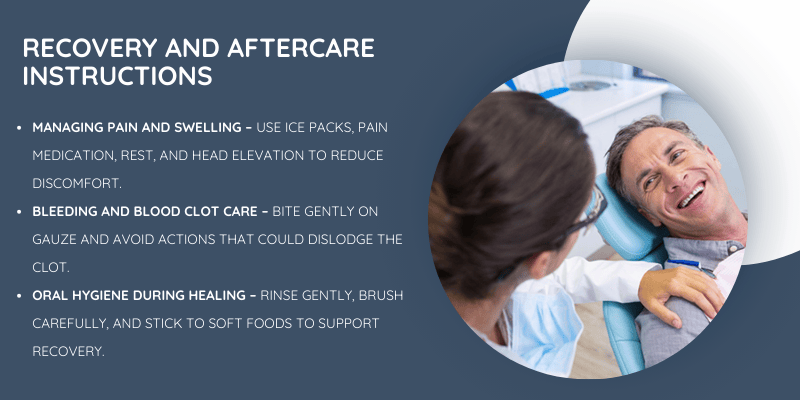
After your wisdom tooth removal, taking care of your mouth properly helps your healing go smoothly. Managing pain and swelling, controlling bleeding, and keeping your mouth clean are all key to avoiding problems like infection or dry sockets.
Managing Pain and Swelling
You’ll likely feel pain and swelling in the first few days after surgery. To reduce swelling, apply an ice pack to your cheek for 15–20 minutes at a time during the first 24 to 48 hours.
This helps control inflammation and discomfort. For pain, over-the-counter ibuprofen is a good choice because it lowers pain and swelling.
Take it as directed by your oral surgeon or on the label. If your doctor gave you prescription pain meds, follow their instructions carefully.
Avoid hot drinks and strenuous activity early on, as these can increase swelling. Rest and keep your head elevated to help with healing.
Bleeding and Blood Clot Care
Bleeding usually occurs for a few hours after the extraction. To control it, bite gently on the gauze your surgeon gave you for 30 to 60 minutes.
If bleeding continues, replace the gauze and keep applying pressure. It’s important not to disturb the blood clot that forms in the socket.
This clot protects the healing bone and nerves beneath. Avoid spitting, rinsing vigorously, smoking, or drinking through a straw for at least 24 hours.
These actions can dislodge the clot and cause a painful condition called dry socket. If bleeding won’t stop after several hours or keeps soaking through gauze, contact your oral surgeon right away.
Oral Hygiene During Healing
Good oral care prevents infection and speeds up recovery. For the first 24 hours, avoid brushing near the extraction site and do not rinse your mouth.
After that, gently rinse your mouth with warm salt water several times a day. Do this by tilting your head side to side and letting the water fall out without forceful spitting.
You can lightly brush your other teeth, but be very careful around the stitches or extraction areas. If your surgeon gave you an antiseptic mouthwash, use it as directed.
Avoid hard, crunchy, or spicy foods until your mouth feels better. Stick to soft foods like mashed potatoes, pudding, or soup, and slowly return to normal eating as you heal to protect your oral health.
Potential Complications and How to Prevent Them
After wisdom tooth extraction, some problems can happen, but many can be avoided with the right care. You should watch for signs like pain, swelling, or unusual taste in your mouth.
Acting quickly helps you heal well and feel better faster.
Preventing Dry Socket
Dry socket happens when the blood clot in your tooth socket gets dislodged or does not form properly. This leaves the bone and nerves exposed, causing sharp pain that can spread to your ear, temple, or chin.
Smoking, using straws, and rinsing your mouth too hard can increase your risk. To prevent dry socket:
- Avoid smoking or using straws for at least a week.
- Do not rinse your mouth vigorously for the first 24 hours.
- Eat soft foods and avoid hard, crunchy items.
- Follow your dentist’s instructions carefully.
If you feel increasing pain a few days after the extraction, contact your oral health specialist. They can treat dry socket by cleaning the area and applying soothing medication.
Recognizing and Managing Infection
Infection is rare but possible after tooth removal. Signs to watch for include:
- Fever
- Swelling that worsens or stays for days
- Redness around the extraction site
- Pus or a bad taste in your mouth
Good oral hygiene helps prevent infections. Brush gently around the area and follow your dentist’s cleaning instructions.
If you notice any of these symptoms, tell your dentist right away. Antibiotics may be needed, and sometimes the infection will need to be drained.
When to Contact Your Dentist
Some symptoms after wisdom tooth extraction need quick attention. Call your dentist if you have:
- Severe or increasing pain not helped by medication
- Heavy bleeding after eating gauze or prolonged bleeding
- Swelling that gets worse after three days
- Signs of infection like fever or pus
- Numbness that lasts for several days
Your dentist is your best resource for guidance. Early care can prevent complications from getting worse and keep your recovery on track.
Don’t hesitate to reach out if something feels wrong.
Getting Back to Normal: Diet, Rest, and Oral Care
After wisdom teeth removal, managing your diet, rest, and oral care carefully helps your mouth heal well. Paying attention to what you eat, how much you move, and how you clean your mouth will make a big difference.
What to Eat and Avoid

Stick to soft foods that don’t require much chewing. Good choices include mashed bananas, yogurt, smoothies (without straws), scrambled eggs, and soup.
These foods help keep your energy up without bothering your healing gums. Avoid crunchy, hard, or sticky foods like nuts, chips, or caramel.
These can scratch your gums or dislodge the blood clots that are key for healing. Also, stay away from spicy, acidic, or hot foods, as they may irritate the extraction site and slow recovery.
Hydration is important, so drink plenty of water and mild herbal teas. Avoid alcohol and caffeine since they can dehydrate you and affect healing.
Rest and Activity Guidelines
Rest is critical right after surgery. Try to keep your head elevated and avoid strenuous activity for at least 48 hours.
Taking short, easy walks is fine. Avoid heavy lifting or intense exercise for about a week.
Sleeping with your head raised helps reduce swelling. Limit talking and chewing to avoid stressing the surgical area.
If your dentist gave you specific aftercare instructions, follow those closely to prevent complications like dry socket or infection.
Long-Term Oral Health Tips
Keep your mouth clean, but be gentle. Use a soft toothbrush and avoid brushing directly over the extraction sockets for the first few days.
After 24 hours, rinse gently with warm salt water several times a day to reduce bacteria and swelling. Avoid smoking and using straws until your mouth is fully healed, as these can cause problems with clotting.
Once healed, maintain regular brushing, flossing, and dental check-ups to keep your mouth healthy and protect your other teeth.
Frequently Asked Questions
After your wisdom tooth extraction, you can expect some pain and swelling that gradually improves. Knowing what is normal and when to seek help makes recovery smoother.
What should I expect in terms of pain in the days following my wisdom tooth extraction?
You will likely feel mild to moderate pain for a few days after surgery. The most intense discomfort usually happens in the first 48 to 72 hours.
Pain medicine, either prescribed or over-the-counter, can help manage this. If the pain gets worse after a few days or doesn’t improve, contact your dentist.
What are some common side effects after having a wisdom tooth pulled out?
Swelling and some bruising around your jaw and face are normal. You may also notice some bleeding or oozing from the extraction site during the first day.
Stiffness in your jaw and difficulty opening your mouth can happen but should get better each day. Avoid spitting or rinsing hard in the first 24 hours to protect the healing clot.
Can you provide a list of do’s and don’ts for post-operative wisdom tooth extraction care?
Do:
- Rest and keep your head elevated to reduce swelling.
- Use cold packs for the first 24–48 hours, then warm compresses if needed.
- Take all medications as directed.
- Eat soft foods like yogurt, soup, or mashed potatoes.
- Keep your mouth clean with gentle rinsing after 24 hours (saltwater is good).
Don’t:
- Smoke or use tobacco products for at least a week.
- Drink through a straw for 1–2 weeks, as suction can dislodge the blood clot.
- Eat hard, spicy, or crunchy foods until healing is well under way.
- Perform heavy exercise or lifting for at least a week.
- Ignore signs of infection like fever, increased pain, or bad taste in your mouth.
How much does it typically cost to have a wisdom tooth removed?
The cost varies depending on where you live, the complexity of the extraction, and your dental insurance coverage. Simple extractions usually cost less than surgical removals that require bone removal or sedation.
On average, you might expect to pay between $200 to $600 per tooth without insurance. More complicated cases and sedation can increase the price.
Are there any long-term side effects associated with the extraction of wisdom teeth?
Most people heal without long-term problems. There is a small risk of temporary numbness if nerves near the tooth are affected, especially with lower wisdom teeth.
Permanent nerve damage is rare. If you have concerns about nerve injury, discuss them with your surgeon before the procedure.
What does the recovery timeline look like after wisdom tooth removal?
The first 24 hours require rest and careful care to manage bleeding and swelling. Swelling peaks between days 2 and 3.
After this, swelling slowly decreases. By day 4 to 7, most pain and swelling improve enough to return to work or school.
Full healing of the gum tissue can take a few weeks. Sutures, if used, may dissolve during this time.