
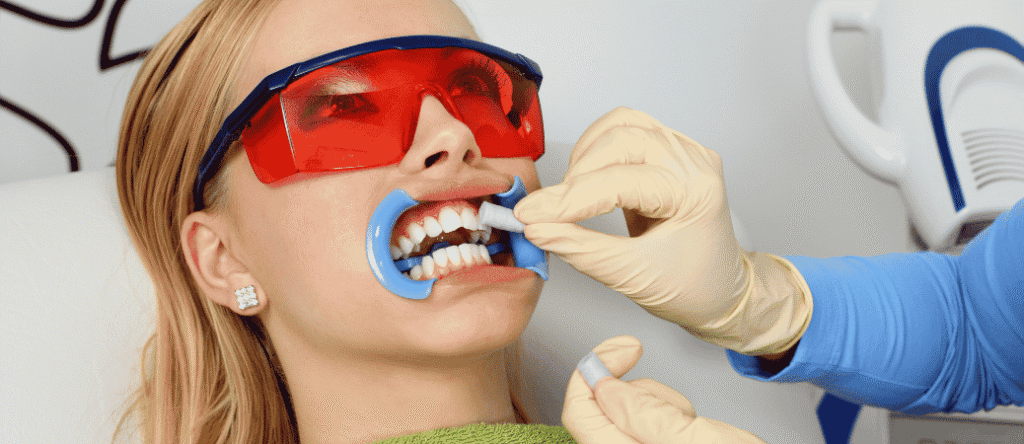
If your smile still looks dull after weeks of whitening strips or faithfully using a tray, there may be a specific reason behind the limited results.
Understanding why teeth whitening isn’t working can help you determine whether the issue is deeper staining, buildup blocking the enamel, thin enamel, or dental work that cannot change color.
When the discoloration is suitable for bleaching, professional teeth whitening offers a more controlled approach to improving tooth color, but the cause of the discoloration needs to be understood first.
Most whitening treatment disappointments trace back to one of four causes: intrinsic discoloration, plaque or tartar in the way, thin or worn enamel, or restorations like crowns and fillings that do not respond to bleaching gel.
Once you know which one applies to you, the next step becomes a lot clearer.
This kind of thing is common, and it is rarely about effort. Some people brush carefully, follow every instruction on the box, and still see barely any change in tooth color.
Others get a bright result at first, only to watch it fade within a couple months. Both situations usually have a clear, identifiable reason behind them.
Key Takeaways
- Whitening struggles usually come from where the stain lives, not from doing the process wrong.
- Buildup, worn enamel, and existing dental work can all block or limit whitening results.
- A quick dental evaluation can tell you whether more whitening will help or if a different fix makes more sense.
What Limited Results Usually Mean
Limited whitening results usually mean you have hit a natural shade limit, not that the product failed.
Every tooth has a genetic baseline color, and whitening can only lift you so far above that starting point before it stops making a visible difference.
Your natural tooth color depends on the thickness of your enamel and the shade of the dentin layer underneath it.
Some people start with yellow teeth, others with a grayer tone, and whitening reacts differently to each.
Stained teeth from years of coffee or tea often respond faster than gray teeth, which tend to need more time or a stronger approach.
Color relapse is also normal. Whitened teeth can drift back toward their original shade over weeks or months, especially if you eat or drink foods that stain easily.
This does not always mean the treatment failed. It often means the effect naturally faded, the same way tinted hair grows out.
Professional teeth whitening, at-home whitening kits, and over-the-counter whitening strips all use the same basic bleaching approach, just at different strengths.
Stronger options move you toward your shade limit faster, but none of them can push a tooth past what its structure allows.
Whitening Has a Realistic Shade Limit
Whitening gel can only lift stains it can reach and break down. It cannot turn every tooth paper-white, and a dentist worth trusting will tell you that upfront.
Most people see a real, noticeable improvement of several shades.
But if your teeth started out gray, heavily stained, or naturally darker, expecting a dramatic all-white transformation can set you up for disappointment even when the product worked correctly.
Is the Discoloration on the Surface or Inside the Tooth?
Whether your discoloration sits on the surface or inside the tooth determines whether whitening can fix it at all. Surface stains respond well to bleaching gel.
Stains that formed inside the tooth structure often do not, no matter how strong the product or how long you leave it on.
Extrinsic stains build up from daily habits like coffee, tea, red wine, and tobacco.
Intrinsic stains form inside the dentin layer, often from medication, fluoride exposure, or an old injury, and whitening gel struggles to reach them.
The color pattern you see, whether it is yellow, gray, patchy, or isolated to a single tooth, can point toward the likely cause.
Extrinsic Stains From Food, Drinks, and Tobacco
Extrinsic stains form on the outer surface of your enamel and are the type whitening handles best.
Dark-colored foods and drinks, along with tobacco use, are the most common culprits behind this kind of surface staining.
Coffee, tea, red wine, berries, and tomato sauce all contain pigments that cling to enamel.
Tobacco stains build up in a similar way but tend to be more stubborn since they combine with tar residue.
These surface stains usually respond well to whitening strips, trays, or in-office treatments because the gel can make direct contact with the discolored layer.
Intrinsic Staining in Dentin
Intrinsic staining happens inside the tooth, usually in the dentin layer beneath your enamel, and it explains a lot of frustrating whitening results.
Since whitening gel works mainly on the outer tooth surface, it has a harder time reaching discoloration that started underneath.
Several things cause intrinsic discoloration:
- Fluorosis from too much fluoride exposure during childhood tooth development
- Certain medications, including some antihistamines and chemotherapy drugs
- Dental trauma that damages the nerve inside a tooth
- Aging, which naturally thins enamel and darkens dentin over time
If your yellowish dentin is showing through thin enamel, whitening can still help some, but the improvement tends to be smaller than what surface stains allow.
What Yellow, Gray, Patchy, and Single Dark Teeth Can Signal
Your tooth color pattern offers real clues about what is going on underneath. This table breaks down common patterns and what they often mean:
| Color Pattern | Likely Cause | Whitening Response |
| Yellow, overall | Thin enamel showing yellow dentin | Moderate improvement |
| Brown, surface | Coffee, tea, tobacco stains | Good improvement |
| Gray, overall | Old fillings, childhood antibiotics, nerve changes | Limited improvement |
| Patchy, white/brown spots | Fluorosis from childhood fluoride exposure | Uneven improvement |
| Single dark tooth | Nerve damage from past trauma | Whitening alone won’t fix it |
A single gray tooth that stands out from the rest deserves prompt attention.
It can point to nerve damage from an old injury, even one from years ago, and it needs a dental evaluation rather than more whitening sessions.
Could Buildup, Enamel, or Technique Be Blocking the Gel?
Plaque, tartar, thin enamel, and product technique can all stop whitening gel from working the way it should, even when the stain itself would normally respond well.
These barriers are some of the easiest to fix once you know they are the issue.
Getting a professional cleaning before you whiten removes buildup that blocks even contact.
Checking your enamel condition and reviewing how you use your whitening product can also make a noticeable difference in your next round of results.
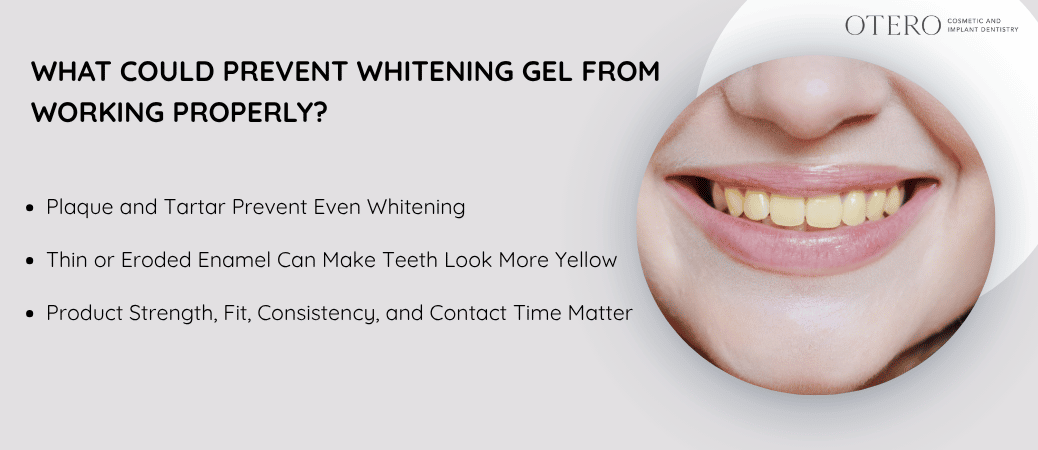
Plaque and Tartar Prevent Even Whitening
Plaque buildup and tartar buildup sit on top of your enamel and prevent whitening gel from reaching the tooth surface underneath.
If you whiten over a layer of plaque, you are bleaching the buildup instead of your teeth.
Plaque forms daily and can be brushed away, but tartar hardens onto the tooth and needs a professional dental cleaning to remove.
A professional dental cleaning can remove plaque and hardened tartar that may prevent whitening gel from making even contact with the enamel.
Thin or Eroded Enamel Can Make Teeth Look More Yellow
Thin or eroded enamel lets more yellow dentin show through, which can make teeth look more yellow no matter how much you whiten.
Enamel erosion from acid exposure, aggressive brushing, or age wears this protective layer down permanently, since enamel does not regenerate once it is gone.
Citrus fruits, soda, wine, and vinegar-based dressings are common sources of acid erosion. Brushing too hard, especially right after eating something acidic, adds to the damage.
Once enamel thins, whitening still works, but the visible improvement tends to be smaller than it would be on thicker enamel.
Product Strength, Fit, Consistency, and Contact Time Matter
Whitening agents like hydrogen peroxide and carbamide peroxide need enough contact time on the tooth to work, and over-the-counter whitening products use lower concentrations than a teeth whitening kit from a dental office.
That means at-home strips and trays typically need longer or more repeated use to reach the same result.
Whitening strips often miss the edges of teeth near the gumline, leading to patchy coverage.
Whitening toothpaste relies on mild abrasives rather than bleaching agents, so it helps with light surface polish but will not lift a stain the way a gel-based product does.
Skipping days or rinsing early cuts into the limited contact time these products need to work.
Why Dental Work Creates Uneven Color
Dental work like crowns, veneers, fillings, and bonding cannot change color with whitening products, which creates uneven results when it sits next to natural teeth.
This is one of the most common reasons someone whitens their natural teeth and ends up with a smile that looks two-toned instead of uniformly brighter.
Porcelain, composite resin, and other restoration materials are designed to hold a fixed shade.
Whitening gel has no effect on them, so as your natural teeth lighten, existing dental work stays exactly the same color it started as.
Which Restorations Will Not Whiten
When decay or damage needs repair, tooth-colored fillings can restore the tooth while being selected to blend naturally with the surrounding smile.
If you whiten around one of these restorations, the natural teeth may end up lighter than the restoration itself, or in some cases darker, depending on the original shade match.
Either way, the mismatch becomes more noticeable the more you whiten.
How Shade Matching Affects a Smile Makeover
Shade matching is the process of choosing restoration colors that blend with your natural teeth, and it plays a big role in any smile makeover.
If you are planning cosmetic dentistry work like veneers or bonding, it often makes sense to whiten your natural teeth first and then match the restoration to your new, brighter shade.
Doing it in the reverse order, restoration first and whitening later, tends to be the reason so many patients end up with a mismatched smile down the road.
What Should You Try Next for Safer, More Predictable Results?
The most reliable next step is a dental evaluation before you try a stronger whitening product on your own.
A dentist can tell you whether your discoloration will respond to more whitening, needs a professional-grade approach, or calls for a different solution altogether.
This single step prevents wasted money on products that were never going to work for your type of stain, and it protects your oral health along the way.
Get a Dental Evaluation Before Increasing Whitening Strength
A dental evaluation checks for cavities, tooth decay, and gum disease before you add more bleaching agent to your routine.
Whitening gel can seep into an untreated cavity and cause real pain, and swollen or receding gums can expose yellowish root surfaces that will not respond to whitening the way enamel does.
The team at Otero Cosmetic & Implant Dentistry often sees patients who tried to push through disappointing results with a stronger over-the-counter product, only to find out the real issue was intrinsic staining or an untreated dental concern.
A short exam upfront saves time and avoids unnecessary sensitivity.
When Professional Whitening May Be the Better Fit
Professional whitening treatments use stronger, more controlled formulas than store shelves offer, along with gum protection to reduce irritation during treatment.
In-office whitening also allows a dentist to manage tooth sensitivity with tools like potassium nitrate or desensitizing toothpaste before and after your visit.
If you have tried whitening strips or a home kit with little success, professional-grade whitening at a practice like Otero Cosmetic & Implant Dentistry often reaches stains that home products cannot fully address, particularly for stubborn extrinsic buildup or mild intrinsic discoloration.
When Bonding, Veneers, or Microabrasion Are Better Alternatives
Bonding, veneers, or microabrasion are often more predictable than repeated whitening attempts when discoloration is intrinsic, patchy, or limited to a single tooth.
Microabrasion gently polishes away thin, superficial intrinsic stains, while composite bonding and porcelain veneers cover discoloration a whitening gel was never going to lift in the first place.
For a single dark tooth from old trauma, or fluorosis spots that whitening only partially improves, these whitening alternatives usually deliver a more even, lasting look.
A simple shift in diet toward a white diet approach, cutting back on dark foods and drinks during and after treatment, also helps protect whatever results you achieve.
If you are in the area, exploring teeth whitening options with a local provider is a practical way to compare which path fits your smile.
A Clearer Path to a Brighter Smile
Disappointing teeth whitening results almost always trace back to something specific, whether that is the type of stain, buildup on your teeth, thin enamel, or dental work that cannot change shade. None of that means whitening failed you or that you did something wrong.
A brighter smile is still realistic for most people once you know which factor applies to your teeth. Sometimes that means a professional teeth whitening session with stronger, better-controlled ingredients.
Other times it means looking at whitening alternatives like bonding or veneers instead of repeating the same product over and over.
Protecting your oral health along the way, through regular cleanings and treating any decay or gum issues early, keeps your results looking their best for longer.
A quick conversation with a dentist can save you from guessing and help you choose the next step that actually fits your teeth.
Frequently Asked Questions
What can I do if teeth whitening is not working?
Start with a dental evaluation to find out whether your discoloration is surface-level or intrinsic.
A dentist can also check for buildup, thin enamel, or existing dental work that might be limiting your results, then recommend whether professional whitening or an alternative treatment fits your situation better.
Why won’t my teeth whiten even though I brush twice a day?
Brushing removes plaque but does not address intrinsic stains inside the dentin layer or discoloration from old dental work.
It also will not undo enamel thinning, which lets more yellow color show through even on a clean, well-brushed tooth.
Why are only the edges of my teeth whitening?
Whitening strips often do not cover the full curve of each tooth, especially near the gumline, leading to patchy or edge-only results.
A properly fitted tray or professional treatment usually gives more even coverage than strips alone.
Why did my teeth go back to yellow after whitening?
Color relapse happens naturally as teeth reabsorb stains from food, drinks, and daily habits over time. Coffee, tea, red wine, and tobacco can rebuild surface stains within weeks, so results fade faster if those habits continue.
What is the strongest safe way to whiten teeth?
Professional teeth whitening performed at a dental office uses the strongest, safely controlled formulas available, along with gum protection to limit irritation.
It also allows a dentist to manage tooth sensitivity, which makes it a more predictable option than repeated at-home use for stubborn stains.