
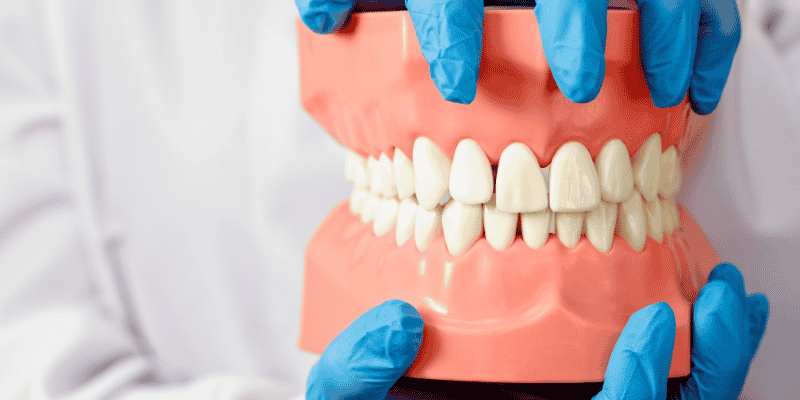
Getting dentures after losing teeth seems like it solves the problem of gaps in your smile. But there’s something happening beneath your gums that most people don’t realize until years later.
Traditional dentures rest on top of your gums and don’t prevent the jawbone underneath from slowly shrinking away, which can lead to loose dentures, changes in your facial appearance, and ongoing dental challenges.
When you lose a tooth, you also lose the root that once kept your jawbone healthy and strong. This is why bone loss with dentures becomes a common long term issue.
Your body sees that bone as unnecessary and starts breaking it down through a process called bone resorption, which continues even when dentures are worn daily.
Over time, the jaw shrinks, dentures fit more poorly, and facial appearance can gradually change.
Understanding why bone loss happens after tooth extraction helps you make better choices about your dental care.
Whether you already wear dentures or you’re considering them, knowing what to expect can help you protect your jaw and keep your smile looking natural for years to come.
Key Takeaways
- Dentures alone cannot stop jawbone shrinkage because they don’t replace the tooth roots that stimulate bone growth
- Bone loss causes dentures to become loose over time and can change your facial appearance
- Dental implants are the only option that prevents continued bone shrinkage by acting like natural tooth roots
Why Bone Shrinkage Happens With Dentures Alone
Your jawbone needs constant stimulation to stay healthy and strong. When you lose your natural teeth and rely on traditional dentures, your jaw doesn’t get the signals it needs to maintain bone density.
Understanding Bone Resorption After Tooth Loss
Bone resorption is your body’s natural response to missing teeth. Your jawbone is living tissue that constantly rebuilds itself when it receives pressure and stimulation.
Once you lose teeth, your body stops sending nutrients to that part of your jaw. It treats the bone as unnecessary and begins breaking it down.
This process happens gradually but continuously.
The bone cells that once supported your teeth get reabsorbed into your body. Your jaw ridge becomes smaller and flatter over time. This change affects how your dentures fit and how your face looks.
The Role of Tooth Roots in Jawbone Health
Your natural tooth roots act like anchors that keep your jawbone active. Every time you chew or bite, the pressure travels through the roots into the bone below.
This pressure tells your body to keep sending blood flow and nutrients to your jaw. The bone stays dense and maintains its shape because it’s being used. Without roots, your jaw loses this vital stimulation.
Traditional dentures rest on your gums instead of being anchored into the jawbone. The chewing forces don’t transfer down to the bone in the same way.
Your body interprets this as a sign that the bone isn’t needed anymore.
How Traditional Dentures Accelerate Bone Loss
Denture wear can actually speed up jawbone deterioration in two ways. First, dentures don’t provide the deep bone stimulation that natural tooth roots give you.
Second, traditional dentures can cause traumatic atrophy from repeated pounding on your gums and underlying bone. Each time you chew, your dentures move slightly and put uneven pressure on different areas.
This constant friction and pressure can damage the bone ridge over time. The combination of lack of stimulation and physical trauma leads to faster jawbone shrinkage than if you had no teeth and wore nothing at all.
Your jaw changes shape, making your dentures fit poorly and potentially giving you a sunken appearance.
How Bone Loss Impacts Denture Fit and Facial Appearance
When your jawbone shrinks, it changes the foundation that your dentures rest on. This affects how stable they feel in your mouth and can change the way your face looks.
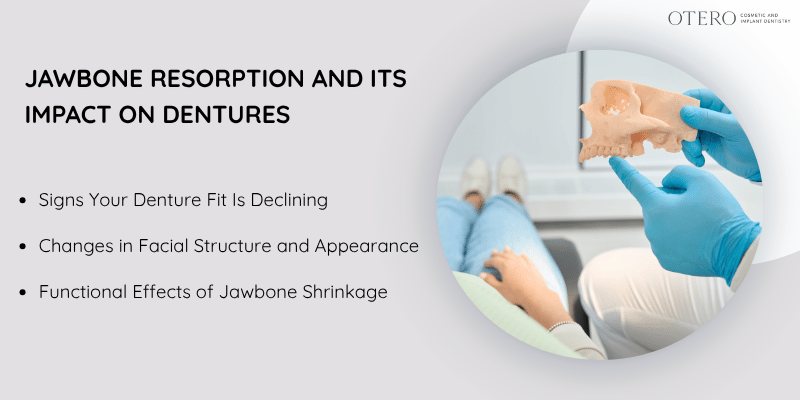
Signs Your Denture Fit Is Declining
Your dentures may slip or move around when you talk, eat, or laugh. This happens because jawbone shrinkage alters your face shape and the ridges that once held your dentures firmly in place.
You might notice sore spots or gum irritation where your dentures rub against the changed bone and tissue. Chewing becomes harder, especially when you try to eat firm or chewy foods.
Common signs include:
- Dentures that click or make sounds when you speak
- Needing more denture adhesive than you used to
- Food getting trapped under your dentures more often
- Difficulty biting into foods like apples or sandwiches
These problems tend to get worse over time as your bone continues to shrink.
Changes in Facial Structure and Appearance
As your jawbone loses volume, your facial features start to change. Your cheeks may sink inward and your lips can lose support, making them appear thinner.
The lower part of your face may look shorter or collapsed. Some people develop deeper wrinkles around their mouth and nose.
This is sometimes called “denture face” and happens because bone loss can lead to a collapsed facial appearance.
Your chin may appear to move closer to your nose. These changes can make you look older than you actually are and affect your confidence in social situations.
Functional Effects of Jawbone Shrinkage
Poor denture stability makes it harder to eat a normal diet. You may need to avoid certain foods or cut everything into smaller pieces.
Speaking clearly becomes more difficult when your dentures move around in your mouth. You might notice clicking sounds or slurring of certain words.
The connection between dentures and bone loss means that denture wear actually speeds up these problems over time. Your bite force decreases, which makes eating less enjoyable and can affect your nutrition.
Many people feel less confident smiling or talking in public. They worry their dentures might slip at the wrong moment, which can lead to avoiding social events or speaking less often.
Types of Dentures and Their Relationship to Bone Loss
Different types of dentures affect your jawbone in unique ways. The bone loss you experience depends on whether you wear full or partial dentures, how quickly they were placed after tooth removal, and how well you maintain them.
Full vs. Partial Dentures
Full dentures replace all your teeth in either your upper or lower jaw. They sit directly on your gum tissue without any tooth roots to stimulate the bone underneath.
Traditional dentures accelerate bone loss because they don’t provide the pressure your jawbone needs to stay healthy.
Your bone can shrink by up to 25% in the first year after tooth loss without proper stimulation. Full dentures put pressure on your jawbone during chewing, which can speed up bone breakdown instead of preventing it.
Partial dentures replace some of your missing teeth while your natural teeth remain. These dentures often attach to your existing teeth with metal clasps.
While partial dentures still don’t stop bone loss in areas where teeth are missing, the remaining natural teeth continue to stimulate those parts of your jawbone.
Immediate Dentures and Early Bone Changes
Immediate dentures are placed right after your teeth are removed. Your dentist fits them during the same appointment as your tooth extraction. This means you don’t have to go without teeth while your gums heal.
However, immediate dentures require frequent adjustments. Your gums and bone change shape significantly during the first few months after tooth removal.
The bone resorption process starts immediately once your tooth roots are gone.
You’ll need several relining appointments to keep your immediate dentures fitting properly. Your jawbone reshapes itself during healing, causing gaps between the denture and your gums.
Denture Care for Different Denture Types
All denture types need daily cleaning to maintain good oral health. You should remove your dentures each night and brush them with a soft-bristled brush and non-abrasive cleaner.
Daily care steps include:
- Rinsing dentures after eating
- Brushing all denture surfaces daily
- Soaking dentures overnight in water or denture solution
- Cleaning your gums and any remaining teeth
Regular dental visits help monitor bone loss and ensure your dentures fit correctly. Your dentist can detect early signs of bone shrinkage and recommend adjustments before your dentures become loose or uncomfortable.
Solutions to Minimize Jawbone Shrinkage
Dental implants offer the most effective way to preserve your jawbone after tooth loss.
When combined with proper nutrition and timely bone grafts when needed, you can significantly slow the bone shrinkage that typically follows tooth extraction.
Dental Implants and Implant-Supported Dentures
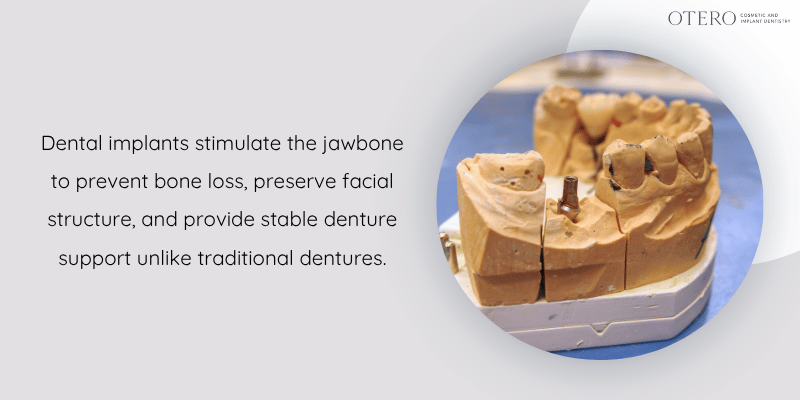
Dental implants work like artificial tooth roots that integrate directly into your jawbone. When you chew or bite down, these titanium posts send pressure signals to the surrounding bone tissue, just like natural teeth do.
This stimulation tells your body to keep the bone strong and healthy. Without it, your jaw assumes the bone isn’t needed anymore and starts breaking it down.
Benefits of implant-supported dentures:
- Stop or dramatically slow ongoing bone loss
- Provide stable support that doesn’t shift when eating
- Maintain your natural facial structure longer
- Eliminate the need for messy adhesives
You don’t need a full set of implants to see results. Most people get good stability with just 2-4 implants supporting a lower denture.
This option, called an overdenture, still allows you to remove your denture but keeps it securely snapped into place.
The key difference is that dental implants stimulate jawbone growth, while traditional dentures just rest on top of your gums without providing any bone stimulation.
Bone Grafting and Bone Grafts for Dentures
If you’ve already experienced significant bone loss, bone grafting can rebuild your jawbone before implant placement.
This procedure takes bone material from another part of your body or uses synthetic bone and places it where your jaw has weakened.
The graft helps rebuild the jawbone over several months, making it strong enough to support dental implants. Your dentist will wait for the graft to fully integrate before placing implants.
When you might need bone grafts:
- You’ve worn traditional dentures for many years
- Your jaw ridge has become too flat or narrow
- Previous X-rays show significant bone loss
- You want implants but don’t have enough bone density
Bone grafting prevents further jaw bone loss by creating a foundation that implants can anchor into. Without adequate bone, implant placement isn’t possible.
Preventing Bone Loss With Tooth Replacement Choices
The type of tooth replacement you choose directly affects your long-term jawbone health. Traditional dentures don’t prevent bone shrinkage because they lack the root structure that keeps bone alive.
Fixed bridges can work for single missing teeth, but they don’t stimulate the bone under the gap. Dental implants address missing teeth while also maintaining bone density through constant stimulation.
Comparing tooth replacement options:
| Option | Prevents Bone Loss | Supports Bone Density |
| Traditional dentures | No | No |
| Fixed bridges | No | Only where teeth remain |
| Dental implants | Yes | Yes |
| Implant-supported dentures | Yes | Yes |
If you’re facing tooth extraction, talk to your dentist about implants before the procedure. Early implant placement can prevent bone loss from starting in the first place, giving you better jawbone health for years to come.
Maintaining Oral Health With Dentures
Taking care of your mouth while wearing dentures requires consistent cleaning habits and professional monitoring.
Regular dental check-ups help catch problems early, while daily hygiene practices prevent gum disease and keep your dentures functioning properly.
The Importance of Regular Dental Check-Ups

You need to see your dentist at least twice a year even if you wear dentures. These visits allow your dentist to check for changes in your jawbone structure and examine your gums for signs of irritation or disease.
During regular dental check-ups, your dentist can adjust your dentures to maintain a proper fit. As your bone changes shape over time, dentures that once fit well may become loose or uncomfortable.
Your dentist will also look for sore spots, infections, and early signs of bone loss that affects denture stability.
A denturist can reline your dentures or recommend when you need new ones. These professionals specialize in denture care and understand how bone shrinkage impacts fit over time.
They can also discuss whether implant-supported options might work better for your situation.
Oral Hygiene and Periodontal Disease Prevention
Good oral hygiene remains important even after losing your natural teeth. You should clean your dentures daily with a soft brush and mild soap or denture cleaner.
Never use regular toothpaste because it can scratch the denture surface.
Remove your dentures at night and soak them in water or denture solution. This gives your gums time to rest and helps prevent infections.
While your dentures are out, gently brush your gums, tongue, and the roof of your mouth with a soft toothbrush.
If you have remaining natural teeth that support partial dentures, maintaining healthy teeth becomes essential for denture stability.
Periodontal disease can cause you to lose these supporting teeth. Brush twice daily and floss around natural teeth to keep gums healthy.
Rinse your mouth after meals to remove food particles. Watch for signs of gum problems like redness, swelling, or bleeding.
Tips for Long-Term Denture Success
Store your dentures properly when not wearing them to prevent warping or damage. Keep them in water or denture solution, never in hot water.
Handle them carefully over a folded towel or basin of water in case you drop them.
Eat a balanced diet with soft foods initially as you adjust to dentures. Gradually add firmer foods as you become comfortable. Cut food into small pieces and chew on both sides of your mouth evenly.
Schedule denture adjustments as soon as you notice looseness or discomfort. Ill-fitting dentures can cause gum irritation and bone damage if left unaddressed.
Never try to adjust or repair dentures yourself with household glues.
Replace worn dentures every five to seven years. Old dentures lose their shape and can speed up bone loss. Talk with your dentist about implant-supported dentures for better bone preservation if you experience significant changes in fit.
Frequently Asked Questions
Jawbone shrinkage affects most denture wearers over time, and understanding why it happens can help you make better choices about your dental care.
These common questions address the science behind bone loss and practical steps you can take to protect your jaw.
Why does the jawbone shrink after you lose teeth?
Your jawbone needs regular stimulation to stay strong and healthy. When you chew with natural teeth, the pressure travels through the tooth roots into the bone below.
This stimulation signals your body to keep rebuilding and maintaining that bone tissue. Once you lose a tooth, that stimulation disappears.
Without those signals, your body starts to absorb the bone that used to support your teeth. This process is called alveolar bone resorption.
Research shows that bone shrinkage happens fastest right after tooth extraction. You might lose 2-4 millimeters of bone width and 1 millimeter of bone height in just the first six months.
Can regular dentures stop bone loss, or does it still continue?
Traditional dentures rest on top of your gums and cannot stop bone loss. They replace the visible part of your teeth but not the roots.
When you bite down on dentures, the pressure goes through the soft gum tissue instead of into the bone. Your jawbone doesn’t receive the stimulation it needs to stay dense.
Regular dentures do not strengthen the jawbone, and bone resorption continues over time. This is why dentures that fit well at first can become loose after several years.
Your lower jaw typically loses bone faster than your upper jaw. This explains why lower dentures often feel looser sooner than upper ones.
How can I help prevent bone loss if I wear dentures?
The most effective way to prevent jawbone shrinkage is through dental implants. These titanium posts act like artificial tooth roots and deliver chewing forces directly into your bone.
Implant-supported dentures help preserve bone that would otherwise be lost with traditional dentures.
Studies show that areas that might lose over 5 millimeters in a year with regular dentures show minimal bone loss when implants are used.
Good nutrition also supports bone health. Make sure you get enough calcium and vitamin D in your diet.
Avoid wearing your dentures overnight unless your dentist specifically recommends it. Taking them out gives your gums time to rest and reduces uneven pressure on the bone.
Visit your dentist regularly for checkups. They can spot early signs of bone loss and recommend adjustments before major problems develop.
What are the signs of bone loss or “denture face,” and how can I avoid it?
Bone loss changes the shape of your jaw and affects your appearance. Your cheeks may start to sink inward, and your lips might lose support.
The lower part of your face can appear shorter or collapsed. You might notice deeper wrinkles around your mouth or a more pronounced chin.
Your dentures may feel loose or slip when you eat, speak, or laugh. Sore spots and gum irritation become more common as the bone ridge flattens.
Chewing gets harder, especially with firm or chewy foods. Some people start avoiding certain foods altogether.
Changes in facial shape can be another clear sign that bone loss is affecting your denture fit. Getting implant-supported dentures helps maintain your facial structure by preserving the underlying bone.
Regular relines or replacement dentures every 5-7 years also help maintain proper fit as your bone changes.
Can I still get snap-in or implant-supported dentures if I already have bone loss?
Most people can still get implant-supported dentures even with some bone loss. The amount of bone you have left determines what treatment options will work best for you.
Your dentist will take X-rays or CT scans to measure your current bone volume. If you have enough healthy bone, implants can be placed right away.
When bone loss is more severe, a bone graft might be needed first. Bone grafting uses bone material to rebuild lost structure before placing implants.
The graft gives implants a solid foundation to anchor into. This procedure adds time to your treatment but makes implants possible for many people who otherwise wouldn’t qualify.
Your dentist can discuss whether you need grafting based on your specific situation.
What options are available if I have too much bone loss for traditional dentures to fit well?
Bone grafting can rebuild areas where you’ve lost significant bone volume. This creates a better foundation for dentures to rest on and improves stability.
Dental implants can be anchored into grafted bone, offering further support to your dentures and increasing stability. Even a few implants can dramatically improve how your dentures fit and feel.
Special denture adhesives provide temporary help with loose dentures while you explore longer-term solutions. Denture liners can also ease discomfort and help dentures conform to your changed bone structure.
Some dentists offer mini implants, which need less bone than standard implants. These smaller posts can work in areas where regular implants won’t fit.
A dental evaluation helps determine which option makes the most sense for your jaw health and budget.