
Missing most or all of your teeth affects more than just your smile. It changes how you eat, speak, and feel about yourself every day.
When you start looking into replacement options, you’ll likely come across two popular choices that use dental implants.
Snap-in dentures attach to implants but can be removed daily, while fixed implant bridges stay permanently in your mouth and only your dentist can take them out.
Both options give you better stability than traditional dentures. But they work differently in your daily routine.
The choice between these two affects everything from your morning routine to what you can eat for dinner. Both improve the function and appearance of your teeth, but they serve different needs and lifestyles.
Understanding how each one fits into your day-to-day life helps you make the right decision for your situation.
Key Takeaways
- Palateless Snap dentures cost less upfront and can be removed, while fixed bridges are permanent and feel more like natural teeth
- Fixed implant bridges require brushing and flossing like real teeth, but snap-in dentures need daily removal for cleaning
- Both options help preserve your jawbone better than traditional dentures and improve your chewing ability
Types of Tooth Replacement Options
When you lose multiple teeth or all your teeth, you have several ways to replace them. Each option works differently and affects your daily life in its own way, from what you can eat to how you care for your new teeth.
Traditional Dentures and Their Limitations
Traditional dentures are removable teeth that rest on your gums without any implants. They’re the most basic form of tooth replacement and rely on suction or adhesive to stay in place.
Conventional dentures are often the least expensive option upfront. However, they come with significant drawbacks in daily life.
They can slip when you eat or talk, which makes many people feel self-conscious. You’ll need to remove them every night for cleaning and soaking.
The bite force with removable dentures is much lower than natural teeth. You might struggle with foods like apples, steak, or corn on the cob.
Many people find that adhesives help but don’t completely solve the stability problem.
Over time, traditional dentures can speed up bone loss in your jaw. Without tooth roots or implants to stimulate the bone, your jawbone slowly shrinks.
This means your dentures will need adjustments or replacements every few years as your jaw shape changes.
Understanding Snap-In Dentures
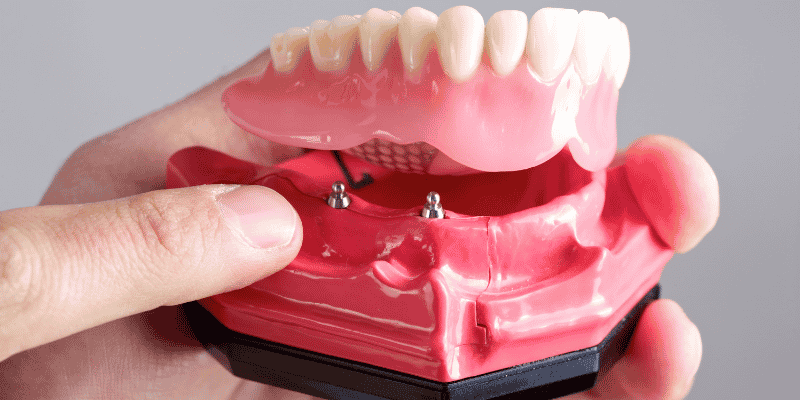
Snap-in dentures attach to dental implants using special connectors but you can still remove them. They’re also called implant-supported dentures or overdentures.
Your dentist places 2-6 implants in your jaw, and the denture snaps onto these implants like buttons.
The implants hold your denture much more securely than traditional dentures. You take them out daily for cleaning, just like regular dentures.
Key features of snap-in dentures:
- Stability: Much better than traditional dentures but not as strong as fixed options
- Implant count: Usually 2-4 implants per arch
- Bite force: About 50-60% of natural teeth
- Removability: You take them out yourself each day
The upper snap-in denture often still covers part of your palate. This can affect how you taste food at first. The lower version typically has a horseshoe shape that feels less bulky.
Exploring Fixed Implant Bridges
A fixed implant bridge stays in your mouth permanently and only your dentist can remove it. This option uses 4-6 implants per arch to support a full set of teeth.
All-on-4 and All-on-6 procedures are the most common types of fixed implant bridges. The number refers to how many implants support your new teeth.
These implants are placed at specific angles to maximize support and often avoid the need for bone grafting.
Fixed bridges feel the most like your natural teeth. They don’t cover your palate, so you can taste food normally and speak clearly right away.
Your bite force reaches 80-90% of natural teeth, which means you can eat almost anything.
You care for fixed implant bridges just like real teeth. You brush them, floss around them, and use a water flosser to keep them clean. There’s no need to remove them at night or carry cleaning supplies when you travel.
The prosthetic can be made from different materials. Zirconia bridges look very natural and last 10-20 years or more. Hybrid bridges combine acrylic teeth with a titanium frame for strength and durability.
Other Implant-Supported Solutions
Beyond snap-in dentures and fixed bridges, you have a few other choices. Individual dental implants work well if you’re missing just a few teeth. Each implant replaces one tooth root and gets topped with a crown.
Implant-supported bridges can replace several teeth in a row without covering the whole arch. This option uses 2-3 implants to support 3-5 connected teeth. It’s a middle ground if you don’t need a full arch replacement.
Some dental practices offer hybrid approaches. You might start with an implant denture that snaps in and later convert it to a fixed bridge as your budget allows.
This gives you immediate stability while working toward a permanent solution.
The right choice depends on your bone density, budget, and lifestyle needs. Your dentist will evaluate your jaw health and discuss which option makes the most sense for your situation.
Daily Life: Comfort, Stability, and Chewing Experience
Fixed implant dentures attach permanently to your jaw, while snap-in dentures connect to implants but you can remove them daily.
These differences affect how stable your teeth feel, what foods you can eat, and how confident you feel during conversations.
Denture Stability and Fit
Fixed implant dentures offer the highest level of denture stability because they’re screwed directly into implants that have fused with your jawbone through osseointegration.
You won’t experience any movement when eating or talking. The denture stays in place 24/7 unless your dentist removes it.
Snap-in dentures provide better stability than traditional loose dentures, but they don’t match the firmness of fixed options.
These implant-supported dentures connect to 2 to 6 implant attachments per jaw. You might feel slight movement when biting down on hard foods.
The snap on dentures can become looser over time as the attachment mechanisms wear down. You’ll need periodic adjustments to maintain proper fit.
Fixed implant dentures don’t have this issue since they don’t rely on clips or snaps that can loosen.
Chewing Efficiency and Food Choices
Your chewing efficiency improves significantly with both options compared to regular dentures. Fixed implant dentures let you eat almost anything without worry.
You can bite into apples, chew steak, and enjoy sticky foods like caramel.
Snap-in dentures improve chewing ability and let you eat harder and stickier foods than conventional dentures. However, you’ll still need some caution with very hard or sticky items.
Your bite strength reaches about 70-80% of what fixed dentures provide.
Foods you can enjoy with both options:
- Corn on the cob
- Nuts and seeds
- Tough meats
- Raw vegetables
Fixed options give you more confidence when eating in social settings since there’s zero risk of movement.
Speech and Everyday Confidence
Fixed implant dentures feel most like natural teeth when you talk. They don’t cover as much of your palate, which means clearer speech from day one.
You won’t deal with clicking sounds or worry about your teeth shifting during important conversations.
Snap-in dentures are less likely to become loose while speaking compared to traditional options. Most people adapt to speaking with implant-retained overdentures within a few weeks.
You might notice occasional movement during animated talking or laughing, though this becomes less noticeable as you adjust.
Both overdenture types look natural when you smile. The main confidence difference comes from internal awareness rather than appearance.
Long-Term Oral Health and Bone Preservation
Both snap-in dentures and fixed implant bridges use dental implants to support your replacement teeth, which means both options help protect your jawbone from the shrinkage that happens after tooth loss.
The number of implants and how they distribute force affects how well each option preserves bone density over time.
Preventing Bone Loss After Tooth Loss
When you lose teeth, your jawbone no longer receives the pressure it needs from chewing. Without that stimulation, your body starts to reabsorb the bone tissue.
This process can speed up when you wear traditional dentures that rest only on your gums. The bone continues to shrink, which is why dentures often need relining or replacement every few years.
Dental implants work differently because they act like tooth roots. They transfer chewing forces directly into your jawbone, which signals your body to maintain the bone tissue around them.
Preserving Jawbone Density
Fixed implant bridges typically use more implants than snap-in dentures. A full-arch fixed bridge often requires four to six implants per arch, while snap-in dentures may use only two to four implants.
More implants mean better force distribution across your jaw. This helps preserve jawbone density in more areas of your mouth.
Snap-in dentures still rest partly on your gums, similar to traditional dentures. While the implants provide important stimulation, the tissue-supported portions may still experience some bone loss over time.
Both options can require bone grafting before implant placement if you don’t have enough bone density. The grafting process builds up weak areas so implants can achieve proper osseointegration.
Role of Implants in Bone Health
Implants need healthy bone to stay stable long-term. Osseointegration is the process where your bone grows around the implant and locks it in place.
Professional teeth cleaning protects both your implants and surrounding bone. Poor cleaning can lead to peri-implantitis, an infection that destroys bone around implants.
Fixed implant bridges and snap-in dentures both improve bone preservation compared to traditional dentures. The key difference is that fixed bridges usually provide more complete bone stimulation across your entire jaw.
Regular dental visits help catch problems early. Your dentist checks for bone loss, gum health, and signs of infection around your implants.
Care, Maintenance, and Durability
Snap-in dentures require daily removal and cleaning, while fixed bridges stay in your mouth and get brushed like natural teeth.
Attachment replacement differs between the two options, with snap-ins needing connector changes every 1-2 years and fixed bridges requiring less frequent professional servicing.
Daily Cleaning Routines
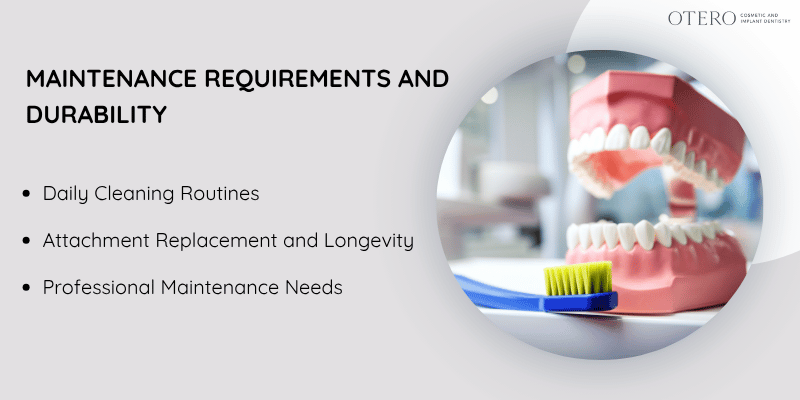
With snap-in dentures, you remove the prosthetic every night to clean both the denture and the implant attachments underneath.
You’ll brush the removable denture with a soft brush and denture cleaner, then gently clean around the implant abutments in your mouth using a regular toothbrush. This two-step process takes about 5-10 minutes.
Fixed bridges don’t come out, so you care for them much like natural teeth.
You brush twice daily and use floss threaders or a water flosser to clean underneath the bridge where food can get trapped. Many people find this routine simpler because there’s no taking anything in and out.
Daily care comparison:
- Snap-in dentures: Remove, brush denture, clean attachments, soak overnight
- Fixed bridges: Brush, floss with special tools, rinse with mouthwash
Attachment Replacement and Longevity
The connectors that hold snap-in dentures to your implants wear down with regular use. You’ll likely need these attachments replaced every 12-24 months, which involves a quick dental visit.
The removable denture itself typically lasts 5-10 years before needing replacement due to wear or changes in your gum shape.
Fixed bridges offer better long-term durability. The dental restoration can last 10-20 years or more depending on the material used. Zirconia bridges tend to last longer than hybrid options.
The implants themselves can function for decades if you maintain good oral hygiene.
Professional Maintenance Needs
You’ll visit your dentist every 6 months with snap-in dentures for cleanings and to check attachment wear. Your dentist will examine the implants, test the fit of your removable denture, and replace worn connectors as needed.
These visits usually cost less than fixed bridge maintenance.
Fixed implant bridges require professional removal for deep cleaning every 1-2 years. Your dentist unscrews the bridge, thoroughly cleans the implants and prosthetic, then reattaches it. Between these appointments, regular checkups and cleanings keep everything healthy.
This maintenance is more involved but happens less frequently than attachment replacements for snap-ins.
Cost Considerations and Candidacy Factors
The financial gap between snap-on dentures and fixed implant bridges can reach tens of thousands of dollars, and your bone health plays a major role in determining which option works for you.
Upfront Costs and Budget Planning
Snap-on dentures typically require two to four implants per arch, which keeps initial costs lower than fixed solutions. You can expect to pay between $5,000 and $15,000 per arch for snap-on dentures.
Fixed implant bridges need four to six implants per arch for proper support. This higher implant count pushes the cost between dental implants and snap-in dentures further apart, with fixed bridges ranging from $20,000 to $45,000 per arch.
Key cost factors include:
- Number of implants needed
- Bone grafting requirements
- Lab fees for custom prosthetics
- Surgeon experience and location
Your dental insurance may cover a portion of removable dentures but rarely covers the implant portion of either treatment.
Longevity and Future Expenses
Fixed implant bridges can last 15 to 25 years with proper care, while snap-on dentures typically need replacement every 5 to 10 years.
The attachments on your snap-on dentures wear out and require replacement every 1 to 2 years at a cost of $300 to $800 per arch.
Your implant-supported bridge stays permanently in place, which eliminates attachment replacement costs. However, the higher initial cost of fixed bridges balances against fewer long-term maintenance expenses.
Snap-on dentures offer easier repairs if damage occurs. A broken fixed bridge often requires complete replacement, which means repeating the full cost.
Health Requirements and Ideal Candidates
Your jawbone density determines which option you can receive. Fixed implant bridges demand stronger bone structure because they support more chewing force directly through the implants.
You might be a better candidate for snap-on dentures if you have moderate bone loss or health conditions that complicate extensive surgery.
Snap-on dentures work well if you take blood thinners or have diabetes that’s under control.
Ideal candidates for fixed bridges:
- Strong jawbone density
- Good overall health
- Non-smokers or willing to quit
- Able to commit to longer treatment
People with severe bone loss need bone grafting before either option becomes possible. Your gum health must also be good, since gum disease weakens the foundation for any dental implants.
Frequently Asked Questions
People choosing between these two tooth replacement options often have similar questions about stability, care routines, and long-term costs. Both choices work with dental implants but affect your daily life in different ways.
Which option feels more stable when eating and speaking—snap-in dentures or fixed implant bridges?
Fixed implant bridges feel more stable because they’re permanently attached to your jawbone. They don’t move at all when you eat or talk. You can bite into apples or corn on the cob without worrying.
Snap-in dentures offer more stability than traditional dentures but can still shift slightly. The implants hold them in place much better than regular dentures that just rest on your gums. You’ll have more confidence when speaking and eating compared to conventional dentures.
How do daily cleaning routines differ between snap-in dentures and fixed implant bridges?
You need to brush and floss fixed bridges just like natural teeth. The bridges stay in your mouth all the time, so you clean them the same way you’d care for regular teeth. This means daily brushing and flossing between the teeth.
Snap-in dentures are easier to clean because you can take them out. You remove them at least once daily to clean both the dentures and the implant attachments.
There’s no need to floss since you can clean all surfaces when the dentures are out of your mouth.
What does it feel like to sleep, wake up, and start the day with each option?
Fixed bridges stay in your mouth 24/7, including while you sleep. You wake up with your teeth already in place. Your morning routine is the same as it would be with natural teeth, just brush and go.
Most people remove their snap-in dentures before bed. You wake up without teeth and need to clean your mouth and dentures before snapping them back in.
This adds a few extra steps to your morning routine that you wouldn’t have with fixed bridges.
How often do snap-in dentures and fixed implant bridges need repairs or maintenance in everyday use?
Fixed bridges can last a lifetime with proper care. They rarely need repairs or replacements. You’ll need regular dental checkups, but the bridges themselves are very durable.
Snap-in dentures will need to be replaced eventually because they wear out over time. The attachments that connect to the implants may need adjustments or replacement every few years.
The denture base can also crack or break and require repairs.
How do costs over time compare when you factor in upkeep for each choice?
Fixed bridges cost more upfront but have lower long-term maintenance costs. You won’t need to replace them, so the initial investment is usually your main expense. Regular dental visits and cleaning are your ongoing costs.
Snap-in dentures have a lower initial cost but require replacement over the years. You’ll need to budget for new dentures, attachment repairs, and potential relining.
These costs add up over decades, though the upfront savings can help if budget is tight now.
Why might a dentist recommend a fixed bridge instead of implants in some situations?
A dentist might recommend fixed bridges when you’re missing several teeth in a row and want a permanent solution.
Fixed bridges use fewer implants than replacing each tooth individually with separate implants. This saves you money while still giving you teeth that look and function like natural ones.
Your jawbone density matters too. If you have enough bone to support implants but want the most natural-feeling option, fixed bridges provide better bite strength and stability.
Some people also prefer not having to remove their teeth daily for cleaning.