
When you’re facing a damaged or infected tooth, you need to make an important choice between saving it with a root canal or replacing it with an implant after extraction.
Both root canal treatment and dental implants have high success rates, with studies showing that the best option depends on your tooth’s condition, the health of surrounding bone and gums, and your long-term oral health goals.
Understanding the differences between root canal vs implant outcomes helps you work with your dentist to make the right decision for your situation.
A root canal keeps your natural tooth by removing infected tissue from inside, while a dental implant replaces the entire tooth with an artificial root and crown.
Endodontic treatment and implant placement each have their own benefits and challenges that affect healing time, cost, and how long the treatment lasts.
The choice between preserving your tooth or getting a single-tooth implant after extraction involves looking at multiple factors beyond just the initial procedure.
This guide breaks down the real-world outcomes for both treatments so you can understand what to expect. You’ll learn about survival rates, possible complications, recovery differences, and how each option affects your daily life over the years ahead.
Key Takeaways
- Root canals preserve natural teeth while dental implants replace extracted teeth with artificial ones
- Both treatments have high long-term success rates when the right option is chosen based on tooth and bone condition
- Your decision should consider clinical factors, treatment timeline, potential complications, and personal health goals
Treatment Decision Factors and Clinical Assessment
Making the choice between saving a tooth or replacing it involves multiple clinical factors and personal considerations.
Your dentist will evaluate the tooth’s current condition, your overall health status, and your long-term oral health goals.
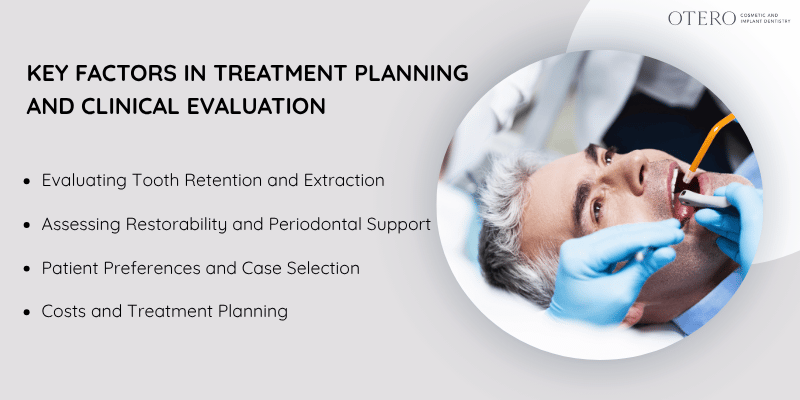
Evaluating Tooth Retention and Extraction
Your dentist must assess whether your compromised tooth can be saved or needs extraction. This evaluation looks at the tooth’s structural integrity and whether enough healthy tooth structure remains above the gum line.
Both root canal treatment and dental implants show high success rates, so other factors become critical. The presence of deep periodontal pockets, existing bone loss, or cracks in the tooth root may favor extraction over retention.
Your dentist will also examine the pulp chamber and root canal anatomy to determine if endodontic treatment is feasible.
The decision becomes more complex when you have risk factors like uncontrolled diabetes or take anti-resorptive drugs for osteoporosis.
These medications can affect healing after both procedures, but may create additional complications with implant placement.
Assessing Restorability and Periodontal Support
The amount of remaining tooth structure directly impacts whether your tooth can support a restoration. A tooth needs adequate ferrule (healthy tooth structure above the bone) to hold a crown successfully.
Your periodontal health plays a major role in treatment planning. Endodontically treated teeth require healthy gums and bone support to survive long-term.
If you have active gum disease or significant bone loss around the tooth, this weakens the case for tooth preservation.
The tooth’s position matters for restoration planning. Teeth in the esthetic zone (your visible front teeth) require careful consideration of appearance outcomes.
Occlusal considerations also factor in, especially if you grind your teeth or have heavy biting forces in that area.
Patient Preferences and Case Selection
Your personal goals and expectations influence the treatment plan significantly. Some patients strongly prefer keeping natural teeth, while others prioritize minimizing the number of appointments or future interventions.
Clinical studies show that patient satisfaction varies based on individual circumstances. Your age, overall health, and commitment to maintenance appointments all affect outcomes.
Younger patients might benefit more from tooth preservation since endodontically treated teeth can last decades with proper care.
Your prescribed medications and medical conditions also guide case selection. Certain health issues may make one option safer or more predictable than the other for your specific situation.
Costs and Treatment Planning
Financial considerations impact your decision between these treatments. Root canal therapy typically costs less initially than tooth extraction and implant placement.
However, you need to consider the full treatment timeline and potential future needs.
A root canal usually requires fewer appointments than implant treatment. The endodontic procedure and crown placement can often finish within two to three visits.
Implant treatment involves extraction, healing time, implant placement, more healing, and finally crown delivery over several months.
Your prosthodontics needs affect total costs. An implant replaces both root and crown, while a root canal saves the natural root but still requires a crown restoration. Insurance coverage varies significantly between these procedures, so check your specific benefits before deciding.
Comparing Survival and Success Rates
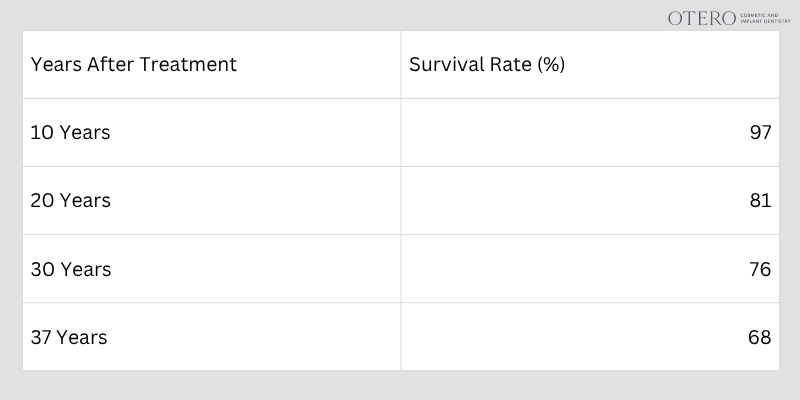
Research shows endodontically treated teeth achieve 97% survival at 10 years and 68% at 37 years, while single-tooth implants demonstrate 80% success rates with 11.72% survival in comparative studies.
Survival of Endodontically Treated Teeth
When you choose root canal treatment, you’re selecting a procedure with strong long-term survival rates backed by clinical evidence. Long-term tooth survival following primary root canal treatment shows impressive results across multiple decades.
A retrospective study of 598 teeth revealed cumulative survival rates of 97% at 10 years, 81% at 20 years, 76% at 30 years, and 68% at 37 years. The endodontic success rates were even higher at 93%, 85%, 81%, and 81% for the same time periods.
Your tooth’s survival depends on several factors. Deep periodontal pockets over 6mm, pre-existing bone loss around the tooth root, and lack of protection from teeth grinding significantly increase your risk of tooth loss.
Restorative treatment quality also matters, as teeth without proper crown coverage or functioning as bridge supports face higher failure rates.
Single-Tooth Implant and Implant Survival
The study found implants achieved 80% success compared to 75.56% for root canals. However, implants showed 11.72% survival rates versus 18.18% for endodontically treated teeth.
Failure rates were similar at 8.27% for implants and 6.25% for root canals.
Your implant location doesn’t significantly affect these outcomes. Both front and back teeth showed comparable results in systematic review analyses.
Success Criteria and Definitions in Research
Understanding what researchers mean by “success” versus “survival” helps you interpret study results. Survival means your tooth or implant remains in your mouth and functions without symptoms, even if minor issues exist.
Success criteria are stricter. Studies using tight requirements showed 74.7% success rates, while those using loose criteria reported 85.2% success for the same treatments. This 10.5% difference affects how you should view comparative studies.
Your 5-year follow-up represents the minimum standard for evaluating treatments, though longer observation periods provide more reliable data about true long-term outcomes.
Treatment Procedures and Clinical Outcomes
Root canal procedures focus on preserving your natural tooth through cleaning and sealing, while implant treatment replaces the entire tooth structure.
Each approach involves distinct steps, recovery periods, and restoration methods that affect your overall treatment experience.
Nonsurgical and Surgical Root Canal Approaches
Nonsurgical root canal treatment is the most common approach your dentist uses to save an infected tooth. Your dentist removes the damaged pulp, cleans the inside of your tooth, and fills it with a special material. This procedure usually takes one or two visits.
Sometimes nonsurgical root canal treatment doesn’t solve the problem. If your tooth becomes reinfected, you might need root canal retreatment.
During non-surgical retreatment, your dentist removes the old filling material and cleans the canals again.
Endodontic microsurgery becomes necessary when nonsurgical methods fail or can’t access the problem area.
The most common surgical retreatment is an apicoectomy, where your dentist removes the tip of your tooth’s root through your gum tissue. This procedure targets infections that persist at the root tip.
Your dentist typically recommends surgical approaches only after other options have been tried. These procedures require local anesthesia and have slightly longer recovery times than nonsurgical treatments.
Tooth Extraction and Implant Placement Protocols
Getting a dental implant starts with removing your damaged tooth. Your dentist extracts the tooth and may perform a bone graft if you don’t have enough bone to support an implant.
The bone needs time to heal before the next step.
Your dentist then places a titanium post into your jawbone during a surgical procedure. This post acts as an artificial tooth root. The bone grows around the implant during a process called osseointegration, which takes three to six months.
After the implant fuses with your bone, your dentist attaches a small connector piece called an abutment. This piece connects the implant to your replacement tooth.
Root canal treatment typically involves fewer visits, while implants may require more due to longer treatment duration and the osseointegration phase.
Restorative Steps: Crowns and Prostheses
After root canal treatment, you’ll need crown placement to protect your tooth. Your dentist shapes the tooth and takes impressions to create a custom crown.
Many root canal-treated teeth also need fiber posts inside the tooth to provide extra support for the crown.
The crown fits over your treated tooth like a cap. It restores your tooth’s shape, strength, and appearance. You can choose from different materials like porcelain, metal, or a combination.
For implants, your dentist creates an implant-supported restoration once the abutment is attached. A single implant-supported prosthesis replaces one tooth.
If you’re missing multiple teeth, your dentist might use implants to support a fixed partial denture.
Crown and Prosthesis Options:
- Porcelain crowns – natural looking, best for front teeth
- Metal crowns – strongest, good for back teeth
- Porcelain-fused-to-metal – combines strength and appearance
- Implant-supported prostheses – permanent, non-removable replacements
Number of Appointments and Treatment Timelines
Root canal treatment usually takes one to three appointments spread over a few weeks. Your first visit involves the actual root canal procedure.
A second visit may be needed if your infection is severe. Your final visit is for crown placement, though temporary crowns can be placed earlier.
Implant treatment requires significantly more time and appointments.
You’ll need visits for extraction, possible bone grafting, implant placement, healing checks, abutment placement, and final crown attachment. The entire process typically takes four to nine months.
Your healing time between appointments varies based on your specific situation. Bone grafts need three to six months to heal before implant placement. The implant itself needs another three to six months for osseointegration.
Emergency situations might extend these timelines. Complications like infections or inadequate bone integration can add extra appointments to either treatment plan.
Complications and Risk Factors
Both root canals and dental implants carry specific risks that can affect long-term success.
Treatment failures often stem from bacterial infections, inadequate healing, bone deterioration, or mechanical complications that develop months or years after the initial procedure.
Endodontic Treatment Failures
Root canal treatments can fail when bacteria remain in the tooth or reinfect it later. Apical periodontitis develops when infection persists at the tooth root tip, creating a periapical radiolucency visible on X-rays.
Vertical root fracture represents one of the most serious complications you might face. These cracks run lengthwise through the tooth root and often require extraction.
They’re difficult to detect and may not show symptoms until significant damage occurs.
The coronal seal plays a critical role in preventing bacteria from entering the treated tooth. If your crown or filling breaks down, bacteria can contaminate the canal system and cause periapical disease.
This is why maintaining proper restorations matters as much as the root canal itself.
Common endodontic failures include:
- Missed or untreated canals during the initial procedure
- Inadequate cleaning and shaping of canal spaces
- Breakdown of the filling material over time
- New decay forming around existing restorations
Implant Complications and Peri-Implant Disease
Dental implants face different challenges than natural teeth. Peri-implant mucositis affects the soft tissue around your implant, causing inflammation similar to gingivitis. If left untreated, it can progress to peri-implantitis.
Peri-implantitis involves both soft tissue inflammation and bone loss around the implant. This condition threatens implant stability and can lead to complete implant failure.
Research shows that teeth adjacent to dental implants had a significantly higher risk of tooth loss, primarily due to root fractures.
Osseointegration failures occur when the titanium post doesn’t properly fuse with your jawbone. This typically happens within the first few months after placement.
Parafunction, such as teeth grinding or clenching, increases stress on implants and raises complication rates.
Studies on implant and root canal treatment survival rates help identify which patient and tooth-related variables affect treatment outcomes.
Bone Loss and Periodontal Considerations
Marginal bone loss around implants differs from bone loss affecting natural teeth. Your implants lack the periodontal ligament that cushions natural teeth, making them more vulnerable to mechanical stress.
Periodontal disease in remaining natural teeth can spread bacteria that affect nearby implants. You need healthy gums and adequate bone volume for implant success.
Bone loss continues gradually after tooth extraction, which affects implant placement timing and success rates.
Natural teeth preserved through root canals maintain the periodontal ligament and surrounding bone structure. This biological connection helps preserve your jawbone density better than leaving an empty socket.
Diagnostic Advances: CBCT and Radiographic Healing
CBCT (cone beam computed tomography) provides three-dimensional imaging that reveals problems traditional X-rays miss. You can see vertical root fractures, hidden canals, and bone defects more clearly with this technology.
Radiographic healing assessment helps your dentist track whether infections are resolving or persisting. Periapical radiolucencies should shrink over time as bone regenerates around successfully treated teeth.
CBCT scans before implant placement show exact bone dimensions, nerve locations, and sinus positions. This precision reduces surgical complications and improves implant positioning.
The technology also helps evaluate osseointegration progress during the healing phase.
Patient-Centered Outcomes and Quality of Life
Research shows that patient satisfaction and quality of life outcomes differ between root canal therapy and dental implants over a five-year period. Both treatment outcomes affect your daily comfort, aesthetics, and long-term oral health in distinct ways.
Aesthetics and Satisfaction
Your smile’s appearance plays a major role in treatment satisfaction. Dental implants typically provide excellent aesthetics in the anterior zone because they replace the entire tooth structure with a crown that matches your natural teeth.
Root canal treated teeth maintain your original tooth, which can be an aesthetic advantage if the natural tooth structure remains intact.
However, these teeth may darken over time and require crowns for protection.
Studies examining patient satisfaction show that both treatments can deliver good results when properly executed.
Your expectations and the skill of your dental provider significantly influence how satisfied you feel with the final appearance.
Function and Oral Health Impact
Masticatory function refers to your ability to chew food effectively. Both root canal treated teeth and implants restore this function, though with some differences.
Implants integrate with your jawbone and provide stable biting force similar to natural teeth. Root canal treated teeth preserve your natural tooth structure and periodontal ligament, which helps you sense pressure when chewing.
Clinical outcomes data indicates failure rates of approximately 6% for both treatments. However, complications occur more frequently with implants at 18% compared to 4% for root canal treatments.
These complications can affect your oral health impact profile and require additional clinical follow-up visits.
Long-Term Efficacy and Patient Preference
Your long-term treatment preference often depends on your tolerance for procedures and potential future interventions. Implant placement results in higher perceived fear and pain levels compared with endodontic procedures.
Root canal therapy preserves your natural tooth, which many patients prefer. This approach requires less invasive surgery and shorter initial recovery times.
Personalized, patient-centered approaches enhance your long-term satisfaction regardless of which treatment you choose.
Your individual circumstances, including bone quality, overall health, and budget, should guide your decision with input from your dental provider.
Frequently Asked Questions
Most people wonder about the lifespan differences between these two treatments and how they compare in terms of pain, cost, and overall health impact. The answers depend on your specific situation and what matters most to you.
How long do root canal–treated teeth typically last compared with dental implants?
Root canal-treated teeth can last many years or even a lifetime when properly restored and maintained. Studies show success rates of 85 to 93% for primary root canals.
However, these teeth face risks beyond just the root canal itself. You might lose the tooth due to fractures, decay, or restorative failures rather than the root canal failing.
Dental implants also have high success rates. Research comparing both treatments shows that survival rates are fairly similar when measured over time.
The key difference is that root canals keep your natural tooth. Implants replace the entire tooth structure from root to crown.
Which option usually feels more painful during and after treatment: a root canal or a dental implant?
Root canals are done with local anesthesia, so you shouldn’t feel pain during the procedure. Most people experience mild to moderate discomfort afterward that goes away within a few days.
Dental implants involve surgery to place a titanium post into your jawbone. You’ll need local anesthesia or sedation during the procedure.
Recovery from implant surgery typically takes longer than a root canal. You might have swelling and discomfort for several days to a week.
The actual pain level varies by person. Many patients report that both procedures are less painful than they expected.
What are the main long-term pros and cons of saving a tooth versus replacing it with an implant?
Saving your natural tooth with a root canal preserves your original tooth structure and keeps the natural ligament around the root. This ligament helps you sense biting pressure and protects your bone.
Root-filled teeth need cuspal coverage restorations like crowns to prevent fractures. These teeth can still develop problems like vertical root fractures or new decay years later.
Dental implants provide stability by fusing with your jawbone. They don’t develop decay and often last longer without complications.
But implants require healthy bone and gums for success. If you don’t have enough bone, you might need grafting procedures first.
Implants also take longer to complete because the post needs months to integrate with bone before the crown goes on. Root canals can usually be finished faster.
How do the total costs compare over time between a root canal with a crown and a dental implant?
A root canal plus crown typically costs less upfront than a dental implant. The initial investment for saving your tooth is usually lower.
However, you need to think about long-term costs over time. If your root canal-treated tooth eventually fails and needs extraction, you’ll pay for both treatments.
Dental implants cost more at first but might save money if they last longer without problems. The total includes the implant post, abutment, and crown.
Your insurance coverage affects the final cost too. Many plans cover root canals but might not cover implants or only cover part of the cost.
When would a bridge be a better long-term choice than a root canal or an implant?
A bridge works when you already have missing teeth next to the problem tooth. It can replace multiple teeth at once using the surrounding teeth as anchors.
You might choose a bridge if you can’t have implant surgery due to health conditions or insufficient bone. Bridges don’t require surgery.
However, bridges require reshaping the healthy teeth on either side. This removes tooth structure that can never grow back.
Bridges also don’t prevent bone loss in the jaw where the tooth is missing. Implants are better at preserving bone because they replace the tooth root.
If your tooth can still be saved with a root canal, that’s usually preferred over a bridge. Keeping your natural teeth is better than removing them to create a bridge.
Are dental implants or root canal–treated teeth considered healthier for the jawbone and gums in the long run?
Dental implants help prevent bone loss in your jaw. When you lose a tooth, the bone in that area starts to shrink because it’s not being stimulated.
The titanium post fuses with your jawbone and provides stimulation similar to a natural root. This keeps the bone from deteriorating.
Root canal-treated teeth preserve your natural root, which is even better for bone health. The periodontal ligament around natural roots provides ideal stimulation.
However, root-filled teeth that later fail and need extraction mean you lose that bone preservation. You then face the same bone loss issues you would have had with immediate extraction.
For gum health, both options can work well if you maintain good oral hygiene. Natural teeth with healthy roots typically provide the best support for gum tissue.