

Cosmetic dental treatments can help you improve the look of your smile in many ways, from brightening your teeth to fixing chips or gaps. Whether you want a subtle change or a more noticeable difference, there are options designed to fit your needs and lifestyle.
You might choose teeth whitening to get a brighter smile, or dental veneers and bonding to cover imperfections. If your teeth are crooked or spaced unevenly, orthodontic options like braces or aligners can help straighten them.
Some treatments even replace missing or damaged teeth with lasting solutions. Understanding your options and what to expect from each treatment can help you make the best choice for your smile.
Taking care of your teeth before and after these procedures is important for long-lasting results and good oral health.
Key Takeaways
- Cosmetic dental treatments offer ways to improve the appearance of your teeth.
- There are different solutions for whitening, fixing damage, and straightening teeth.
- Knowing how to care for your teeth and choosing the right treatment helps maintain your smile.
Most Popular Cosmetic Dental Treatments
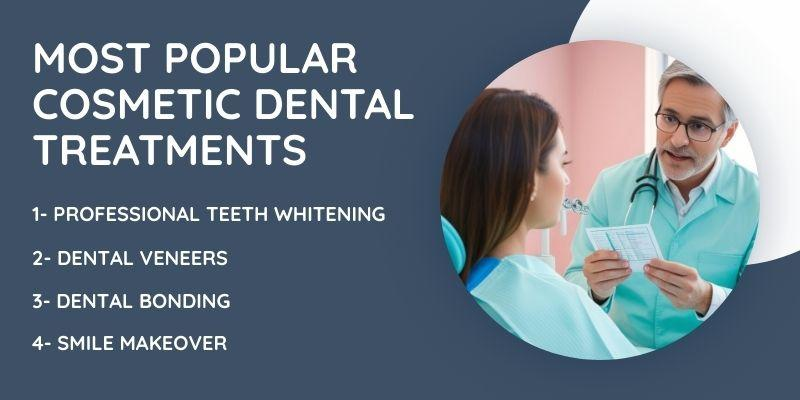
Cosmetic dental treatments are in high demand, with the global market valued at $33.6 billion in 2022 and projected to expand to $89.03 billion by 2030, growing at a compound annual growth rate (CAGR) of about 13.5%.
This substantial growth reflects the increasing interest in enhancing smiles through various procedures, including whitening, veneers, and more.
Many people want to improve their smile by addressing issues like stained teeth, chips, or uneven gaps. There are simple and advanced treatments that fit different needs and budgets to help you get a brighter, smoother, and more balanced smile.
Professional Teeth Whitening
If your teeth are stained from coffee, tea, or smoking, professional teeth whitening can help. This treatment uses stronger bleaching agents than over-the-counter products, so you get faster and better results.
You can choose in-office whitening, which takes about an hour, or custom home kits made by your dentist. In-office whitening often uses special lights or lasers to activate the gel.
It’s a quick solution that usually causes less sensitivity than older methods. A whitening treatment can brighten your teeth by several shades and is often the first step in a cosmetic dental procedure.
Results last around 1 to 3 years, depending on your habits.
Dental Veneers
Dental veneers are thin shells placed over your teeth to improve their shape, color, and alignment. You have two main options: porcelain veneers, which look very natural and last 10-15 years, and composite veneers, which are less expensive but may need replacement sooner.
No-prep veneers require little to no drilling, making them a popular choice if you want a quick smile upgrade without damaging your teeth. They fix problems like chips, gaps, or stubborn stains.
Getting veneers usually takes two dentist visits, one for impressions and planning, and the second for placement. Your cosmetic dentist will help decide which type is best for your needs.
Dental Bonding
Dental bonding uses tooth-colored resin to repair small chips, gaps, or discolorations. The material blends well with your natural teeth and can be done in just one visit.
New bonding materials also release minerals that protect your teeth from cavities. This makes bonding a good option if you want a natural look while also keeping your teeth healthy.
Bonding doesn’t last as long as veneers, with an average life of 5 to 8 years. It’s affordable and a quick fix if you want to improve your smile without a long treatment.
Smile Makeover
A smile makeover combines several cosmetic dental procedures to create a complete transformation. You might start by straightening your teeth with clear aligners.
Next, your cosmetic dentist may reshape your gums to improve their look, whiten your teeth to make them brighter, and add veneers or bonding for the final touch. This plan is customized to your specific smile goals.
It can take from a few months to over a year, depending on the treatments chosen.
Teeth Whitening Options and Considerations
You have several choices for whitening your teeth, each with different levels of convenience, cost, and effectiveness. Understanding how these options work, their key ingredients, and what affects your results can help you choose the best approach for your needs.
In-Office Whitening Procedures
When you visit a dentist for teeth whitening, the treatments use stronger bleaching agents than home kits. These often contain hydrogen peroxide in higher concentrations to remove deep stains from your enamel quickly.
Common in-office methods include laser whitening and LED light treatments. These use light to speed up the breakdown of stains after applying a whitening gel.
You can usually see noticeable changes after just one or two sessions. Dentist-supervised whitening is safe because the gums and soft tissues get protected.
However, you may feel some tooth sensitivity during or after the process. These treatments tend to cost more but offer faster and longer-lasting results compared to at-home methods.
A 2025 survey revealed that 85.5% of respondents believe cosmetic dentistry enhances both appearance and confidence, with 42% having already undergone a cosmetic procedure. More people are choosing professional cosmetic dental treatments to enhance their smiles.
At-Home Whitening Products
If you prefer whitening at home, there are many products like strips, gels, trays, and whitening pens. These often use carbamide peroxide or hydrogen peroxide but in lower amounts than dentist treatments.
Whitening strips are popular because you can easily apply them and remove them after 30 minutes. They work well on surface stains but may not last as long as professional treatments.
Custom trays and gels provide more even coverage but require careful use to prevent gel leaking, which might irritate gums. Whitening toothpaste is the mildest option and mainly removes surface stains without changing your natural tooth color.
Ingredients and Safety
Most whitening products rely on hydrogen peroxide or carbamide peroxide to break apart stains on your teeth. These ingredients lighten teeth by oxidizing colored molecules within the enamel.
It’s important to follow usage instructions, as overuse can cause tooth sensitivity or gum irritation. People with sensitive teeth should look for products with built-in desensitizers or lower peroxide levels.
Whitening does not work on crowns, veneers, or fillings. Also, avoid whitening if your teeth or gums are unhealthy, as this can worsen problems.
Always check if a product is approved by dental associations for safety.
Factors Affecting Results
Your teeth’s natural color, type of stains, and lifestyle habits influence how well whitening will work. Extrinsic stains come from foods, drinks, and smoking and are easier to remove than intrinsic stains inside your enamel.
The length of treatment and concentration of whitening agents also affect how white your teeth become. You might need touch-ups after a few months, especially if you consume coffee or red wine regularly.
Good oral hygiene helps keep results lasting longer. Brushing, flossing, and avoiding stain-causing foods can maintain your new bright smile over time.
For safe, effective, and professionally supervised whitening, schedule a visit at Otero Cosmetic & Implant Dentistry in Wilmington, NC, and get a brighter smile with confidence.
Dental Veneers and Bonding Solutions

If you’re looking to improve your smile, both dental veneers and bonding offer effective ways to fix imperfections like chips, gaps, and discoloration.
Each method uses different materials and techniques, which affect how they look, how long they last, and what you experience during treatment.
Porcelain Versus Composite Veneers
Porcelain veneers are thin, custom-made ceramic shells that cover the front of your teeth. They look very natural because porcelain reflects light like real teeth.
These veneers resist stains well and usually last 10 to 15 years. Composite veneers are made from tooth-colored resin.
They are applied directly to your teeth and shaped by your dentist. Composite veneers cost less and can be done in one visit, but they are less durable and can stain over time.
| Feature | Porcelain Veneers | Composite Veneers |
| Material | Ceramic | Tooth-colored resin |
| Appearance | Very natural | Natural but less glossy |
| Durability | 10-15 years | 3-7 years |
| Stain resistance | High | Lower |
| Cost | Higher | Lower |
| Treatment time | Multiple visits | Usually one visit |
Procedure and Longevity
For porcelain veneers, your dentist removes a thin layer of enamel to fit the shell properly. You will usually need two or more visits.
A local anesthetic is often used to keep you comfortable. Porcelain veneers can last over a decade with good care.
The material resists stains and maintains color well. Dental bonding uses a similar tooth-colored resin, but the dentist applies it directly to your tooth without removing much enamel.
It’s a quicker process, often done in one office visit with little to no anesthesia. Bonding may only last 3 to 7 years, as the resin can chip or stain more easily than porcelain, so it may need touch-ups or replacements sooner.
Dental Bonding
Dental bonding is a cosmetic dental procedure that uses a tooth-colored resin to fix minor damage and imperfections. It works well for small chips, gaps, or discoloration.
During bonding, your dentist will roughen the tooth’s surface and apply a special adhesive before molding the resin. The material is hardened with a light and polished to blend with your natural teeth.
Because bonding does not usually require enamel removal or local anesthetic, it is less invasive and more affordable than veneers. However, the resin can stain and may not last as long.
When to Choose Veneers or Bonding
You might pick veneers if you want a longer-lasting solution and need to fix bigger problems like worn or crooked teeth. Veneers offer a smoother, more polished look that lasts longer but costs more and takes more time.
If you want a quick, affordable fix for small chips, gaps, or slight discoloration, bonding could be right for you. Bonding is less invasive and easier to repair but won’t last as long as veneers.
Your dentist can help decide the best option based on your dental goals, budget, and lifestyle.
Orthodontic Treatments for Straighter Teeth
You have several options if you want to straighten your teeth. These treatments vary in how they look, how long they take, and how you care for them.
Understanding these differences will help you choose the best fit for your needs.
Traditional Braces
Traditional braces are metal brackets stuck to your teeth and connected by a wire. This wire applies gentle pressure to move your teeth into the right position over time.
They are very effective for many types of alignment issues, like crowding, overbites, or gaps. You will visit your orthodontist regularly to adjust the wire and check progress.
Treatment usually lasts between 18 months and 3 years. Braces are not removable, so you will need to be careful when eating and remember to keep them clean.
Because they are made of metal, braces are very noticeable. But they work well and tend to cost less than some of the newer options.
You may also wear a mouthguard if you play sports to protect your braces and teeth.
Clear Aligners (Invisalign)
Clear aligners, like Invisalign, are a popular alternative to metal braces. They are made of smooth, clear plastic trays that fit over your teeth and are nearly invisible.
You get a new set of aligners every 1 to 2 weeks, and each set moves your teeth a little bit. Since aligners are removable, you can eat, drink, brush, and floss without issues.
This makes them easier to maintain than braces. Treatment time usually ranges from 3 months to 18 months, depending on how severe your teeth alignment is.
They can handle mild to moderate cases but might not work well for severe misalignments. Invisalign costs are similar to braces but tend to be higher than at-home options.
Orthodontic Treatment Planning
Before any treatment, your orthodontist will check your teeth, roots, and jaw alignment. This careful examination helps create a plan suited just for you.
They may take X-rays, photos, and impressions or digital scans of your teeth. This info helps to choose between metal braces, clear aligners, or other options.
Your treatment plan also sets the estimated time and cost. You will have regular checkups to monitor progress and adjust your devices if needed.
This keeps your treatment safe and effective, ensuring your smile improves as intended.
If you’re considering braces or clear aligners, you can schedule an orthodontic consultation with us to find the option that fits your smile goals.
Restorative Cosmetic Treatments

Restorative cosmetic treatments help fix damaged or missing teeth while improving how your smile looks. These options blend health and beauty, giving you both function and confidence.
Dental Implants
Dental implants replace missing tooth roots with a small metal post that anchors into your jawbone. Once the implant heals, your dentist puts a crown on top.
This crown looks natural and acts just like a real tooth. Implants don’t affect your nearby healthy teeth, unlike bridges.
They also help keep your bone strong by stimulating it. Implants work well if you want a long-lasting, stable replacement that feels comfortable when you eat or talk.
The implant crown can be made from materials like porcelain, which matches your natural teeth’s color and shine. Implants require good jawbone health, so your dentist might check or prepare your bone beforehand.
Dental Crowns
Dental crowns cover and protect teeth damaged by decay, cracks, or large fillings. They fit over your tooth like a cap and restore its shape and strength.
Crowns also improve the appearance of chipped or misshaped teeth. You can choose from different materials:
- Porcelain crowns: Look very natural and are popular for front teeth.
- Metal crowns: Strong and durable, often used for back teeth where chewing force is higher.
- Porcelain-fused-to-metal crowns: Combine strength with a natural look.
Your tooth may need some enamel removed so the crown fits properly. Crowns help you keep your natural teeth longer and improve your smile’s appearance.
Gum Contouring
Gum contouring reshapes uneven or excessive gum tissue to enhance your smile’s balance. This treatment is perfect if your gums cover too much of your teeth or your gum line is uneven.
During the procedure, your dentist removes or reshapes gum tissue using lasers or small surgical tools. This can reveal more of your natural teeth and give your smile a cleaner, more attractive look.
It’s a simple way to fix a “gummy” smile or correct uneven gum lines without touching the teeth themselves. Healing is usually quick and can boost your confidence with minimal discomfort.
Dentures
Dentures replace missing teeth and nearby tissues. They come in two main types:
- Full dentures:Replace all teeth in your upper or lower jaw.
- Partial dentures:Fill in gaps when you still have some natural teeth.
Dentures rest on your gums and may need adhesives for stability. Implant-supported dentures attach to dental implants, offering much better hold and comfort.
Modern dentures look natural and can improve your ability to chew and speak. They are removable, which makes cleaning easy.
Costs, Oral Care, and Choosing a Cosmetic Dentist
Knowing what to expect with costs, how to care for your teeth after treatment, and picking the right dentist are key to a good experience. You’ll want to understand how prices vary, what insurance might cover, how to keep your smile healthy, and how to find a dentist who fits your needs.
Treatment Costs and Dental Insurance
Cosmetic dental procedures can vary widely in price. For example, teeth whitening might cost between $15 and $1,800, depending on whether you do it at home or in a clinic.
Braces range from about $2,000 to $8,000, while veneers often cost $250 to $2,500 per tooth. Implants can be the most expensive, often $1,500 to $6,000 per tooth.
Dental insurance rarely covers cosmetic treatments. Some policies might help with part of a procedure if it improves oral health, like braces for jaw alignment.
Before starting treatment, check your insurance details for limits, waiting periods, and what is eligible. You might also look into financing options or discounts to help manage the cost of cosmetic dentistry procedures.
Maintaining Results and Oral Hygiene
Keeping your new smile bright requires good oral care. After whitening, avoid stain-causing foods like coffee, tea, and smoking to keep teeth white longer.
If you have veneers, implants, or braces, regular brushing and flossing are even more important. These treatments can trap food and plaque, which can cause decay or gum problems.
Visit your dentist regularly for checkups and cleanings. They can monitor the health of both your teeth and any cosmetic work you’ve had done.
Using fluoride toothpaste and gentle brushing helps protect your enamel, which may be more sensitive after some treatments.
How to Choose the Right Cosmetic Dentist
Choose a cosmetic dentist who specializes in the procedures you want. Look for someone with good reviews and before-and-after photos of their work.
Check if the dentist offers a consultation. This lets you ask questions, talk about costs, and see if you feel comfortable with their approach.
Make sure the dentist uses effective, safe materials and follows modern techniques. You can ask about their training and how many similar procedures they’ve done.
It’s also smart to compare prices and treatment plans from a few dentists. A good cosmetic dentist will explain what you can expect clearly and honestly.
For personalized guidance and expert recommendations, schedule a consultation at Otero Cosmetic & Implant Dentistry in Wilmington, NC, and explore the best cosmetic options for your smile.
Frequently Asked Questions
Cosmetic dental treatments can vary widely in their benefits, costs, and risks. Knowing what to expect during treatment and how long results last will help you make informed choices.
Finding the right dentist is also important for a positive experience.
What are the benefits of different cosmetic dental procedures?
Each procedure targets specific needs. Teeth whitening brightens your smile quickly and reduces stains.
Veneers cover chips and gaps, giving a natural look. Bonding fixes small flaws fast, while implants replace missing teeth and restore function.
How can I find a reputable cosmetic dentist in my area?
Look for a dentist who specializes in cosmetic dentistry. Check for credentials and training in cosmetic procedures.
Review before-and-after photos of their work and read patient reviews. A good dentist will openly discuss your options and answer your questions.
What should I expect during a cosmetic dental treatment?
You might have a consultation first to plan your treatment. Procedures like whitening are simple and usually pain-free.
More involved treatments, such as veneers or implants, may require multiple visits and some anesthesia. Your dentist will explain what to expect step by step.
How long do cosmetic dental treatments typically last?
Longevity depends on the treatment. Veneers can last 10 to 15 years with proper care.
Teeth whitening results often last up to two years. Implants can last a lifetime if you keep good oral hygiene and attend regular dental checkups.
Are there any risks associated with cosmetic dental procedures?
Some treatments may cause mild sensitivity or discomfort. Poorly fitted veneers can lead to irritation.
Risks vary by procedure but are usually minor when done by a skilled dentist. Always follow your dentist’s care instructions to reduce risks.
How much does it typically cost to undergo a cosmetic dental treatment?
Costs vary a lot based on the procedure and your location. Whitening is often the most affordable, while implants and veneers are more expensive.
It’s best to ask your dentist for a detailed cost estimate. Ask if payment plans or insurance can help manage expenses.