

You’ve seen the perfectly aligned, brilliantly white smiles on social media and wondered if cosmetic dentistry could give you the same results.
The truth is that while modern cosmetic procedures can dramatically improve your smile, they work differently for everyone based on your unique dental structure and oral health.
The gap between what you expect from cosmetic dentistry and what’s actually possible often comes down to communication with your dentist before treatment begins.
Many patients walk into consultations with images of celebrity smiles, not realizing that cosmetic dentistry expectations require careful management to achieve satisfaction.
What you see in before-and-after photos may not account for digital filters, different starting points, or the aggressive treatments that were needed.
Understanding cosmetic dentistry expectations helps you make better decisions and feel happier with your results.
The questions you ask during your consultation matter more than you might think.
When you know which procedures fit your goals, what timeline to expect, and what limitations exist for your case, you’re setting yourself up for success rather than disappointment.
Key Takeaways
- Clear communication with your dentist about realistic outcomes prevents disappointment and increases satisfaction with cosmetic procedures
- Every patient’s dental structure is different, which means cosmetic dentistry results vary based on your unique oral health and bone structure
- Asking specific questions about limitations, timelines, and maintenance requirements during consultation helps align your expectations with achievable results
Understanding Realistic Outcomes in Cosmetic Dentistry
Your cosmetic dentist can transform your smile, but knowing what’s actually possible helps you avoid disappointment and makes sure you’re happy with your results.
What Influences the Results of Cosmetic Procedures
Your starting point matters more than you might think. The current condition of your teeth and gums directly affects what your cosmetic dentist can achieve during your smile makeover.
Several key factors shape your final results:
Your oral health status – You need healthy teeth and gums before starting cosmetic work. Cavities, gum disease, or bone loss must be treated first.
Your age – As you get older, your enamel gets thinner and your gums may recede. These changes affect how treatments look and how long they last.
Your daily habits – Smoking, drinking coffee or red wine, and your cleaning routine all impact your results.
The materials used – Different veneers, crowns, and whitening systems produce different outcomes. Higher-quality materials typically last longer and look more natural.
Your dentist’s skill – An experienced cosmetic dentist uses digital imaging and precise techniques to maximize your results while keeping them realistic.
Common Myths vs. Actual Results
Many people believe they can get a celebrity smile in one visit. That’s not how cosmetic dentistry works.
Myth: Whitening makes all teeth perfectly white
Reality: Professional whitening lightens your teeth several shades, but it can’t fix deep stains or damaged enamel. Your results depend on your enamel thickness and the type of staining you have.
Myth: Veneers fix everything
Reality: Veneers improve color, shape, and minor alignment issues. They can’t replace orthodontic treatment for serious crowding or bite problems.
Myth: Results look exactly like the photos
Reality: Successful cases aren’t always the “perfect” smiles. Your anatomy, oral health, and facial structure create unique results.
Myth: Cosmetic work lasts forever
Reality: Bonding and whitening need touch-ups every few years. Veneers and crowns can last decades with proper care, but they’re not permanent.
The Role of Before-and-After Photos
Before-and-after photos show you what’s possible, but you need to look at them carefully. These images often show best-case scenarios rather than typical outcomes.
Photos can be misleading because lighting, angles, and editing make improvements look bigger than they are. When you’re looking at a dentist’s portfolio, pay attention to cases that look similar to your situation.
Managing patient expectations through photos requires honesty about what they represent. Ask your dentist to show you a range of cases, not just the most dramatic transformations.
Digital simulations during your consultation give you a better idea of your personal results. These tools let you see how your own teeth might look after treatment based on your unique oral anatomy.
Setting Yourself Up for Satisfaction
Patients who have realistic cosmetic dentistry expectations are consistently more satisfied with their outcomes. When you understand the process upfront, you appreciate your transformation more.
Start by having an honest conversation with your cosmetic dentist about your goals. Bring photos of smiles you like, but explain what specifically appeals to you about them.
Ask these important questions during your consultation:
- What results can I realistically expect based on my current oral health?
- How long will the treatment take from start to finish?
- What maintenance will I need to keep my results?
- What happens if I’m not happy with the outcome?
Setting realistic expectations for your smile makeover means understanding both possibilities and limitations. Your dentist should explain what they can and can’t do before you commit to treatment.
This partnership approach leads to better patient satisfaction and results you’ll actually love.
Popular Cosmetic Dental Procedures and Their Limitations
Most cosmetic dental procedures can dramatically improve your smile, but each treatment has specific boundaries that affect results and longevity.
Understanding what veneers, whitening treatments, orthodontics, and implants can realistically achieve helps you set appropriate expectations before you commit to treatment.
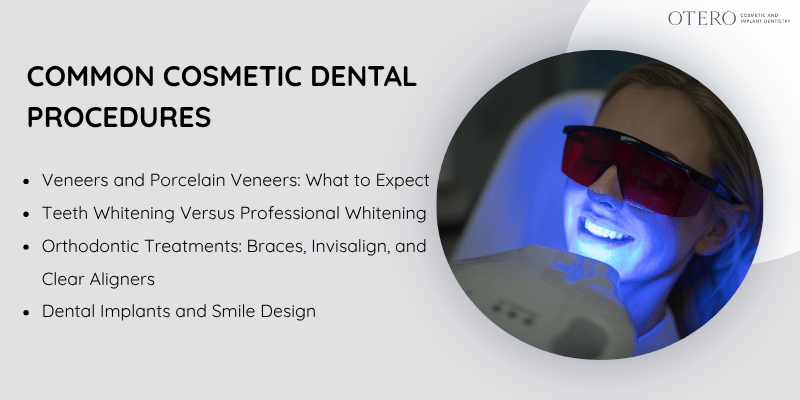
Veneers and Porcelain Veneers: What to Expect
Porcelain veneers are thin shells that cover the front surface of your teeth to change their color, shape, or size. They work well for teeth with permanent stains, chips, or minor alignment issues.
Your dentist will need to remove a small amount of tooth enamel before placing veneers. This process is permanent because your natural tooth structure cannot grow back.
Veneers typically last longer than dental bonding and resist staining better than your natural teeth.
However, veneers have limitations. They can chip or crack if you bite hard objects or grind your teeth at night. They also cannot fix major orthodontic problems or replace missing teeth.
The initial cost ranges from several hundred to over a thousand dollars per tooth, and you may need replacements every 10 to 15 years.
Teeth Whitening Versus Professional Whitening
Teeth whitening removes stains caused by coffee, tea, smoking, and aging. Professional whitening uses stronger bleaching agents than over-the-counter products and delivers faster results.
Your dentist can perform in-office whitening in one or two visits lasting 1-2 hours each. Alternatively, they can create custom trays for at-home whitening, which takes 2 to 4 weeks depending on the peroxide strength.
Professional teeth whitening cannot change the color of crowns, veneers, or fillings. It also will not work on certain types of discoloration caused by medications or tooth trauma.
Your teeth can become stained again if you continue consuming staining substances. Some people experience temporary tooth sensitivity after treatment.
Orthodontic Treatments: Braces, Invisalign, and Clear Aligners
Orthodontic treatment uses braces or clear aligners to straighten crooked teeth, close gaps, and fix bite problems. Traditional braces use metal or ceramic brackets attached to your teeth with wires that gradually move them into position.
Clear aligners like Invisalign are removable plastic trays that you replace every two weeks. They work well for minor to moderate spacing issues but may not handle severe bite problems as effectively as braces.
Treatment typically takes several months to a few years depending on your specific needs. After your orthodontic treatment ends, you will need to wear a retainer to keep teeth in their new positions.
Braces require extra attention to oral hygiene since food can get trapped around brackets. Clear aligners must be worn 20-22 hours daily to work properly.
Dental Implants and Smile Design
Dental implants replace missing teeth with artificial roots surgically placed into your jawbone. They provide a stable foundation for crowns or bridges and look like natural teeth.
The implant process requires multiple steps over several months. A surgeon places titanium screws into your jaw, which fuse with the bone. Then your dentist attaches an abutment and custom crown.
Smile design with implants offers a long-term solution that preserves jawbone structure.
However, implants are expensive and require adequate bone density. If you have bone loss from gum disease or missing teeth, you may need bone grafting first.
The entire process involves surgery with recovery time and multiple dental visits.
Success depends on good oral hygiene and healthy gums. Some people cannot get implants due to certain medical conditions or medications that affect bone healing.
Patient Consultations and Shared Decision-Making
A cosmetic dentistry consultation gives you the chance to discuss your goals with qualified professionals and understand what treatments can realistically achieve.
Shared decision-making in dentistry helps you and your cosmetic dentist reach a treatment plan that matches your needs and expectations.
Why Scheduling a Consultation Is Essential
When you schedule a consultation, you get a complete evaluation of your oral health and cosmetic concerns. Your cosmetic dentist will examine your teeth, gums, and bite to determine which treatments are safe and effective for you.
This first meeting lets you ask questions about procedures, costs, and timelines. You can discuss what bothers you about your smile and what you hope to achieve.
Many cosmetic dentists offer consultations where they take photos and measurements of your teeth. These records help create your personalized treatment plan.
The consultation also gives you time to assess whether you feel comfortable with the dentist and their approach to care.
Talking About Informed Consent and Risks
Informed consent means your dentist explains the treatment in detail before you agree to proceed. You need to understand what the procedure involves, how long it takes, and what results you can expect.
Your cosmetic dentist should discuss potential risks and complications specific to your treatment. For example, veneers require removing some tooth enamel, which is permanent. Teeth whitening might cause temporary sensitivity.
Ask about alternative treatment options and what happens if you choose not to proceed. Patient autonomy in dentistry depends on having complete information to make informed choices.
Get clear information about costs, payment plans, and whether insurance covers any part of your treatment. Understanding the financial commitment prevents surprises later.
Using Digital Smile Design Tools

Digital smile design technology lets you see potential results before treatment begins. Your cosmetic dentist uses photos and digital imaging to create a smile simulation that shows how your teeth might look after treatment.
These tools help improve communication between you and your dentist. Instead of trying to describe what you want in words, you can see visual options and provide feedback.
A smile simulation helps set realistic expectations. You can see whether the changes you want are possible with your facial structure and existing teeth.
This prevents disappointment when actual results don’t match unrealistic mental images.
Personalized Treatment Plans and Digital Smile Preview
Your personalized treatment plan outlines specific procedures, the order they’ll happen, and estimated timeframes. Each plan is unique because your teeth, goals, and budget differ from other patients.
A digital smile preview shows you the expected outcome based on your specific case. This preview considers your face shape, skin tone, and natural tooth proportions.
The American Academy of Cosmetic Dentistry emphasizes that good cosmetic dentists customize treatments rather than using a one-size-fits-all approach.
Your treatment plan should include follow-up appointments and maintenance requirements. Some cosmetic treatments need touch-ups or replacements over time, and knowing this upfront helps you plan for long-term care.
Factors That Affect Satisfaction and Long-Term Results
Your success with cosmetic dentistry depends on multiple factors beyond the procedure itself.
The condition of your oral health before treatment, your bite mechanics, how well expectations align with reality, and what you can learn from others’ experiences all play major roles in your outcome.
Oral Health and Dental Health Before Treatment
Your existing oral health sets the foundation for any cosmetic work. Dentists need to address cavities, gum disease, and tooth decay before starting cosmetic procedures.
If you have active infections or weak enamel, your dentist must treat these issues first. This can add weeks or months to your timeline. Many patients don’t realize that cosmetic treatments won’t fix underlying dental problems.
Your teeth need structural integrity to support veneers, crowns, or bonding. Weak teeth may require root canals or extractions before cosmetic work can begin. This is why your dentist conducts thorough exams and X-rays during consultation.
Key pre-treatment requirements:
- No active tooth decay
- Healthy gum tissue
- Sufficient tooth structure
- Stable dental restorations
Bite Alignment, Gum Health, and Tooth Shape
Your bite alignment affects how long cosmetic work lasts. If your teeth don’t meet properly when you close your mouth, veneers or crowns may chip or crack.
Gum health directly impacts your cosmetic results. Inflamed or receding gums create uneven margins around restorations. Your dentist may recommend gum treatment before placing veneers or crowns.
Tooth shape matters because not every tooth can support every type of restoration. Small or severely worn teeth may need different approaches than larger, healthier teeth.
If you grind your teeth (bruxism), you’ll likely need a night guard to protect your cosmetic work.
Your natural tooth shape determines what’s possible. Extremely short teeth may need crown lengthening surgery before veneers. Severely rotated teeth might require orthodontics first.
Managing Patient Expectations and Open Communication
Managing patient expectations starts with honest conversations about what treatments can and cannot achieve. You should ask to see before-and-after photos of patients with similar teeth to yours.
About 30% of patients express dissatisfaction with cosmetic dentistry results, often because of poor communication or unrealistic expectations.
Ask your dentist specific questions about timeline, maintenance, and longevity.
Digital smile design technology helps bridge the expectation gap. Studies show patients who see digital previews of their results report higher satisfaction scores compared to traditional planning methods.
You need to discuss your lifestyle habits too. Coffee, tea, red wine, and smoking all affect how your cosmetic work ages. Your dentist should explain maintenance requirements during your consultation.
Patient Testimonials and Real-World Stories
Reading patient testimonials helps you understand realistic timelines and outcomes. Look for stories from people who had similar dental issues to yours.
Pay attention to testimonials that mention challenges or extended treatment times. These give you a more accurate picture than stories showing only perfect results.
Ask your dentist if you can speak with previous patients about their experiences.
Real-world outcomes from clinical studies show that patient satisfaction depends heavily on understanding the full treatment process. Patients who knew about potential adjustments and follow-up visits reported better experiences.
Consider these questions when reading testimonials:
- How long did the full treatment take?
- What unexpected issues came up?
- How many appointments were needed?
- What maintenance is required?
Practical Questions to Ask Before Any Cosmetic Procedure
Before you commit to any cosmetic dental work, you need to gather specific information about your provider, the procedure itself, and what happens after treatment.
Getting clear answers about qualifications, recovery time, costs, and long-term care helps you make a decision that fits your life and budget.
Evaluating Provider Qualifications and Experience
Ask your dentist directly about their training in cosmetic dentistry. General dentists can perform cosmetic work, but specialized training makes a big difference in results.
Request to see before-and-after photos of patients who had the same procedure you’re considering. Real examples show you what the dentist can actually achieve.
You should also ask how many times they’ve performed your specific procedure.
Check if they’re certified by professional organizations. Ask about the technology and techniques they use. Modern equipment often means more comfortable treatment and better outcomes.
Don’t skip reading reviews from other patients. Their experiences tell you about the dentist’s skill, communication style, and how they handle problems.
Understanding the dentist’s expertise and approach helps ensure your expectations match what they can deliver.
Assessing Recovery, Pain Management, and Maintenance
You need to know exactly what happens after you leave the dental office. Ask how long recovery takes and what symptoms are normal versus signs of problems.
Find out about pain levels during and after treatment. Some procedures cause temporary sensitivity while others involve more discomfort. Ask if sedation dentistry options are available if you feel anxious.
Get specific instructions about what you can and cannot do after treatment. This includes foods to avoid, activities to skip, and how to care for your teeth. Some procedures require follow-up visits or touch-ups.
Ask if you’ll need to take time off work or avoid certain activities. Knowing the recovery timeline helps you plan around your schedule. Understanding what to expect after the procedure prevents surprises and stress during healing.
Reviewing Costs and Budgeting Wisely
Get a complete breakdown of costs before agreeing to treatment. Ask if the quoted price includes all visits, materials, and follow-up care.
Most dental insurance doesn’t cover cosmetic procedures. You’ll likely pay out of pocket unless the work also fixes a health problem. Ask your dentist’s office if they offer payment plans or financing options.
Find out if you can break the treatment into stages. For example, you might whiten your teeth first and get veneers later. This spreads out costs over time.
Ask about hidden fees like consultation charges, X-rays, or emergency visits if something goes wrong. Some offices charge separately for each part of treatment.
Knowing the full financial picture helps you budget without surprises.
Long-Term Care and Maintenance Commitment

Cosmetic dental work doesn’t last forever without proper care. Ask how long results typically last with good maintenance versus without it.
Find out what daily care your new smile requires. Veneers might need special brushing techniques. Whitened teeth need touch-ups every few months or years depending on your habits.
Ask about costs for maintaining results over time. Professional cleanings, replacement materials, or touch-up treatments add up. Some procedures like implants need regular checkups to prevent problems.
Understand how your lifestyle affects longevity. Coffee, tea, red wine, and smoking can stain whitened teeth faster. Grinding your teeth at night can damage veneers or bonding.
Your dentist should explain which habits to change for the best results.
Talk to our cosmetic dentistry experts today and get honest answers about timelines, results, and long term smile improvements.
Frequently Asked Questions
Patients often wonder about the same concerns when planning cosmetic dental work. Understanding realistic timelines, costs, and long-term care helps you make better decisions about your smile.
What results can I realistically expect from cosmetic dental treatment, and what changes are not possible?
Cosmetic dentistry can improve tooth color, shape, alignment, and spacing. Your dentist can fix chips, close gaps, and make uneven teeth look more uniform.
However, some limitations exist based on your natural tooth structure and oral health. If you have severe bone loss or gum disease, you may need other treatments first. Your age, bite pattern, and jaw structure also affect what’s possible.
Managing expectations during your consultation helps ensure you understand both the benefits and limits of each procedure. Your dentist should show you before-and-after photos of similar cases so you can see realistic outcomes.
How long will it take to see my final smile, including healing time and any follow-up visits?
The timeline depends on which procedures you choose. Simple teeth whitening takes one or two visits, while veneers typically require two to three appointments over several weeks.
More complex treatments like dental implants can take several months. You need time for healing between steps, especially if bone grafting is involved.
Most cosmetic procedures include a temporary phase where you wear temporary restorations. You’ll need to return for adjustments and final placement once your permanent restorations are ready.
Ask your dentist about the specific timeline for your treatment plan so you can plan around work and social events.
How long do cosmetic dental results typically last, and what maintenance will I need?
Porcelain veneers usually last 10 to 15 years with proper care. Dental crowns can last 15 years or longer. Teeth whitening results fade over time and may need touch-ups every one to three years.
The lifespan of your results depends on the materials used, your dentist’s skill, and how well you care for them. You need to brush twice daily, floss regularly, and avoid habits like teeth grinding or chewing ice.
Understanding how long restorations last helps you plan for future maintenance. Regular dental checkups catch problems early before they become expensive repairs.
What are the risks, side effects, or potential complications I should know about before starting?
All dental procedures carry some risk. You might experience temporary tooth sensitivity, especially after whitening or veneer placement. Some patients have mild discomfort or swelling that goes away within a few days.
More serious complications are rare but can include nerve damage, infection, or poor bonding that causes restorations to fall off. If your dentist removes too much tooth structure, you might need additional work later.
A cosmetic consultation is a medical evaluation, not just an aesthetic appointment. Ask about specific risks for your situation and what warning signs to watch for during recovery.
How will you match the color, shape, and overall look so my smile still looks natural?
Your dentist should consider your facial features, skin tone, and personality when designing your smile. They’ll look at your natural tooth color and shape to create restorations that blend with any remaining natural teeth.
Digital imaging and trial smiles help you preview results before permanent work begins. Your dentist may make temporary restorations first so you can test the look and feel.
The goal is a smile that looks like it belongs to you, not one that looks fake or overdone. Ask to see photos of the dentist’s previous work to make sure their aesthetic style matches what you want.
What will the total cost include, and could there be any additional fees along the way?
Your initial quote should cover the procedure itself, materials, lab fees, and follow-up appointments. Ask if the cost includes temporary restorations, anesthesia, and any imaging or molds needed.
Additional fees might come up if you need preparatory work like fillings or gum treatment. If complications arise during treatment, you may face extra charges for repairs or adjustments.
Making informed decisions about your care means understanding all costs upfront. Get a detailed written estimate that breaks down each charge and ask about payment plans if needed.