
Getting cosmetic dentistry is just the beginning of your investment. The real question is how much you’ll spend keeping that beautiful smile looking great over the next decade.
Research shows that maintenance costs for dental implants average 9% of the initial treatment cost per year over a 10-year period.
This means if you spent $20,000 on your cosmetic dental work, you could pay around $1,800 annually just for upkeep.
Different procedures come with different maintenance needs, and knowing what to expect helps you plan your budget better.
Your cosmetic dental work needs regular care to stay beautiful and functional. Understanding the cosmetic dentistry long term cost helps you make smart choices about your oral health investment.
Key Takeaways
- Annual maintenance for cosmetic dentistry typically costs about 9% of your original treatment price
- Regular professional teeth cleanings and checkups prevent expensive complications down the road
- Planning for maintenance expenses helps you protect your investment and keep your smile looking its best
Understanding 10-Year Cosmetic Dentistry Maintenance Costs
When you invest in cosmetic dentistry, the initial procedure cost is just the beginning of your financial commitment.
Annual maintenance costs typically add up to 9% of your initial implant treatment cost over a decade, and different procedures require varying levels of ongoing care.
Initial vs. Ongoing Investment
Your upfront cosmetic dentistry costs represent only part of the total expense you’ll face over ten years.
The initial procedure might seem like the biggest financial hurdle, but maintenance therapy adds up significantly over time.
For dental implants specifically, you’ll need to budget an extra 9% of your original treatment cost each year for maintenance.
If your implant procedure costs $3,000, that means roughly $270 per year or $2,700 over ten years just for upkeep.
Most cosmetic dentistry procedures require regular check-ups, professional cleanings, and occasional repairs or replacements.
You might also face unexpected costs if complications arise or if your restorations need adjustments.
Cost Variation by Procedure Type
Different cosmetic dental procedures come with vastly different maintenance requirements and costs. Veneers typically need replacement every 10-15 years, while dental implants can last longer with proper care.
Teeth whitening treatments require the most frequent touch-ups, often every 6-12 months depending on your habits. Bonding usually lasts 3-10 years before needing repair or replacement.
Crowns and bridges may need adjustments or replacements within the 10-year window.
The type of procedure you choose directly impacts what you’ll spend on maintenance over the long term.
More complex treatments like full smile makeovers involve multiple components that each require their own maintenance schedule.
Talk to our dental team today and explore cost-effective options that fit your long-term budget.
Factors Affecting Long-Term Cost
Your personal habits play a major role in determining your actual maintenance costs. Smoking, drinking coffee or wine, and poor oral hygiene can increase how often you need repairs or replacements.
Key cost factors include:
- Your dentist’s location and experience level
- Quality of materials used in your original procedure
- How well you maintain your oral health at home
- Whether complications like peri-implantitis develop
- Insurance coverage for maintenance visits
Geographic location significantly influences cosmetic dentistry cost for both initial treatment and ongoing care. Dentists in urban areas typically charge more than those in rural locations.
The materials and techniques your dentist uses also affect durability and future maintenance needs.
Breakdown of Maintenance Expenses by Cosmetic Procedure
Each cosmetic dental procedure comes with its own unique maintenance requirements and associated costs that add up over a decade.
Your long-term expenses will vary significantly depending on whether you choose dental implants, veneers, whitening treatments, or orthodontic work.
Dental Implants Maintenance Costs
Dental implants require ongoing care that adds about 9% annually to your initial implant cost over 10 years, according to research on implant maintenance costs.
You’ll need regular supportive periodontal treatment, typically spending around 77 minutes per year on routine maintenance appointments.
Technical complications affect nearly 40% of implant patients. The most common issues include:
- Screw loosening (43% of all complications)
- Abutment fractures (requiring 94 minutes average to fix)
- Screw fractures (needing 84 minutes to repair)
Biological complications occur less frequently but require attention. About 30% of patients experience peri-implant mucositis, while 9% develop peri-implantitis.
Most technical complications resolve in one to two appointments, but biological complications may need one to three visits for peri-implantitis treatment.
Your implant therapy maintenance budget should account for both routine cleanings and potential complication repairs. These costs ensure your implants remain functional and healthy throughout their lifespan.
Veneers and Dental Bonding Expenses
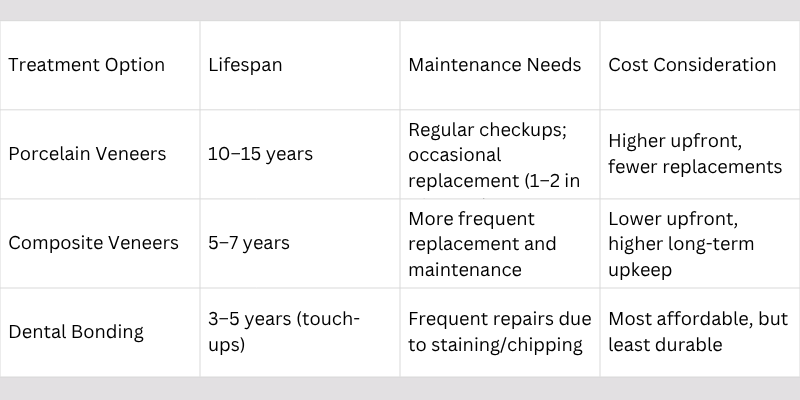
Porcelain veneers typically last 10-15 years with proper care, while composite veneers may need replacement every 5-7 years.
Your maintenance routine involves regular dental checkups, professional cleanings, and potential replacements if veneers chip or crack.
Porcelain veneers cost more upfront but often require less frequent replacement than composite options. You should expect to replace 1-2 veneers within a 10-year period if you have a full set.
Dental bonding requires more frequent touch-ups since the composite material can stain or chip more easily. You might need bonding repairs every 3-5 years depending on your habits and oral care.
Key maintenance expenses include:
- Biannual professional cleanings and polishing
- Protective night guards if you grind your teeth ($300-$500)
- Veneer replacements or repairs ($1,000-$2,500 per tooth)
Teeth Whitening and Retainer Upkeep
Professional teeth whitening requires periodic touch-ups to maintain your bright smile. Most people need repeat treatments every 6-12 months, with each session costing $300-$800.
Your teeth whitening cost over 10 years depends on how often you want refresher treatments and whether you use at-home maintenance kits.
At-home whitening trays prescribed by your dentist offer a more affordable maintenance option. You’ll pay $100-$400 for custom trays initially, then $20-$50 for whitening gel refills every few months.
Retainers need replacement every 1-2 years since they wear out with regular use. Budget $200-$500 per replacement depending on whether you choose wire retainers or clear plastic aligners.
You’ll need to replace them more frequently if you lose them or if they crack from normal wear and tear.
Orthodontic Treatments: Braces and Clear Aligners
Metal braces, ceramic braces, and lingual braces all require regular adjustment appointments every 4-8 weeks during active treatment.
After your braces come off, you’ll need retainers indefinitely to prevent teeth from shifting back.
Clear aligners like Invisalign don’t require adjustment appointments, but you’ll pay for replacement aligners if you lose them ($100-$200 per set).
Post-treatment retention is essential regardless of which orthodontic option you chose.
Your long-term orthodontics maintenance includes:
| Expense Type | Frequency | Estimated Cost |
| Retainer replacement | Every 1-2 years | $200-$500 |
| Retainer repairs | As needed | $50-$150 |
| Follow-up visits | Annually | $50-$200 |
Dental crowns may be needed if braces damage existing teeth or fillings during treatment. These repairs add $800-$1,500 per tooth to your overall orthodontic maintenance budget over the decade following treatment.
Common Complications and Their Impact on Maintenance Costs
Implant complications fall into two main categories that directly affect your wallet: technical issues like loose screws and broken parts, and biological problems such as gum inflammation and bone loss.
Each type requires different treatments and costs.
Technical Complications: Repairs and Replacements
Technical complications with your dental implants can range from minor fixes to complete replacements.
The most common issues include loosening of screws, chipping of the crown material, and in rare cases, abutment fracture or screw fracture.
Most technical problems get resolved in one to two appointments. If you experience screw loosening, you’ll typically need two visits to fix the issue.
Minor chips might seem simple but can require up to five appointments if the damage leads to crown replacement.
An abutment fracture is more serious. This problem needs about four visits and involves dental laboratory work to create a new crown.
These complications add both time and money to your maintenance costs beyond regular checkups.
Biological Complications: Clinical Management
Biological complications involve the tissues around your implant. The two main conditions are peri-implant mucositis and peri-implantitis, which your dentist identifies through bleeding on probing and probing depth measurements.
Peri-implant mucositis causes gum inflammation around the implant. Research shows about 30% of patients develop this condition over 10 years.
Treatment usually takes one to two appointments and focuses on deep cleaning.
Peri-implantitis is more severe and affects about 9% of patients. This condition involves progressive bone loss around the implant.
In extreme cases, you might need guided bone regeneration (GBR) procedures or even implant removal. These treatments require multiple visits and significantly higher costs than routine maintenance.
How Complications Affect Long-Term Expenses
Additional treatment costs beyond regular maintenance add up quickly over time. Your annual maintenance expenses will average about 9% of what you originally paid for the implant treatment each year.
If you avoid complications entirely, you’ll only pay for one yearly visit combining dental hygiene and examination.
Patients dealing with implant complications face extra appointments, laboratory fees, and replacement parts. A single technical issue can cost hundreds to thousands of dollars depending on severity.
Your total 10-year costs depend heavily on whether problems develop. Staying complication-free keeps expenses predictable and manageable.
Supporting Smile Longevity: Professional Care and At-Home Maintenance
Regular professional visits combined with daily cleaning habits protect your cosmetic dental work and control long-term maintenance expenses.
Professional cleanings remove buildup that home care alone cannot address, while consistent oral hygiene between appointments prevents costly repairs.

Routine Dental Hygiene Visits
You should schedule professional cleanings every three to six months to maintain your cosmetic dentwork. Your dental hygienist will examine restoration margins for signs of wear, staining, or biofilm accumulation during these visits.
Standard cleaning appointments typically include:
- Professional plaque and tartar removal around restoration margins
- Polishing with ultra-fine compounds that won’t damage veneers or crowns
- Fluoride treatment to protect natural tooth structure near restorations
- Margin assessment to catch early signs of degradation
Patients with cosmetic restorations often benefit from more frequent cleanings than the standard six-month schedule. More frequent visits help identify issues before they become expensive problems.
Your dentist may recommend quarterly appointments if you have multiple veneers, crowns, or extensive composite work.
Supportive Care Protocols
Your dental team creates customized supportive care protocols based on your specific restorations and oral health needs. These protocols track your plaque control record over time to identify areas needing improvement.
Professional maintenance includes careful polishing techniques that protect delicate restoration margins. Your hygienist uses specialized instruments at controlled speeds to clean without causing damage.
They avoid aggressive polishing within 0.5mm of restoration edges to preserve bonding integrity.
Antimicrobial rinses may be recommended if you struggle with plaque buildup around cosmetic work.
Chlorhexidine rinses used for two-week cycles can reduce inflammation and decay risk by 60-70% around restoration margins. Your dentist monitors for any side effects like staining or taste changes.
Home Oral Hygiene Practices
Your daily oral hygiene routine directly impacts how long your cosmetic dentistry lasts. Electric toothbrushes with soft bristles provide superior plaque removal compared to manual brushing without damaging restorations.
Essential daily practices include:
- Brushing twice daily for two minutes with soft-bristled brushes
- Flossing or using interdental brushes around all restoration margins
- Using water irrigators to clean hard-to-reach areas near veneers and crowns
- Avoiding abrasive whitening toothpastes that can scratch composite restorations
You must clean around restoration margins carefully since plaque accumulation causes both gum inflammation and material degradation.
Food particles and bacteria trapped at restoration edges lead to secondary decay that requires replacement. Water irrigators work well for patients who find traditional flossing difficult around cosmetic work.
Avoid habits that stress your restorations like chewing ice, biting nails, or using teeth as tools. These behaviors concentrate force at restoration margins and accelerate adhesive interface breakdown.
How to Manage and Reduce Your 10-Year Cosmetic Dentistry Costs
Strategic planning can significantly lower your long-term cosmetic dentistry expenses through smart use of insurance benefits, tax-advantaged accounts, budget-conscious procedure selection, and alternative care providers.
Maximizing Dental Insurance and Payment Plans
Most dental insurance plans don’t cover purely cosmetic work, but you can still benefit when procedures have restorative elements.
If your dentist documents that a crown or veneer repairs damaged tooth structure, your insurance might cover part of the cost. Review your annual maximum and schedule procedures across calendar years to use benefits twice.
Many dental offices offer payment plans for veneers and whitening that let you spread costs over 6 to 24 months. In-house financing often comes with zero interest if you pay within the promotional period.
Ask about automatic payment discounts that can save you 5% or more.
CareCredit and similar cards provide extended payment terms for larger treatments. Compare interest rates carefully, as deferred interest plans charge retroactive fees if you don’t pay the balance in full by the deadline.
Using HSAs, FSAs, and Financing Options
A health savings account (HSA) lets you set aside pre-tax money for dental work, which effectively reduces your costs by 20-30% depending on your tax bracket.
You can use HSA funds for procedures that improve oral function, including many cosmetic treatments with restorative benefits.
Flexible spending accounts work similarly but require you to use funds within the plan year. Front-load your FSA contributions if you know you’ll need cosmetic work that year.
Dental discount plans differ from insurance by offering 10-60% off services for an annual membership fee of $100-$200.
These plans work well for cosmetic procedures that insurance won’t touch. You pay the discounted rate directly to participating dentists without waiting periods or claim forms.
Choosing Cost-Effective Procedures
Some cosmetic treatments deliver similar results at different price points. Composite bonding costs $300-$600 per tooth while porcelain veneers run $1,000-$2,500 per tooth.
For minor chips or gaps, bonding provides low cost cosmetic dental treatments for adults that last 5-10 years.
At-home professional whitening kits from your dentist cost $100-$400 versus $400-$600 for in-office treatments. The take-home option takes longer but produces comparable results at half the price.
Consider treating only your most visible teeth rather than your entire smile. Upper front six or eight teeth make the biggest visual impact.
Discuss phased treatment plans with your cosmetic dentist to prioritize high-impact procedures first and spread costs over several years.
Working with Cosmetic Dentists and Dental Schools
Dental schools can significantly reduce cosmetic dentistry costs since supervised students perform procedures at 30-70% below market rates.
Treatment takes longer due to the teaching environment, but you receive care reviewed by experienced faculty dentists.
Call local dental schools to ask which cosmetic procedures they offer. Most provide veneers, crowns, whitening, and bonding through their advanced training programs.
When choosing a cosmetic dentist for complex work, request detailed treatment plans from multiple providers.
Compare not just prices but also materials quality, warranty coverage, and included follow-up visits. Some dentists bundle maintenance visits and touch-ups into their initial fees while others charge separately.
Ask about package pricing for multiple procedures done together. Many practices discount combined treatments by 10-15% compared to individual procedure costs.
The True Value of 10-Year Cosmetic Dental Investments
Beyond the initial price tag, cosmetic dental work provides measurable returns through improved confidence and lasting results.
When you look at a full smile makeover or digital smile design over ten years, the investment pays dividends in both how you feel and how well your restoration performs.
Confidence and Daily Life Benefits

Your smile affects every interaction you have. A smile makeover changes how you present yourself at work, in social settings, and even in photos you’ll treasure for years.
Studies from the American Academy of Cosmetic Dentistry show that people with improved smiles report better job interviews and first impressions.
You stop hiding your teeth when you laugh. You feel more comfortable speaking in meetings or at social events.
Premium porcelain used in modern restorations looks natural under different lighting.
Unlike older materials that can appear fake or yellow over time, quality porcelain crowns maintain their appearance for years. You won’t need to worry about your restoration looking obvious or outdated.
The psychological benefits add up. When you factor in ten years of improved self-esteem and social comfort, the cost per day of a smile makeover becomes minimal compared to the daily confidence boost you receive.
Long-Term Aesthetic and Functional Outcomes
Fixed restorations using advanced implant systems provide both beauty and function for a decade or longer.
Straumann Bone Level and Astra Tech Osseospeed implants have documented success rates above 95% at ten years according to research published in PubMed.
These premium implant systems integrate with your bone to create stable foundations. You can eat normally without worrying about slippage or damage.
A porcelain crown on a quality implant feels and works like a natural tooth.
Digital smile design allows precise planning before any work begins. Your dentist maps out exactly how your new smile will look and function, reducing the chance of issues down the road.
The materials matter significantly over time. Premium porcelain resists staining from coffee, wine, and foods that would discolor natural teeth.
Your investment maintains its appearance with normal care, giving you consistent results throughout the ten-year period.
Frequently Asked Questions
Understanding the real costs of maintaining cosmetic dental work helps you plan your budget over the years ahead.
These common questions cover everything from repair schedules to hidden expenses that catch many patients off guard.
What ongoing maintenance costs should I expect after getting veneers or bonding?
You’ll need regular dental cleanings every six months, which typically cost between $75 and $200 per visit. Your veneers might need professional polishing during these appointments to keep them looking bright.
Composite bonding usually requires touch-ups every few years to maintain its appearance. These minor repairs can cost $100 to $300 per tooth.
If you develop any chips or damage, repairs range from $200 to $500 depending on the extent of the problem. Additional regular maintenance costs add up to about 9% of your initial treatment cost over a 10-year period.
How often do cosmetic dental restorations typically need repairs or replacement?
Composite bonding generally lasts 3 to 10 years before needing replacement. Porcelain veneers hold up longer, typically lasting 10 to 15 years with proper care.
Crowns usually last 15 to 20 years, while dental implants can last 20 years or more. Minor repairs might be needed sooner if you grind your teeth or experience trauma to your mouth.
Your lifestyle habits and how well you care for your dental work play a big role in these timelines. Some people need replacements sooner, while others get even more years out of their cosmetic work.
Which cosmetic dentistry options tend to have the lowest long-term upkeep costs?
Teeth whitening has the lowest maintenance costs overall. You’ll just need occasional touch-up treatments every 6 to 12 months, which cost $100 to $400 depending on your method.
Porcelain veneers offer good value over time because they last longer than composite bonding. While they cost more upfront, you won’t need to replace them as often.
Dental crowns also provide solid long-term value. Their durability means fewer replacements over the decades, which saves money in the long run.
What kinds of follow-up appointments and cleanings are usually needed to keep cosmetic work looking great?
You need professional cleanings at least twice a year. Some people with cosmetic dental work benefit from visiting every four months instead.
Your dentist will check your restorations during these visits to spot early signs of wear or damage. They can fix small problems before they turn into expensive repairs.
Professional polishing keeps your cosmetic work looking new. Some materials need special polishing techniques that you can’t do at home.
How do lifestyle habits like coffee, smoking, or teeth grinding affect long-term maintenance expenses?
Coffee, tea, and red wine can stain your cosmetic work over time. You might need more frequent whitening treatments or professional cleanings to remove these stains.
Smoking discolors both natural teeth and dental work much faster. It also increases your risk of gum disease, which can threaten the foundation of your cosmetic restorations.
Teeth grinding wears down and cracks veneers, crowns, and bonding. You’ll need a custom night guard that costs $300 to $800, plus potential repair costs if damage occurs before you get one.
Are there common hidden costs (like retainers, night guards, or whitening touch-ups) that people forget to budget for?
Night guards are essential if you grind your teeth, but many people don’t realize they need one until damage occurs. Custom guards cost $300 to $800 and need replacement every few years.
Whitening touch-ups keep your natural teeth matching your veneers or crowns. These treatments cost $100 to $400 and might be needed once or twice a year.
Sports guards protect your investment during physical activities. A custom-fitted guard costs $200 to $500 but prevents thousands in potential repair costs.
Special toothpaste and mouthwash recommended for cosmetic dental work add $50 to $100 to your yearly budget. Water flossers that work well with restorations cost $50 to $100 upfront.